

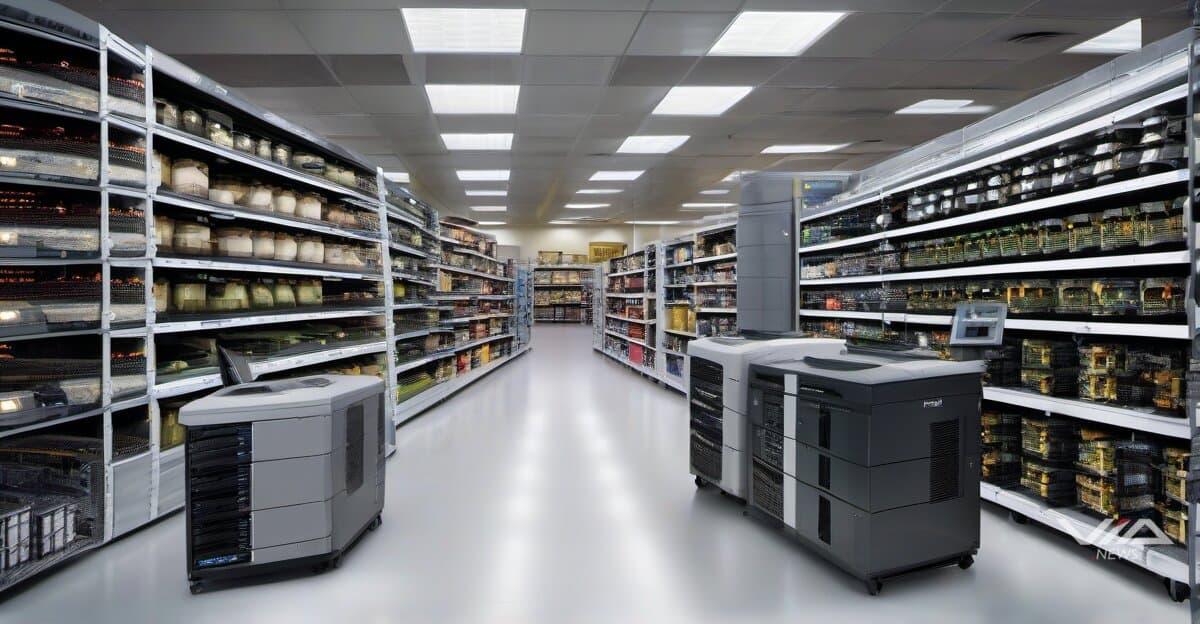
Computer vision technology is transitioning from experimental testing to operational deployment across retail and industrial applications. Major technology providers including Microsoft and Supermicro are releasing agentic AI systems with integrated vision capabilities for autonomous store operations, asset tracking, and navigation tasks.
The deployment acceleration reflects broader patterns in AI infrastructure adoption visible in recent semiconductor earnings reports. Enterprise customers are moving beyond initial pilots to scale production implementations of vision-enabled systems.
Retail applications focus on checkout automation, inventory monitoring, and loss prevention. Industrial use cases center on equipment inspection, safety compliance monitoring, and autonomous material handling. Both sectors are deploying systems that combine camera arrays with edge processing hardware.
Technology providers are packaging vision capabilities into turnkey solutions rather than requiring custom integration. Microsoft's offerings target enterprise customers with existing Azure infrastructure. Supermicro is positioning server hardware optimized for vision processing workloads. Specialized AI vendors are delivering vertical-specific applications.
The shift from experimentation to production creates measurable demand for semiconductor components, particularly GPUs and vision-specific processors. This infrastructure buildout appears in earnings from chip manufacturers and server hardware vendors.
Enterprise adoption patterns show customers deploying vision systems alongside other AI capabilities rather than as standalone projects. Store operators combine checkout automation with inventory management. Manufacturers integrate quality inspection with predictive maintenance systems.
Investment in vision infrastructure requires upfront capital for cameras, processing hardware, and network upgrades. Retail deployments typically start with high-traffic locations before expanding. Industrial implementations often begin with specific production lines or warehouse sections.
The technology's maturation is reducing implementation friction. Improved accuracy in object recognition and tracking enables applications previously limited by error rates. Lower hardware costs make deployments economically viable for mid-market customers beyond early enterprise adopters.
Market participants tracking semiconductor earnings and enterprise technology spending can monitor vision system adoption through hardware vendor revenues, cloud infrastructure consumption, and vertical software sales in retail and industrial segments.