
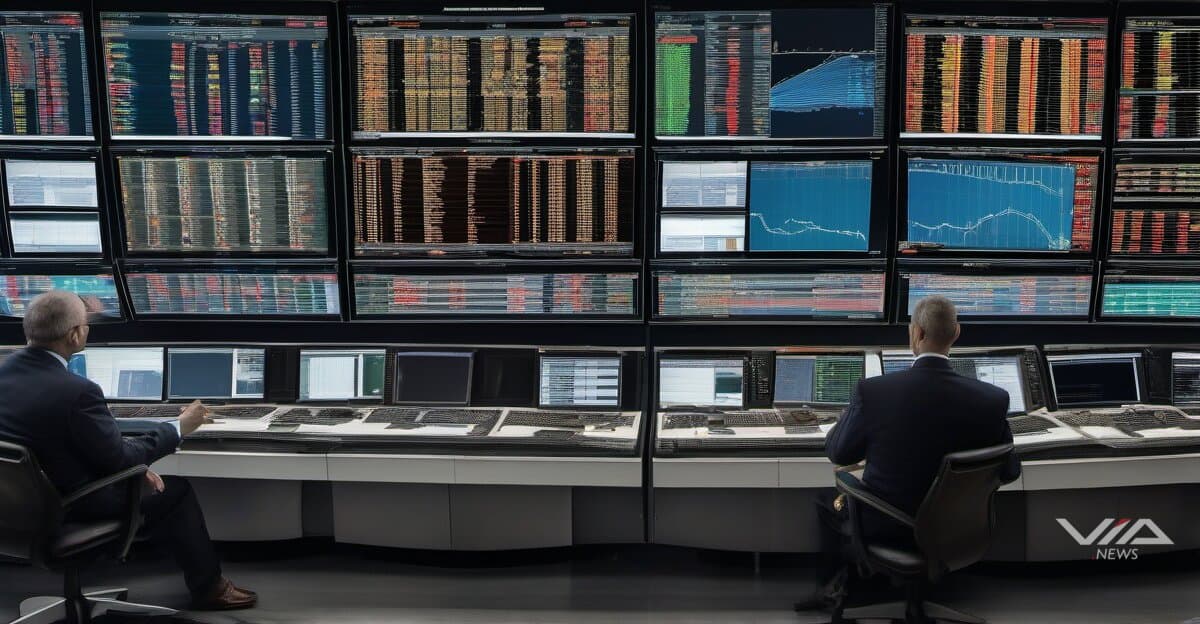
Flow Traders and Virtu Financial reported robust 2025 performance driven by deep learning initiatives and expanded trading capital, widening the gap between institutional quant operations and a wave of retail-facing AI trading platforms entering markets with aggressive claims.
Platforms including Quantum AI, Vorexlan, Envariax, GPT Invest, and Lucren launched automated trading services targeting retail investors, promising real-time analytics and algorithm-driven positioning. Vorexlan disclosed a $250 minimum deposit requirement and operates as a services company earning through partnered broker relationships rather than user trading profits.
These platforms employ machine learning layers analyzing volatility patterns and cross-market relationships, processing thousands of data points simultaneously through multi-layer neural networks. Vorexlan's architecture includes anomaly detection models and smart-routing systems for automated execution across cryptocurrencies, forex, commodities, indices, and equities.
The retail platforms carry extensive risk disclaimers. Vorexlan operates only in jurisdictions where partner brokers hold legal authorization, with availability spanning Europe, Asia, Latin America, Oceania, and select African markets. Identity verification requires government-issued ID and proof of residence under KYC and AML compliance frameworks.
Institutional players maintain advantages through Renaissance Technologies-era mathematical foundations and regulatory transparency. UK market position disclosures impose structure on algorithmic trading, contrasting with the speculative retail AI boom's uncertain quality.
The bifurcation highlights asymmetric sophistication: established firms leverage proven quantitative strategies and deep capital reserves, while retail platforms face questions about execution quality, broker partnership stability, and investor protection. Regional regulators restrict automated trading systems in some jurisdictions, adding compliance layers that favor institutional operations.
Trading costs on retail platforms include broker spreads, rollover charges, and instrument-specific fees beyond the platforms' service revenue. Professional quant shops operate with proprietary infrastructure and direct market access, avoiding intermediary fee structures that erode retail returns.
The market structure shift reflects algorithmic trading's evolution from specialized institutional domain to mass-market product, with regulatory scrutiny intensifying as retail participation grows.