

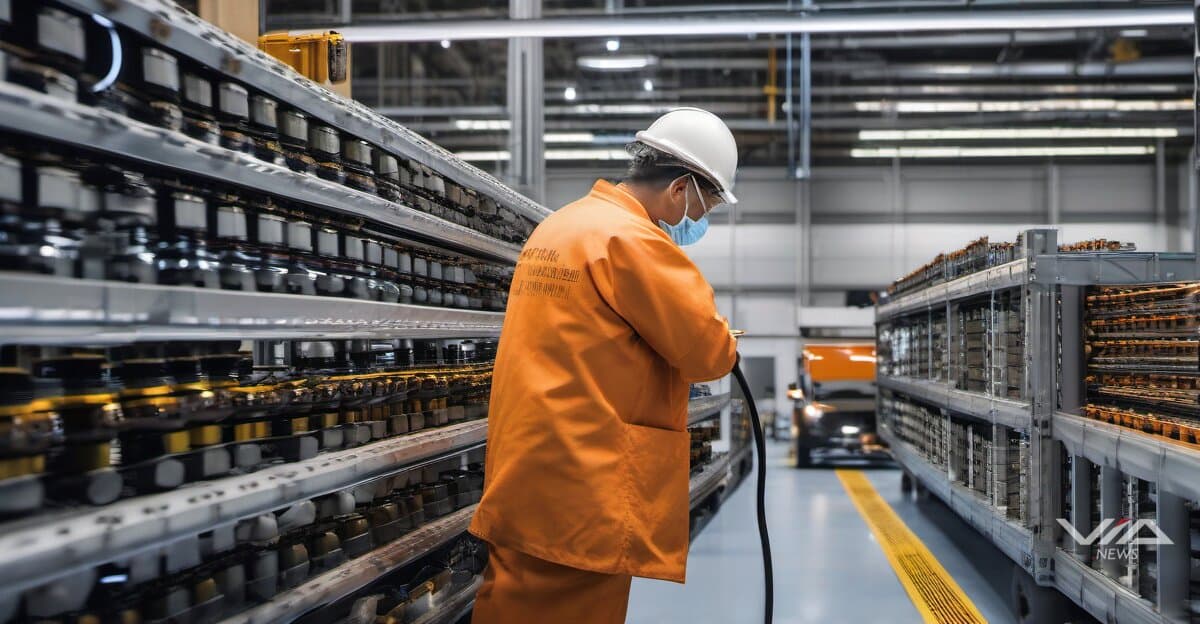
U.S. defense procurement rules will ban Chinese rare earths starting January 2027, forcing electric vehicle manufacturers to restructure battery supply chains while navigating parallel EU transparency mandates.1
The regulatory convergence creates dual pressure on automakers. Ford and Tesla must establish rare earth sourcing outside China within nine months while simultaneously preparing for EU Battery Passport requirements that mandate full supply chain transparency. Companies face material cost increases as they shift to Australian, Vietnamese, and North American suppliers charging premium prices over Chinese alternatives.
Industry conferences signal the manufacturing shift underway. The Battery Show Europe presents keynote speakers focused on next-generation solutions and strategic partnerships to navigate the energy transition.2 The Battery Show South positions itself as a platform for innovation and collaboration in battery and energy storage.3
Rare earth suppliers stand to benefit from procurement redirection. Australian miners Lynas Rare Earths and Iluka Resources control significant non-Chinese neodymium and praseodymium reserves essential for EV motors. MP Materials operates the only U.S. rare earth mine at Mountain Pass, California. Vietnamese processing facilities are expanding capacity to capture redirected demand.
Battery material suppliers face mixed prospects. Companies with diversified sourcing like Albemarle and Livent gain advantage over China-dependent competitors. Cell manufacturers including CATL and LG Energy Solution must document entire supply chains to meet EU passport standards, adding compliance costs but potentially creating competitive moats through certification.
Automaker stocks reflect restructuring uncertainty. Companies with advanced supply chain diversification may outperform peers still dependent on Chinese materials as the deadline approaches. Tesla's vertical integration strategy and Ford's North American battery plant investments position them ahead of competitors lacking domestic sourcing alternatives.
The transformation extends beyond compliance. Supply chain security now factors into product development timelines, manufacturing location decisions, and strategic partnership formation. Battery technology advancement continues, but geopolitical risk management has become equally important to investor analysis of EV sector valuations.