
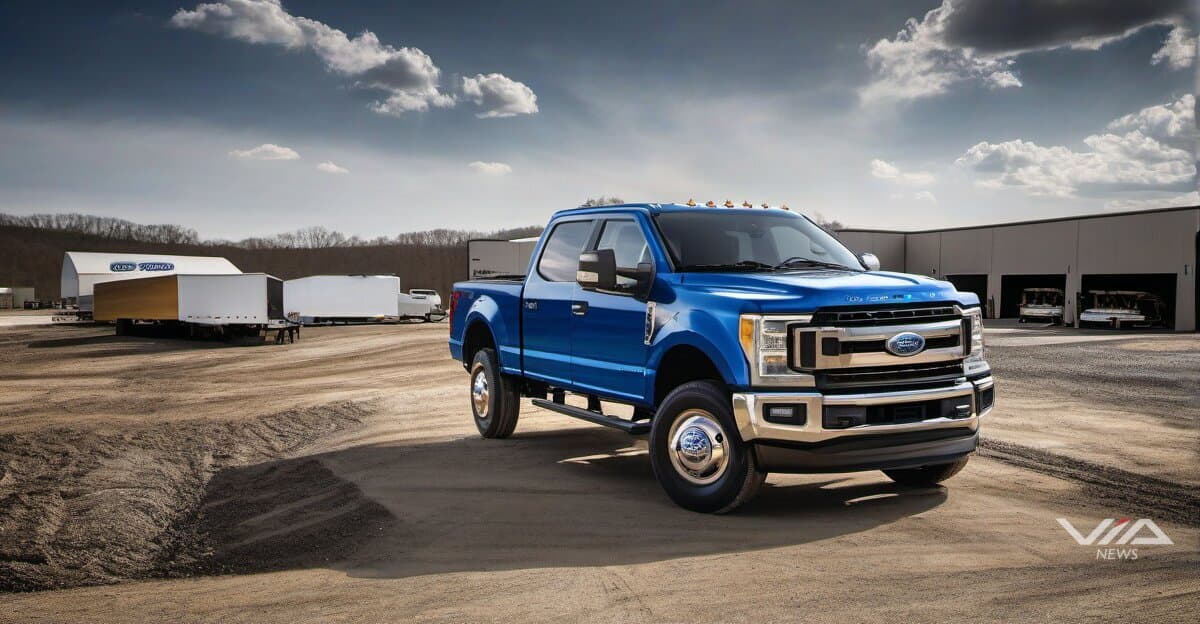
Ford Motor Company is making a decisive pivot away from electric vehicles at its flagship BlueOval City facility in Tennessee, announcing that the sprawling plant — originally conceived as the crown jewel of its EV transformation — will instead produce a new line of affordable, gas-powered Built Ford Tough trucks. The reversal is one of the clearest signals yet that Ford is subordinating its electrification ambitions to near-term financial discipline.
The Tennessee Truck Plant, a centerpiece of Ford's multi-billion dollar investment in American manufacturing, had been slated to launch a next-generation electric truck. That program has now been shelved in favor of traditional internal combustion engine (ICE) pickups — a segment where Ford's F-Series franchise consistently ranks as the best-selling vehicle line in the United States and a critical profit engine for the company.
Following the Customer, Not the Mandate
The strategic language from Ford's camp is revealing: the company is framing this as "following customers," a pointed acknowledgment that consumer demand for electric trucks has fallen short of earlier projections. EV adoption in the full-size truck segment has been sluggish, with buyers citing range anxiety, towing limitations, charging infrastructure gaps, and — crucially — price premiums that remain difficult to justify against well-proven ICE alternatives.
For Ford stock (F), the implications are layered. On one hand, doubling down on high-margin ICE trucks shores up the company's near-term earnings outlook. Ford's Pro commercial vehicle segment and its ICE truck business have been the financial backbone keeping the company profitable while the Model e EV division bleeds cash. Ford's EV unit is widely expected to post losses exceeding $5 billion for the current fiscal year, making every dollar redirected toward profitable ICE production arithmetically significant.
Capital Reallocation and Earnings Implications
The retooling of BlueOval City carries direct balance sheet consequences. The facility represents one of the largest single manufacturing investments in Ford's recent history, with the company committing roughly $5.6 billion to the Tennessee complex in partnership with SK On for battery production. Shifting the vehicle program away from EVs raises questions about stranded capital, potential write-downs, and revised production timelines that analysts will scrutinize in upcoming earnings calls.
Automotive sector watchers note that Ford's move fits a broader industry pattern. General Motors has similarly trimmed EV production targets, and Stellantis has delayed several electric models. The sector-wide recalibration is pressuring EV-dedicated competitors and forcing investors to reassess long-term valuation multiples that had been pricing in aggressive electrification timelines.
Sector Valuation Ripple Effects
For broader automotive sector valuations, Ford's Tennessee decision carries a sobering message: the EV transition will be slower, lumpier, and more capital-intensive than the bull-case scenarios that drove elevated price-to-sales multiples in 2021 and 2022. Legacy automakers that priced in EV optionality are being re-rated toward their traditional ICE earnings multiples — historically in the 5x–8x forward earnings range.
Ford shares have reflected this tension, trading at compressed multiples as investors weigh the cash drag from Model e against the resilience of the Pro and Blue (ICE) segments. The Tennessee pivot could serve as a near-term catalyst if it is interpreted as management prioritizing free cash flow generation and shareholder returns over an EV timeline that the market had largely stopped rewarding.
The key risk: if EV adoption accelerates faster than Ford's revised roadmap anticipates, the company may find itself behind competitors who maintained their electrification investments. For now, however, Ford is making a clear-eyed bet that profitable trucks in the short term outweigh the speculative upside of electric trucks that customers are not yet buying in sufficient volumes.