
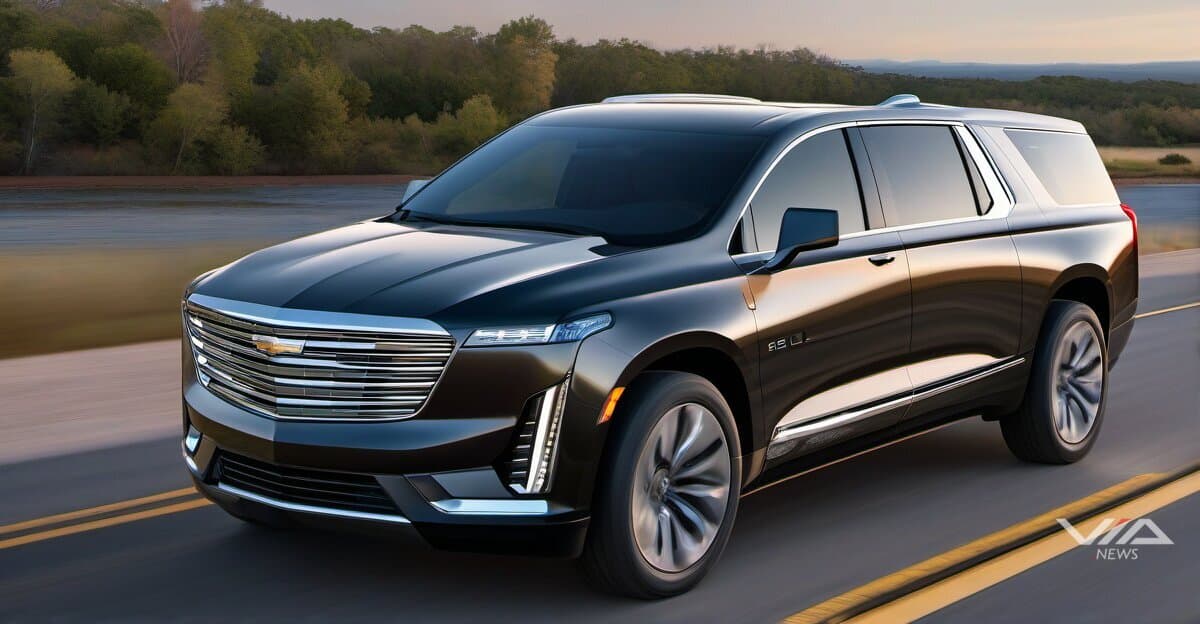
General Motors is making a high-stakes wager on autonomous driving that could prove as consequential for its stock valuation as its core truck business. During the company's Q4 2025 earnings call on January 27, 2026, executives confirmed plans to debut Level 3 autonomous driving capability on the Cadillac Escalade I in 2028 — a system that allows drivers to fully remove their eyes and hands from the wheel during highway travel.
The technology stack is built around sensor redundancy: LIDAR, radar, and cameras working in concert to meet the safety thresholds required for a true L3 classification under international standards. L3 represents a meaningful step beyond today's commercially available driver-assistance systems, which legally require driver attention at all times.
Why This Matters for Investors
For the automotive sector, the competitive implications are significant. Tesla has pursued a camera-only strategy and frames its Full Self-Driving suite as L2+ rather than certified L3. Waymo, owned by Alphabet, operates at L4 in geofenced areas but is not embedded in consumer vehicles. GM's 2028 target — if met — would position the company as one of the first legacy automakers to deliver certified L3 to retail customers at scale.
Market participants tend to assign technology premiums to automakers that credibly demonstrate an AV roadmap. GM's stock has already appreciated more than 170% since November 2023, a run driven by disciplined capital returns ($23B returned to shareholders, including $6B in buybacks in 2025 alone) and strong operating performance. Whether the L3 announcement adds another leg to that rally will depend on investor confidence in execution timelines — historically a weak point across the AV industry.
Financial Foundation Is Solid
The timing of the announcement benefits from GM's strongest balance sheet in years. The company closed 2025 with $21.7B in cash, generated $10.6B in adjusted automotive free cash flow, and guided for $13–15B in adjusted EBIT in 2026. That financial cushion matters: autonomous driving development is capital-intensive, and investors in legacy AV programs — including GM's own Cruise unit — have seen how quickly costs can spiral.
GM's 2026–2027 capital expenditure guidance of $10–12B annually includes approximately $5B earmarked for US manufacturing expansion, suggesting the company is managing AV investment alongside commitments to its ICE and EV base business.
Risk Factors to Watch
Several variables could influence how this announcement ages. Regulatory approval for L3 highway driving in key US states is not guaranteed by 2028. Liability frameworks for eyes-off operation remain unsettled. And GM is carrying $3–4B in projected tariff costs in 2026, with ongoing supply chain friction from Nexperia chip replacements adding another $100M quarterly headwind.
The company also took $7.6B in EV-related charges in the second half of 2025, a signal that ambitious technology timelines carry real financial downside when market conditions shift. Investors who saw Cruise's operational suspension in 2023 will apply a skeptical lens to any AV commitment from GM management.
Sector Implications
A credible L3 launch from a mass-market automaker would intensify competitive pressure on dedicated AV software companies and could accelerate partnerships or consolidation across the sensor supply chain — including LIDAR manufacturers and semiconductor firms specializing in automotive-grade chips. For portfolio managers with exposure to the broader autonomous vehicle ecosystem, GM's 2028 target is a date worth marking on the calendar.