
General Motors entered 2026 carrying the weight of a $7.6 billion restructuring charge — the cost of a painful recalibration of its electric vehicle ambitions. Yet beneath the write-downs and capacity rightsizing, CEO Mary Barra is pointing investors toward a more distant horizon: a 2028 software-defined vehicle architecture that the company believes will fundamentally reframe how it competes in the next era of transportation.
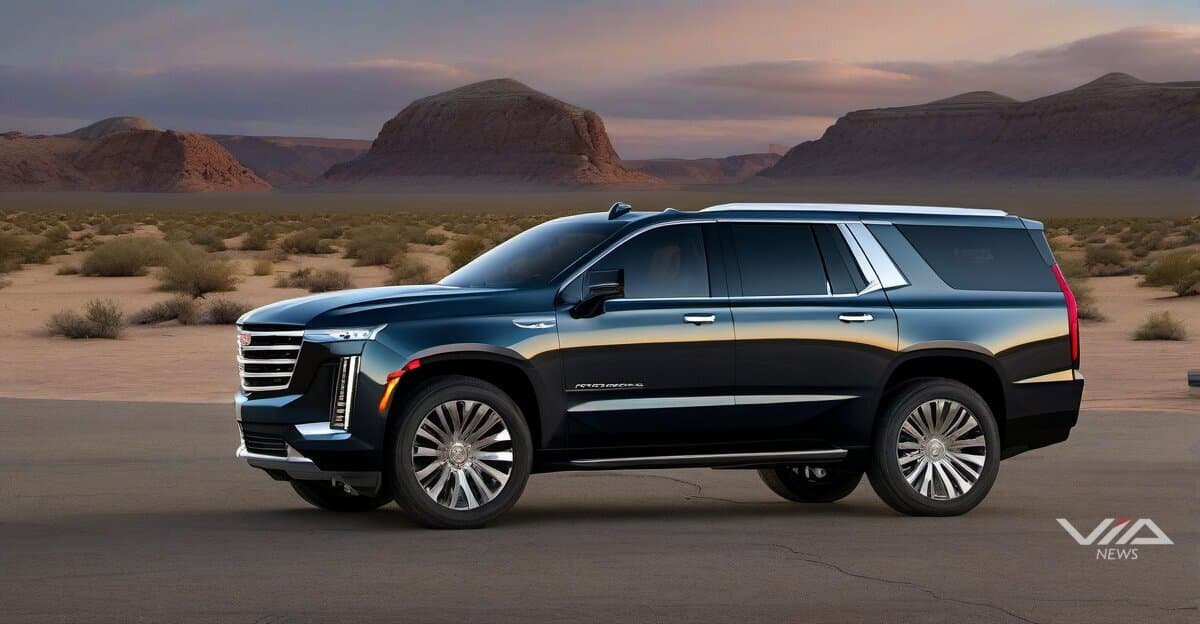
The platform, internally designated SDV 2.0, is scheduled to debut on the Cadillac Escalade I and represents a generational leap over GM's current vehicle software stack. According to details disclosed during the company's Q4 2025 earnings call on January 27, 2026, the architecture will feature a single centralized compute core — replacing the distributed network of dozens of electronic control units that define today's vehicles — alongside 10 times more over-the-air (OTA) update capacity and a staggering 1,000x increase in bandwidth.
Why SDV 2.0 Matters for Investors
The strategic logic is straightforward, even if the execution risk is considerable. Software-defined vehicles generate recurring revenue streams that traditional automakers have historically left on the table. GM's OnStar and software services division is already contributing — management flagged $400 million in incremental high-margin revenue as a 2026 tailwind — but SDV 2.0 is designed to make that figure look modest by comparison.
A centralized compute architecture also dramatically reduces the cost and complexity of delivering new features post-sale. Rather than requiring hardware recalls or dealer visits, GM could push autonomous driving upgrades, safety enhancements, and new in-cabin experiences directly to vehicles over the air. That model mirrors Tesla's playbook, which has allowed the EV pioneer to improve vehicles long after purchase and monetize software features on a subscription basis.
The Financial Backdrop: Strong Core, Costly Transition
GM's financial position heading into this technology bet is materially stronger than many observers expected. Full-year 2025 EBIT adjusted came in at $12.7 billion — at the high end of guidance — while adjusted automotive free cash flow reached $10.6 billion. The company ended the year with $21.7 billion in cash and has guided for $13–15 billion in adjusted EBIT for 2026, with EPS of $11–13 per diluted share.
That cash generation has funded an aggressive capital return program: $23 billion returned to shareholders since November 2023, a 35% reduction in share count, and a 20% dividend increase to $0.18 per quarter. A new $6 billion buyback authorization signals management confidence in sustained free cash flow even as it absorbs the remaining cash charges from its EV restructuring — the majority of the $4.6 billion cash component is still expected to flow out in 2026.
The EV Paradox
The SDV 2.0 timeline creates an interesting paradox for GM's EV narrative. The company took $5 billion in Q4 2025 charges alone, including impairments tied to the BrightDrop discontinuation and broader EV asset write-downs, citing softer demand, policy shifts, and the termination of consumer tax credits. Yet SDV 2.0 is being developed in parallel with continued EV product investment — the architecture is explicitly designed to underpin both electric and internal combustion vehicles, giving GM flexibility as the market evolves.
Tariff exposure remains a real variable. GM faces $3–4 billion in gross tariff costs in 2026, with a Q1 impact alone of $750 million to $1 billion. Management has offset more than 40% of tariff costs through self-help initiatives, and the Korea tariff assumption embedded in guidance (15% versus the statutory 25%) introduces further uncertainty.
The 2028 Horizon
For market participants, SDV 2.0 is best understood as a long-duration option embedded in a stock that is currently trading on near-term earnings power. The 2028 launch date is far enough away to carry meaningful execution risk — technology partnerships, compute supplier relationships, and regulatory approvals for autonomous features all remain variables. But the underlying financial engine GM has built — $10 billion-plus in annual free cash flow, a disciplined capital allocation framework, and improving North America margins targeting 8–10% — provides a credible runway to fund the transition without diluting shareholders.
Whether SDV 2.0 ultimately delivers the software economics GM is promising, or becomes another costly pivot, may well define the company's valuation trajectory through the early 2030s.