
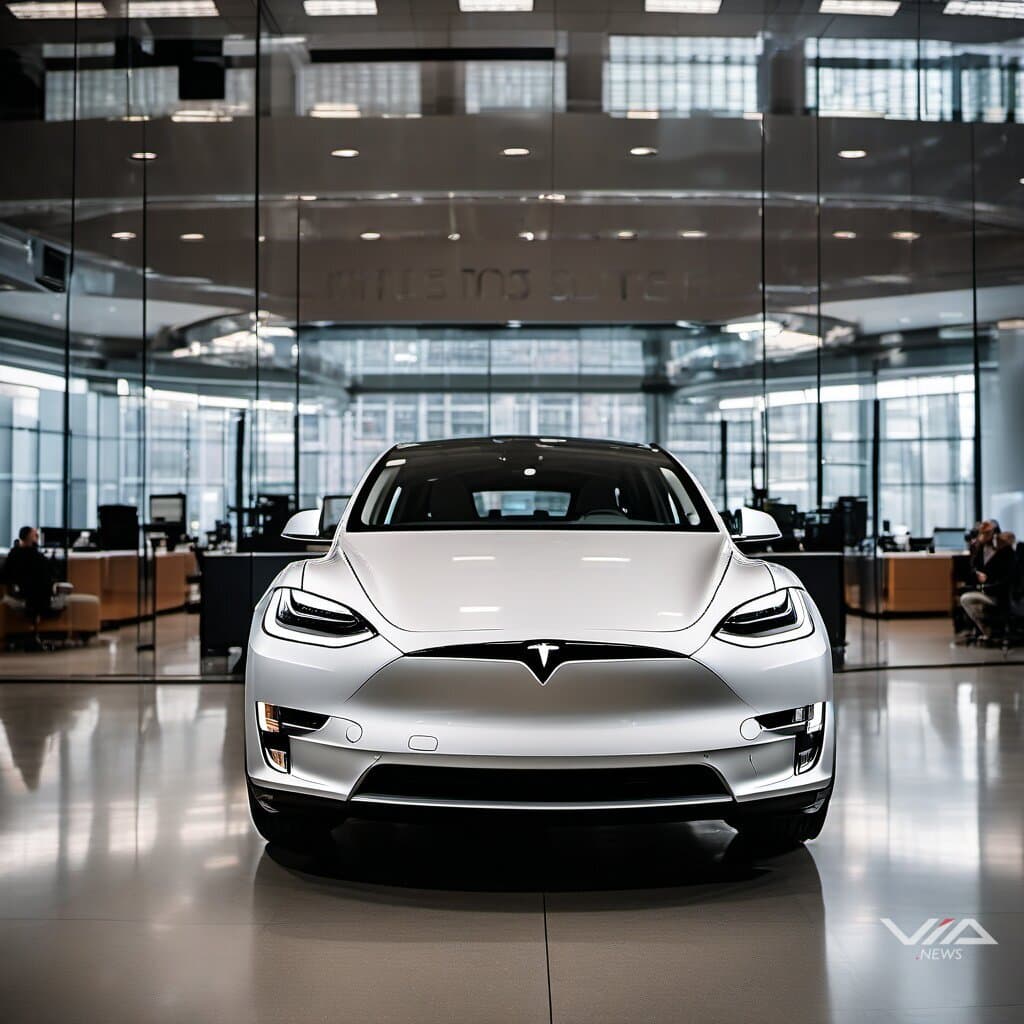
Tesla recently reported a nearly 16% decline in electric vehicle (EV) deliveries for the fourth quarter of 2023, marking a significant challenge for the company amidst rising competition and industry headwinds in the U.S. Despite this setback, investors remain optimistic, focusing their attention on Tesla's emerging robotaxi fleet and other innovative initiatives.
The Optimistic View
The market's optimism stems from Tesla's ambitious plans to expand into the robotaxi market, which could diversify its revenue streams and potentially lead to higher margins. According to analysts, if Tesla successfully deploys its robotaxi fleet across numerous cities and achieves full autonomy and operational efficiency, it could capture a significant portion of the transportation market. Additionally, the introduction of Optimus robots could further enhance Tesla's market presence by tapping into the burgeoning robotics sector. By combining these two initiatives—robotaxis and Optimus robots—Tesla could drive substantial growth and redefine its competitive position.
- There is potential for high margins in the robotaxi business, as Tesla aims to produce autonomous vehicles at a lower cost compared to competitors.
- Successful deployment of the robotaxi fleet and introduction of Optimus robots could capture significant market share in both transportation and robotics sectors.
The Pessimistic View
However, there are significant risks associated with Tesla's ambitious plans. Critics argue that overreliance on unproven technologies such as robotaxis and humanoid robots could be premature and may not achieve commercial viability. Moreover, intense global competition from established automakers and new entrants could erode Tesla's market share. If Tesla fails to scale its robotaxi and humanoid robot initiatives effectively, it could lead to a prolonged period of declining EV sales and profitability, resulting in a significant drop in stock price and potentially triggering a broader sell-off in the tech sector.
- Risk of unproven technologies not achieving commercial viability.
- Intense global competition could erode Tesla's market share.
System-Level Implications
Tesla's shift towards autonomous driving and robotics could have far-reaching implications for the automotive industry. Supply chain disruptions might occur due to reduced demand for components specific to electric vehicles. Conversely, there could be a shift in investment towards autonomous driving technologies and away from traditional automotive manufacturing. This transition could redefine Tesla's competitive position, potentially overshadowing traditional automotive giants and leading to new alliances and partnerships.
The Contrarian Perspective
While investors are optimistic about Tesla's future growth through its robotaxi fleet and humanoid robots, some analysts argue that this focus on futuristic projects may be premature and distracting from the current financial health and market position of Tesla's core business. They suggest that Tesla should prioritize stabilizing its core EV business before fully committing to new ventures. This contrarian view highlights the importance of balancing innovation with maintaining a strong foundation in existing markets.
In conclusion, Tesla faces a challenging yet promising path ahead. While the recent decline in EV deliveries presents immediate concerns, the potential for growth through innovative initiatives like the robotaxi fleet and humanoid robots offers a compelling vision for the future. As Tesla navigates these challenges, the balance between innovation and stability will be crucial in determining its long-term success.
Multiple Perspectives
The Optimistic Case
Bulls believe that Tesla's expansion into the robotaxi market and the introduction of Optimus robots represent significant opportunities for diversification and growth. They argue that Tesla's ability to produce autonomous vehicles at a lower cost than competitors could lead to high margins in the robotaxi business. If Tesla successfully deploys its robotaxi fleet across multiple cities and achieves full autonomy and operational efficiency, it could capture substantial market share. Additionally, the introduction of Optimus robots could open up new revenue streams in the robotics sector. Bulls envision a scenario where these initiatives drive significant growth, enhancing Tesla’s valuation and market position.
The Pessimistic Case
Bears express concern over Tesla's reliance on unproven technologies such as robotaxis and humanoid robots. They argue that these technologies may not achieve commercial viability, leading to a prolonged period of declining electric vehicle (EV) sales and profitability. Furthermore, intense global competition from established automakers and new entrants could erode Tesla's market share. If Tesla fails to scale its robotaxi and humanoid robot initiatives effectively, it could result in a significant drop in stock price, potentially triggering a broader sell-off in the tech sector. Bears highlight the risks associated with betting heavily on technologies that have yet to prove themselves in the marketplace.
The Contrarian Take
The consensus among investors is optimistic about Tesla's future growth through its robotaxi fleet and humanoid robots. However, a contrarian view suggests that this focus on futuristic projects may be premature and could distract from the current financial health and market position of Tesla's core business. While the potential benefits of these initiatives are acknowledged, the contrarian argument posits that Tesla should prioritize stabilizing its core operations and ensuring sustainable growth before fully committing to these ambitious projects. This perspective emphasizes the importance of maintaining a strong foundation in the existing EV market while cautiously exploring new frontiers.
Deeper Analysis
Second-Order Effects
The decline in Tesla's EV deliveries and the shift in investor focus towards autonomous driving and robotics could have several ripple effects across various sectors:
- Supply Chain Adjustments: As Tesla reduces its reliance on certain EV-specific components, suppliers may need to diversify their product lines or risk losing significant revenue.
- Innovation Acceleration: Increased investment in autonomous driving technologies might spur rapid advancements, leading to new safety standards and regulations that could impact all automotive manufacturers.
- Economic Reallocation: Capital moving away from traditional automotive manufacturing towards tech-driven initiatives could lead to shifts in economic growth patterns, with some regions benefiting more than others.
Stakeholder Reality Check
The reality of Tesla's evolving strategy affects different stakeholders in distinct ways:
- Workers: With declining EV sales, there is a risk of job cuts or reduced hiring in manufacturing and sales roles. However, the expansion into autonomous driving and robotics could create new opportunities in engineering and software development.
- Consumers: While the immediate impact on current EV owners might be minimal, future buyers could see changes in product offerings and pricing strategies as Tesla pivots towards more advanced technologies.
- Communities: Local economies heavily reliant on Tesla's manufacturing presence may face challenges if production scales back. Conversely, areas investing in tech infrastructure could benefit from new job creation and innovation hubs.
Global Context
The international perspective on Tesla's declining EV deliveries reveals broader geopolitical implications:
- Asian Markets: Countries like China see this as an opportunity for domestic brands such as BYD to capture a larger share of the global EV market. This could enhance China's strategic position in the automotive industry and bolster its technological ambitions.
- European Union: European automakers might accelerate their own EV and autonomous driving initiatives to compete effectively. This could lead to increased collaboration between EU-based companies and tech firms, fostering a more integrated approach to future mobility solutions.
- American Industry: In the U.S., the shift could prompt a reevaluation of federal policies and incentives aimed at supporting the automotive sector. There may be a push for more comprehensive support for emerging technologies and workforce training programs.
What Could Happen Next
Scenario Planning: Tesla's Future in Autonomous Driving and Robotics
Best Case Scenario (Probability: 35%)
In this scenario, Tesla successfully scales its robotaxi fleet and introduces Optimus robots into the market with full operational efficiency and autonomy. The deployment of these technologies not only captures significant market share but also drives substantial innovation in both transportation and robotics sectors. This success leads to a surge in Tesla's stock price, potentially reaching or exceeding Cathie Wood’s $2,600 price target by 2029. Additionally, Tesla forms strategic partnerships with major tech companies, further solidifying its position as a leader in autonomous technology.
Most Likely Scenario (Probability: 45%)
A balanced assessment suggests that while Tesla will make progress in deploying its robotaxi fleet and introducing Optimus robots, these advancements may not be as rapid or widespread as initially hoped. The company faces challenges in scaling operations and ensuring regulatory compliance across different regions. Despite these hurdles, Tesla maintains steady growth in its EV sales and gradually increases its market share in autonomous driving and robotics. This scenario sees Tesla's stock price moderately increasing, reflecting a cautious optimism among investors.
Worst Case Scenario (Probability: 20%)
In this scenario, Tesla struggles to scale its autonomous driving and robotics initiatives effectively. The company faces significant delays and cost overruns, leading to a decline in EV sales and profitability. These setbacks result in a substantial drop in Tesla's stock price, potentially triggering a broader sell-off in the tech sector. The failure to meet expectations in these key areas could also lead to a loss of investor confidence and a reevaluation of Tesla's long-term prospects.
Black Swan (Probability: 5%)
An unexpected outcome could involve a sudden breakthrough in battery technology that drastically reduces the cost and increases the efficiency of electric vehicles. This technological leap could accelerate the adoption of EVs globally, benefiting Tesla immensely. However, it could also spur intense competition from established automotive manufacturers who rapidly adapt to the new technology, challenging Tesla's leadership position in the EV market.
Actionable Insights
Actionable Insights
For Investors
Portfolio Implications: Tesla's recent decline in EV deliveries by nearly 16% signals a need to reassess the stock's valuation within your portfolio. Consider diversifying your investments into other sectors or companies that show more stable growth.
What to Watch: Keep a close eye on Tesla’s progress in the robotaxi market. This could be a significant revenue stream, but also monitor the company's financial health and its ability to compete against established automakers and new entrants.
For Business Leaders
Strategic Considerations: The shift in focus towards the robotaxi market presents both opportunities and risks. Evaluate whether entering the autonomous vehicle sector aligns with your company’s long-term strategy and consider partnerships or acquisitions to stay competitive.
Competitive Responses: Given the intense competition, it might be prudent to invest in R&D to innovate and differentiate your products. Additionally, explore strategic alliances with tech firms to enhance your autonomous driving capabilities.
For Workers & Consumers
Employment: Tesla's declining EV sales may lead to job cuts or reduced hiring in manufacturing and sales roles. If you work in these areas, consider upskilling or exploring opportunities in emerging sectors such as autonomous vehicles.
Pricing: As Tesla focuses on new markets like robotaxis, existing EV models might see price adjustments to maintain profitability. Stay informed about pricing changes and consider purchasing options that offer flexibility, such as leasing or financing plans.
For Policy Makers
Regulatory Considerations: With Tesla moving into the robotaxi market, there is a need for robust regulations to ensure safety and fair competition. Develop guidelines for autonomous vehicle testing and deployment, and consider incentives for companies investing in advanced technologies.
Economic Impact: Monitor the economic impact of Tesla's shift in focus on local industries and workforce. Implement policies to support retraining programs for displaced workers and encourage innovation in related fields to foster economic resilience.
Signal vs Noise
The Real Signal
Tesla's recent decline in EV deliveries by nearly 16% signals a potential shift in consumer demand or production challenges. This decline highlights the need for a closer look at Tesla's core automotive business, which remains its primary revenue generator.
The Noise
The media hype surrounding Tesla's future ventures into robotaxis and humanoid robots distracts from the current financial health of the company. While these projects hold promise, they are still in developmental stages and may not provide immediate returns.
Metrics That Actually Matter
- Quarterly Delivery Numbers: Reflects the demand for Tesla’s vehicles and operational efficiency.
- Gross Margins: Indicates the profitability of Tesla’s core automotive business.
- Cash Flow: Provides insight into Tesla’s liquidity and ability to fund ongoing operations and new initiatives.
Red Flags
A significant drop in quarterly delivery numbers coupled with declining gross margins could indicate underlying issues in Tesla’s core business. Additionally, if cash flow becomes negative, it might suggest financial strain despite ambitious future plans.
Historical Context
Historical Context
Similar Past Events:
In the early 2000s, General Motors (GM) faced declining sales of its traditional vehicles while simultaneously investing heavily in new technologies like hybrid cars and hydrogen fuel cells. This period saw GM’s core automotive business under pressure due to increased competition and regulatory challenges.
What Happened Then:
Despite initial struggles, GM managed to stabilize its core business through strategic cost-cutting measures and rebranding efforts. The company also leveraged its investments in new technologies to position itself as an innovator, which helped regain investor confidence over time.
Key Differences This Time:
Tesla operates in a highly dynamic and rapidly evolving market where technological advancements and consumer preferences change quickly. Unlike GM, Tesla has built a strong brand identity around innovation and sustainability, which gives it a unique advantage in attracting both customers and investors. Additionally, Tesla’s diversified approach, including energy storage solutions and autonomous driving initiatives, offers multiple revenue streams that were not available to GM during its restructuring phase.
Lessons from History:
The experience of GM highlights the importance of balancing short-term financial stability with long-term strategic investments. For Tesla, maintaining focus on its core EV business while nurturing emerging initiatives could be crucial. Historical precedents suggest that companies that successfully navigate such transitions often do so by leveraging their brand strength and innovative capabilities to stay ahead of competitors and meet evolving market demands.