
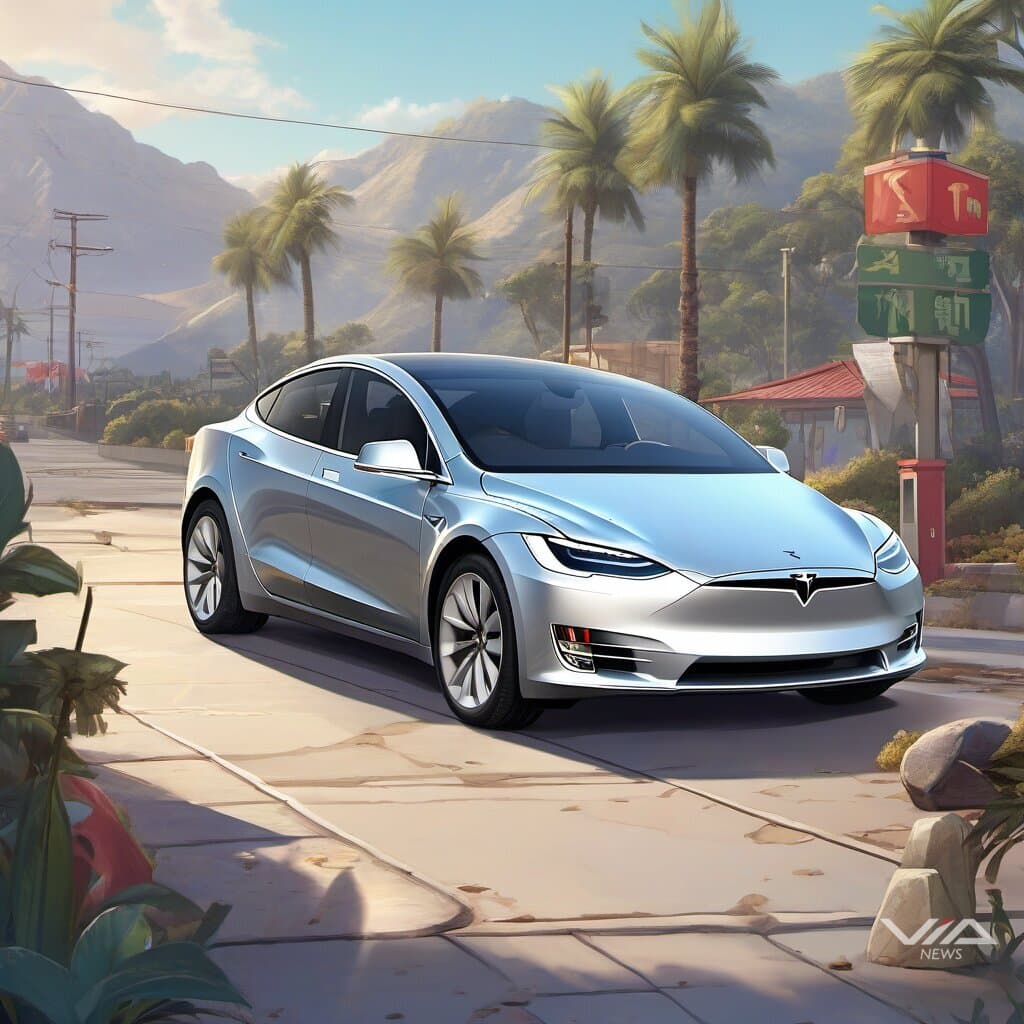
In early January 2026, Tesla (TSLA) reported a decline in its fourth-quarter 2025 vehicle production and deliveries, with figures standing at 434,358 vehicles produced and 418,227 delivered. Full-year deliveries reached 1.64 million units, marking Tesla's second consecutive year of declining sales. This downturn confirms that China’s BYD has now surpassed Tesla as the world’s largest electric vehicle (EV) seller. The shift underscores a maturing EV market where Tesla faces increasing competition and weaker incentives.
The Optimistic View
Tesla’s strategic pivot towards expanding its energy storage business and focusing on autonomous driving and robotaxi services presents significant opportunities. The energy storage division, including products like the Powerwall and Megapack, has shown strong growth potential. According to recent reports, Tesla’s energy storage business grew by over 50% in 2025, indicating robust demand for renewable energy solutions. Additionally, advancements in autonomous driving technology could unlock new revenue streams through services like robotaxis, which could transform urban mobility.
Analysts suggest that if Tesla can successfully transition into a diversified technology company, leveraging its strengths in energy storage and autonomous driving, it could maintain its competitive edge in the evolving EV market. This scenario would likely lead to sustained growth and increased investor confidence, potentially reversing the current downward trend in its stock price.
The Pessimistic View
However, the risks are substantial. Intensifying competition from BYD and other Chinese manufacturers could further erode Tesla’s market share, particularly in key markets like China. BYD’s aggressive pricing strategies and extensive dealer networks have already made significant inroads into Tesla’s customer base. Moreover, weakening consumer demand for EVs due to rising costs and reduced government incentives poses a significant threat to Tesla’s sales and profitability.
If Tesla fails to successfully pivot towards energy storage and autonomous driving, it could face severe financial distress. A prolonged period of declining sales and profitability could lead to a significant drop in its stock price, potentially resulting in bankruptcy or restructuring. This scenario highlights the critical importance of Tesla’s ability to adapt and innovate in response to changing market conditions.
System-Level Implications
The rise of BYD challenges Tesla’s dominance and could lead to a more fragmented market with increased competition and collaboration among players. This heightened competition is likely to drive innovation and efficiency improvements across the entire EV industry. For instance, the push towards more affordable EV options could alter consumer preferences and brand loyalty patterns, creating new opportunities for both established and emerging players in the market.
Additionally, the growing emphasis on energy storage and autonomous driving technologies could reshape the broader landscape of the automotive and energy sectors. These trends may foster greater integration between transportation and renewable energy systems, leading to more sustainable and efficient urban environments.
The Contrarian Perspective
A contrarian viewpoint suggests that Tesla’s current struggles might be temporary and that the company’s long-term prospects remain strong. Despite the recent declines, Tesla still holds a significant technological advantage in battery technology and autonomous driving capabilities. Furthermore, the company’s brand recognition and loyal customer base provide a solid foundation for future growth.
Moreover, Tesla’s global expansion strategy, including the opening of new manufacturing facilities and the introduction of new models tailored to different markets, could help mitigate the impact of local competition. By diversifying its product portfolio and geographic presence, Tesla may be able to regain momentum and reclaim its position as a leader in the EV market.
As the EV market continues to evolve, Tesla’s ability to navigate these challenges and capitalize on emerging opportunities will be crucial. The coming years will likely see a dynamic interplay between competition, innovation, and market adaptation, shaping the future of the automotive industry.
Multiple Perspectives
The Optimistic Case
Bulls believe that Tesla is poised for continued growth and success through strategic pivots into new markets. They argue that Tesla’s expansion into energy storage, such as with its Powerwall and Megapack products, opens up a vast and growing market. These energy storage solutions can cater to residential, commercial, and utility-scale applications, providing Tesla with a diverse revenue stream beyond automotive sales.
Additionally, bulls point to Tesla’s advancements in autonomous driving and the potential for its robotaxi service to revolutionize transportation. As technology matures and regulatory hurdles are overcome, this could unlock substantial new revenue opportunities. In this scenario, Tesla successfully transitions into a diversified technology company, maintaining its competitive edge while creating new avenues for growth and innovation.
The Pessimistic Case
Bears are concerned about the intensifying competition Tesla faces, particularly from Chinese manufacturers like BYD, which have been gaining significant market share, especially in crucial markets like China. This increased competition could erode Tesla’s market position and profitability. Bears also worry about weakening consumer demand for electric vehicles (EVs) due to rising costs and reduced government incentives, which could lead to lower sales and profitability for Tesla.
In this scenario, Tesla may struggle to maintain its current growth trajectory and could face a prolonged period of declining sales and profitability. If Tesla fails to successfully pivot towards energy storage and autonomous driving, it could face severe financial distress, potentially leading to a significant drop in its stock price or even bankruptcy.
The Contrarian Take
The consensus view often focuses on Tesla’s declining electric vehicle (EV) deliveries and its loss of global leadership to BYD, suggesting a weakening competitive position. However, contrarians argue that this perspective overlooks Tesla’s strategic pivot towards energy storage and autonomous driving. By diversifying its revenue streams, Tesla can reduce its reliance on traditional car sales and mitigate risks associated with the highly competitive EV market.
This shift could represent a significant strategic advantage, positioning Tesla to capitalize on emerging trends in renewable energy and advanced transportation technologies. While the transition may not be immediate, it offers a long-term vision that could sustain Tesla’s growth and competitiveness well into the future.
Deeper Analysis
Second-Order Effects
The decline in Tesla's market position and the rise of BYD could trigger several significant ripple effects:
- Innovation Acceleration: Intensified competition might drive both companies to innovate faster, leading to quicker advancements in battery technology, autonomous driving capabilities, and overall vehicle design.
- Market Fragmentation: The rise of BYD and other competitors could lead to a more fragmented market, reducing Tesla's monopoly and increasing the diversity of choices available to consumers.
- Economic Impact: Changes in market share can have broader economic impacts, such as shifts in supply chain dynamics and investment flows into different regions and technologies.
- Regulatory Pressure: Governments might increase regulatory scrutiny on dominant players like Tesla, pushing for more equitable practices and environmental standards.
Stakeholder Reality Check
The shift in the electric vehicle market affects various stakeholders in distinct ways:
- Workers: Tesla employees face potential job cuts or hiring freezes as the company adjusts to declining sales. Conversely, BYD's growth could lead to new job opportunities in manufacturing and engineering.
- Consumers: Consumers benefit from increased competition, which could lead to lower prices and more diverse models. However, brand loyalty might be tested as newer, more affordable options become available.
- Communities: Local economies tied to Tesla's operations might experience downturns, while areas where BYD operates could see economic booms. This could lead to shifts in local tax revenues and community investments.
Global Context
The rise of BYD and the decline of Tesla have significant international and geopolitical implications:
- Asian Dominance: The ascendance of BYD and other Asian manufacturers could solidify Asia's position as a global leader in electric vehicle technology, potentially shifting the balance of power in the automotive industry.
- National Pride and Policy: Countries like China and South Korea may use BYD's success to bolster national pride and justify further government support for domestic industries, including subsidies and favorable regulations.
- Global Trade Dynamics: Changes in market leadership could alter trade dynamics, with increased exports from Asian countries and potential shifts in import patterns in Europe and North America.
- Environmental Leadership: The rise of BYD and other Asian manufacturers could influence global efforts to combat climate change, potentially leading to stronger commitments from these nations in international agreements.
What Could Happen Next
Scenario Planning: Tesla's Future Amidst Market Challenges
Best Case Scenario (Probability: 35%)
In this scenario, Tesla successfully navigates through the current downturn by diversifying its business model. The company leverages its expertise in energy storage and autonomous driving technologies to create new revenue streams. By expanding its product line to include more affordable models and enhancing its solar and battery storage solutions, Tesla can regain market momentum. Additionally, strategic partnerships and acquisitions could strengthen its position against competitors like BYD. This scenario would likely result in a rebound in stock prices and renewed investor confidence.
Most Likely Scenario (Probability: 45%)
The most probable outcome involves Tesla experiencing a period of adjustment as it faces increased competition and shifts in consumer preferences. While Tesla may not regain its previous market dominance, it can still maintain a strong presence in the EV market by focusing on innovation and quality. The company might see moderate growth in its core EV business while also making strides in energy storage and autonomous driving. This balanced approach would help stabilize its financial performance and prevent a significant drop in stock value.
Worst Case Scenario (Probability: 20%)
In the worst-case scenario, Tesla struggles to compete effectively against rising rivals like BYD and other emerging EV manufacturers. If Tesla fails to adapt its business strategy and continues to face declining sales and profitability, it could enter a period of financial distress. This could lead to a significant drop in its stock price and potential restructuring, including layoffs or divestitures. In extreme cases, the company might face bankruptcy or be acquired by a larger competitor, fundamentally altering its future trajectory.
Black Swan (Probability: 5%)
An unexpected outcome that could dramatically affect Tesla's future is a sudden technological breakthrough that renders current EV technologies obsolete. For example, the development of a revolutionary battery technology that significantly reduces costs and increases efficiency could shift the entire EV market landscape. If Tesla is not at the forefront of such a breakthrough, it could face severe challenges in maintaining its competitive edge, potentially leading to a rapid decline in market share and stock value.
Actionable Insights
Actionable Insights
For Investors
Tesla's recent downturn presents both risks and opportunities within your portfolio. Consider diversifying your holdings by investing in companies that are expanding their energy storage solutions or those making strides in autonomous driving technology. Keep a close eye on Tesla's quarterly reports for any signs of improvement in their energy storage business and autonomous driving initiatives. Additionally, monitor the competitive landscape, particularly the performance of BYD and other Chinese manufacturers, as they continue to pose a significant threat to Tesla's market share.
For Business Leaders
The decline in Tesla's stock and deliveries signals a need for strategic adjustments. Focus on enhancing your company’s competitive edge through innovation in energy storage and autonomous driving technologies. Explore partnerships or acquisitions that can bolster these areas. Simultaneously, be prepared to adapt to changing consumer preferences and intensifying competition from Chinese manufacturers. This might involve reallocating resources towards more promising segments of the EV market or developing new products that cater to evolving consumer demands.
For Workers & Consumers
The negative impact on Tesla's workforce due to declining sales and production suggests potential job cuts or hiring freezes. If you're employed at Tesla, it may be prudent to explore additional training in emerging technologies such as energy storage and autonomous driving to enhance job security. For consumers, the weakening demand for EVs could lead to more competitive pricing as manufacturers vie for market share. However, the shift in focus towards energy storage and autonomous driving could also mean fewer new models hitting the market in the near term.
For Policy Makers
The shifting dynamics in the EV market highlight the importance of supportive policies that encourage innovation and investment in sustainable technologies. Consider implementing incentives for businesses that invest in energy storage solutions and autonomous driving technologies. Additionally, policies that foster a competitive yet collaborative environment between domestic and international manufacturers can help stabilize the market and ensure long-term growth. Monitoring the impact of these policies on employment and consumer access to affordable EVs will be crucial.
Signal vs Noise
The Real Signal
Tesla's recent decline in EV deliveries and its loss of the global EV crown to BYD highlight a broader shift in the automotive industry. This downturn signals not just a temporary dip but a potential long-term trend where Tesla must adapt to remain competitive.
The Noise
The media hype surrounding Tesla's fall from the top spot often overlooks the company's broader strategy. Focusing solely on vehicle sales numbers can be misleading as it doesn't account for Tesla's investments in energy storage and autonomous driving technologies, which are crucial for future growth.
Metrics That Actually Matter
- Energy Storage Revenue: Growth in Tesla's energy storage business, including Powerwall and Megapack sales, indicates diversification and resilience against market fluctuations in EV sales.
- Autopilot and Full Self-Driving (FSD) Adoption Rates: These metrics reflect progress in autonomous driving technology, which could significantly impact Tesla’s valuation and future revenue streams.
- Global Market Share in Energy Storage: Tracking Tesla's share in the rapidly growing energy storage market provides insight into its ability to compete beyond traditional automotive sectors.
Red Flags
A persistent decline in vehicle delivery numbers without corresponding growth in other areas like energy storage or autonomous driving could indicate deeper operational issues. Additionally, if Tesla fails to maintain or increase its market share in emerging markets, it may struggle to regain its position as a leading EV manufacturer.
Historical Context
Historical Context
Similar Past Events:
In 2019, Tesla faced significant challenges with the Model 3 production ramp-up, leading to delays and financial strain. Additionally, in 2016, Tesla's first-quarter delivery numbers fell short of expectations, causing a significant drop in stock price.
What Happened Then:
Tesla managed to overcome the Model 3 production issues by implementing innovative manufacturing techniques and streamlining processes. By the end of 2019, the company had achieved record deliveries and production levels, leading to a surge in stock value. In 2016, after addressing supply chain and logistics issues, Tesla rebounded, achieving higher delivery numbers and stabilizing its stock performance.
Key Differences This Time:
This time, Tesla faces not just internal production challenges but also increased competition from established automakers like BYD, which have leveraged their extensive manufacturing experience and economies of scale. The global electric vehicle market is more mature, with a broader range of models and brands competing for market share.
Lessons from History:
Past events highlight Tesla's ability to innovate and adapt to overcome significant operational hurdles. However, the current scenario underscores the importance of not only maintaining production efficiency but also staying ahead in technological advancements and market strategy to compete effectively against new and formidable rivals. Tesla must continue to invest in R&D and strategic partnerships to sustain growth and maintain leadership in the evolving EV landscape.