
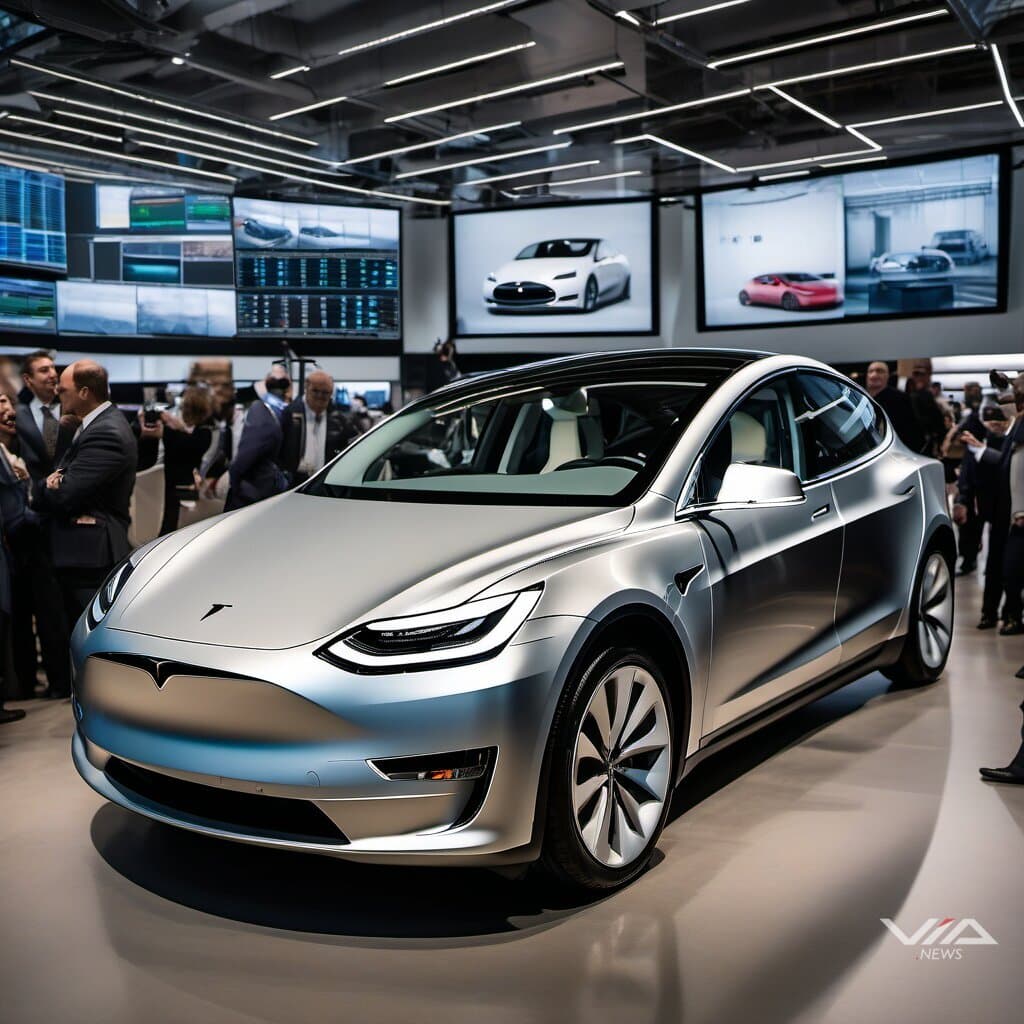
Tesla, the electric vehicle (EV) giant, recently reported a nearly 16% decline in EV deliveries for the fourth quarter of 2023. Despite this setback, investors have maintained a bullish outlook, focusing instead on Tesla's emerging robotaxi fleet and other innovative initiatives.
The Optimistic View
The market's optimism stems from Tesla's potential to diversify its revenue streams through the expansion into the robotaxi market. Analysts believe that if Tesla successfully launches its robotaxi service across multiple cities, it could generate substantial recurring revenue. Additionally, the Optimus humanoid robots could create a new revenue stream by entering various sectors such as manufacturing and logistics.
The potential for high margins in the robotaxi business is another factor driving investor confidence. Tesla aims to produce autonomous vehicles at a lower cost compared to competitors, which could provide a significant competitive advantage. If Tesla achieves widespread adoption of its robotaxi service, it could enhance the company's valuation and offset the current struggles in the EV market, thereby stabilizing its financial performance.
The Pessimistic View
However, there are significant risks associated with Tesla's ambitious plans. Overreliance on unproven technologies such as robotaxis and humanoid robots could lead to unforeseen challenges. If Tesla fails to successfully commercialize these initiatives, it could result in a prolonged period of declining revenues and profits, potentially leading to a significant devaluation of the company's market capitalization.
Intense competition from established automakers and new entrants in the EV market is another concern. As Tesla's market share declines, other manufacturers like BYD, Rivian, and Lucid could capitalize on this opportunity, leading to further consolidation in the industry. This increased competition could erode Tesla's market position and make it challenging for the company to regain its former dominance.
System-Level Implications
The reduction in Tesla's market share has broader implications for the automotive supply chain. As Tesla reduces orders from suppliers, it could impact their profitability and investment decisions. This disruption could lead to a shift in the competitive landscape, with more diversified players gaining ground.
Increased competition in the EV sector could also accelerate technological advancements and innovation. Other manufacturers might adopt similar strategies to compete with Tesla, leading to a more dynamic and competitive market environment overall.
The Contrarian Perspective
While the market is currently focused on Tesla's emerging technologies, some analysts argue that the immediate impact of these innovations may be overestimated. Scaling these technologies to a level where they can significantly contribute to Tesla's bottom line will likely face numerous challenges, including regulatory hurdles, technological limitations, and consumer acceptance.
The market may be underestimating the difficulties Tesla faces in maintaining its leadership in the EV market. As competition intensifies, Tesla will need to continue innovating and improving its core business to remain relevant and profitable.
In conclusion, while Tesla's recent decline in EV deliveries is concerning, the company's future remains uncertain. The success of its emerging technologies will play a crucial role in determining Tesla's long-term prospects. Investors should remain cautious and consider both the potential rewards and the inherent risks associated with Tesla's ambitious plans.
Multiple Perspectives
The Optimistic Case
Bulls believe that Tesla’s expansion into the robotaxi market and the development of its Optimus humanoid robots represent significant opportunities for diversification and growth. They argue that Tesla’s ability to produce autonomous vehicles at a lower cost than competitors could lead to high margins in the robotaxi business. If Tesla successfully launches its robotaxi service across multiple cities, it could generate substantial recurring revenue. Additionally, the Optimus robots gaining traction in various sectors could create a new revenue stream, further enhancing Tesla’s valuation. Bulls are optimistic that these initiatives will not only diversify Tesla’s revenue but also solidify its position as a leader in both electric vehicle and autonomous technology markets.
The Pessimistic Case
Bears express concern over Tesla’s reliance on unproven technologies such as robotaxis and humanoid robots. They argue that these initiatives may not achieve the projected scale or profitability, leading to a prolonged period of declining revenues and profits. Intense competition from established automakers and new entrants in the EV market could erode Tesla’s market share, exacerbating financial difficulties. Bears fear that if Tesla fails to successfully commercialize its robotaxi and humanoid robot projects, it could result in a significant devaluation of the company’s market capitalization, potentially leading to a stock price collapse and widespread investor disappointment.
The Contrarian Take
The contrarian view suggests that while investors are excited about Tesla’s emerging technologies like the robotaxi fleet and Optimus humanoid robots, they may be overestimating the immediate impact of these innovations. The market might be overlooking the significant challenges in scaling these technologies effectively. Contrarians argue that the consensus is too focused on the potential of these new ventures and not enough on the practical hurdles Tesla must overcome to make them viable. This perspective highlights the importance of considering both the promise and the risks associated with Tesla’s ambitious technological endeavors.
Deeper Analysis
Second-Order Effects
The decline in Tesla's EV deliveries may trigger several second-order effects that could reshape the automotive industry. One significant consequence is the potential realignment of supply chains. As Tesla scales back orders, suppliers might face financial strain, prompting them to seek new partnerships or diversify their client base. This could lead to a more fragmented supplier ecosystem, with smaller players gaining prominence as they adapt to the changing demands of the market.
Another ripple effect is the acceleration of innovation among competitors. With Tesla facing challenges, companies like BYD, Rivian, and Lucid Motors may step up their game, introducing new technologies and features to capture a larger share of the market. This could result in a faster pace of technological advancement within the EV sector, benefiting consumers with more advanced and affordable options.
Stakeholder Reality Check
Workers: The impact on Tesla employees is likely to be significant. Reduced production volumes could translate into fewer jobs or slower hiring, affecting not just those directly employed by Tesla but also those working in ancillary roles such as sales and service. The ripple effect extends to suppliers and contractors who rely on Tesla's orders for their livelihoods.
Consumers: For buyers of Tesla vehicles, the decline in deliveries might mean longer wait times for new cars, potentially pushing some towards competitors. However, Tesla's brand loyalty remains strong, and many consumers may still prefer waiting for a Tesla over switching to another brand. The focus on new initiatives like the robotaxi fleet could also attract early adopters interested in cutting-edge technology.
Communities: Local economies around Tesla's manufacturing hubs could experience a slowdown if job losses occur. This includes areas surrounding Tesla's Gigafactories, where the company's presence has been a significant driver of economic activity. Communities may need to adapt by fostering a more diverse industrial base to mitigate the risks associated with reliance on a single major employer.
Global Context
- Asian Markets: In Asia, particularly China, Tesla's struggles present an opportunity for domestic automakers to expand their market share. Companies like BYD are well-positioned to capitalize on this situation, potentially leading to increased investment in local manufacturing and battery technology. This could strengthen China's position in the global EV market and influence international trade dynamics.
- European Union: European automakers, already investing heavily in EV technology, may see Tesla's challenges as a chance to accelerate their own growth. The EU's push for sustainable transportation could benefit from a more competitive landscape, driving down costs and improving the overall quality of EVs available to consumers.
- North America: In North America, the decline in Tesla's deliveries could spur greater collaboration between traditional automakers and tech companies to develop innovative solutions. This could lead to a more integrated approach to EV development, combining automotive expertise with technological advancements.
What Could Happen Next
Scenario Planning
Best Case Scenario (Probability: 25%)
In this scenario, Tesla successfully launches its robotaxi service across multiple cities, achieving rapid adoption and generating substantial recurring revenue. The Optimus humanoid robots also find widespread application in manufacturing, construction, and logistics, creating a new revenue stream that enhances Tesla's valuation. Additionally, Tesla manages to maintain strong relationships with key suppliers and regulators, ensuring a stable supply chain and regulatory environment. This scenario would likely drive Tesla's stock price significantly higher, potentially reaching or exceeding the $2,600 price target set by Cathie Wood of Ark Invest.
Most Likely Scenario (Probability: 50%)
A balanced assessment suggests that Tesla will face challenges in scaling up its robotaxi and Optimus robot initiatives but will still achieve some level of success. While these new ventures may not fully offset declining EV sales, they contribute positively to Tesla’s overall financial health. The company continues to innovate and improve its core electric vehicle offerings, maintaining a competitive edge in the market. However, increased competition from companies like BYD, Rivian, and Lucid will put pressure on Tesla's market share. This scenario would result in moderate growth in Tesla's stock price, reflecting a steady but cautious investor sentiment.
Worst Case Scenario (Probability: 20%)
In the worst-case scenario, Tesla fails to successfully commercialize its robotaxi and humanoid robot initiatives, leading to a prolonged period of declining revenues and profits. The company faces significant supply chain disruptions as it reduces orders from suppliers, impacting their profitability and investment decisions. This results in a significant devaluation of Tesla's market capitalization, potentially leading to a stock price collapse and widespread investor losses. Competitors take advantage of Tesla's struggles, leading to further consolidation in the EV sector and a shift in market dynamics.
Black Swan (Probability: 5%)
An unexpected outcome could be a sudden technological breakthrough by a competitor that renders Tesla's current technologies obsolete. For example, the emergence of a new battery technology that drastically improves range and charging times, or an innovative autonomous driving system that outperforms Tesla's capabilities. Such a development could rapidly erode Tesla's competitive advantage and lead to a sharp decline in its market position and stock value.
Actionable Insights
Actionable Insights
For Investors
Tesla's recent decline in EV deliveries by nearly 16% presents both challenges and opportunities. Investors should focus on the company's expansion plans into the robotaxi market, which could diversify revenue streams and potentially offer high margins. However, caution is advised due to the overreliance on unproven technologies like autonomous vehicles and humanoid robots. Monitor the progress of these initiatives closely, as they will be key indicators of future growth. Additionally, keep an eye on Tesla's financial health and competitive landscape, particularly how it responds to pressure from established automakers and new entrants.
For Business Leaders
The strategic response to Tesla's declining EV sales and its push into new markets like robotaxis should involve a dual approach. On one hand, consider strengthening your own electric vehicle offerings to compete directly with Tesla. On the other hand, explore partnerships or investments in autonomous driving technology to capitalize on the growing demand for mobility solutions. Evaluate the potential risks associated with emerging technologies and ensure robust R&D investments to stay ahead of the curve.
For Workers & Consumers
The decline in Tesla's EV deliveries suggests a challenging period for employment within the company, particularly in manufacturing and sales roles. Workers should prepare for potential job cuts or reduced hiring and consider upskilling in areas related to autonomous driving and robotics. For consumers, the shift towards new markets like robotaxis might lead to innovative services but could also result in higher prices initially. Stay informed about Tesla’s product launches and pricing strategies to make informed purchasing decisions.
For Policy Makers
The regulatory environment surrounding Tesla's expansion into autonomous driving and robotaxis requires careful consideration. Policymakers should work on developing frameworks that support innovation while ensuring safety and ethical standards. This includes setting guidelines for testing autonomous vehicles on public roads and addressing privacy concerns related to data collection. Additionally, policies should encourage collaboration between tech companies and traditional automakers to foster a balanced ecosystem that benefits all stakeholders.
Signal vs Noise
The Real Signal
Tesla's recent decline in EV deliveries by nearly 16% highlights a significant challenge in maintaining growth momentum in a highly competitive market. This decline underscores the need for Tesla to diversify its revenue sources beyond traditional electric vehicle sales.
The Noise
The media hype surrounding Tesla's emerging technologies, such as the robotaxi fleet and Optimus humanoid robots, might be overshadowing the current financial performance and operational challenges. While these innovations hold promise, they are still in early stages and their immediate impact on Tesla’s bottom line is uncertain.
Metrics That Actually Matter
- Quarterly Delivery Numbers: Tracking quarterly delivery numbers will provide insights into Tesla's ability to maintain or grow its core business.
- Robotaxi Fleet Rollout Timeline: Monitoring the timeline and scale of the robotaxi fleet rollout can indicate progress in diversifying revenue streams.
- Operating Margins: Observing changes in operating margins can reveal how effectively Tesla is managing costs and improving profitability across different product lines.
Red Flags
A key warning sign is the potential for overestimation of the immediate financial benefits from emerging technologies. Scaling these innovations requires substantial investment and time, and any delays or cost overruns could negatively impact Tesla’s financial health and investor sentiment.
Historical Context
Historical Context
Similar Past Events:
In the early 2000s, General Motors (GM) faced a significant decline in sales and profitability due to increased competition and economic downturns. GM's traditional automotive business struggled, but the company was also investing heavily in new technologies and alternative energy sources.
What Happened Then:
The decline in GM's core business led to a series of restructuring efforts, including layoffs and plant closures. Despite these challenges, GM's investments in hybrid technology and electric vehicles eventually paid off, contributing to its recovery and positioning it as a leader in the evolving automotive landscape.
Key Differences This Time:
Tesla operates in a highly competitive yet rapidly growing electric vehicle market, with a strong brand presence and a diversified portfolio that includes not just cars but also energy storage solutions and autonomous driving technologies. Unlike GM, Tesla has managed to maintain high valuations despite fluctuations in its core business, thanks to investor optimism about its future potential.
Lessons from History:
The experience of GM highlights the importance of strategic investment in emerging technologies during times of industry disruption. For Tesla, the focus on developing a robotaxi fleet and other innovative initiatives could similarly position it as a leader in the future of transportation, much like GM's investments in hybrid technology. However, Tesla must continue to innovate and adapt to remain competitive in an increasingly crowded field.