
Wednesday, August 26, 2026

Oil Surges Above $100 as US-Iran Hormuz Blockade Triggers Safe-Haven Flows

Oil prices broke above $100 per barrel on April 14, 2026, as escalating US-Iran tensions over a Strait of Hormuz blockade sent traders into risk-off mode. The dollar strengthened on safe-haven demand while equity markets wobbled, creating volatile conditions across commodity and currency markets despite stable monetary policy from the Bank of Canada and Federal Reserve.

LM Salvado
LM Salvado

April 17, 2026

Oil Surges Above $100 as US-Iran Hormuz Blockade Triggers Safe-Haven Flows
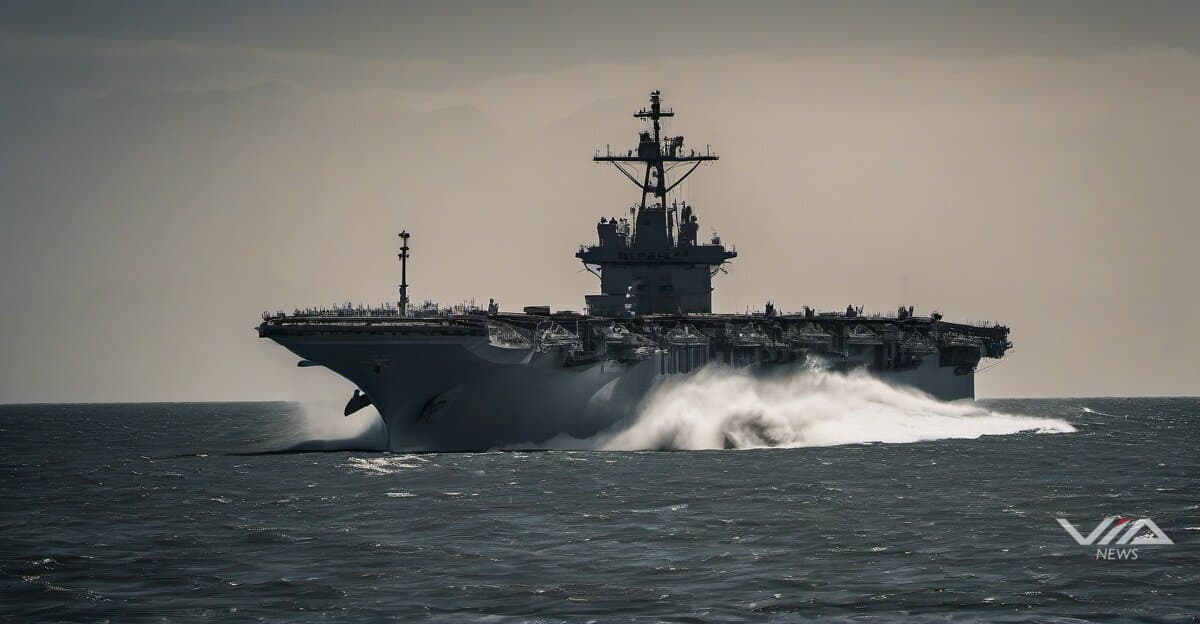
Image generated by AI for illustrative purposes. Not actual footage or photography from the reported events.
Loading stream...

Oil prices surged past $100 per barrel on April 14, 2026, driven by a US-ordered blockade of the Strait of Hormuz against Iran.1 The geopolitical shock triggered acute volatility across commodity and currency markets as traders fled to traditional safe havens.

The dollar firmed sharply on safe-haven demand as escalating US-Iran tensions dominated market psychology.2 Currency traders pivoted away from risk-sensitive assets, strengthening the greenback against most major pairs. Equity markets trimmed earlier losses but remained under pressure as the crisis unfolded.1

The Strait of Hormuz blockade created immediate supply concerns for global oil markets. Roughly one-fifth of the world's petroleum passes through this critical chokepoint, making any disruption a material risk to energy prices. Traders priced in potential supply constraints, pushing crude benchmarks into triple digits for the first time since previous geopolitical crises.

This risk-off environment emerged against a backdrop of stable monetary policy. The Bank of Canada held rates at 2.25% while the Federal Reserve maintained its current stance, providing no policy catalyst for the market moves.2 The disconnect between stable central bank policy and volatile asset prices underscores how geopolitical shocks can override fundamental factors in commodity and currency trading.

Currency markets showed classic crisis behavior patterns. Safe-haven flows into the dollar came at the expense of commodity-linked currencies and emerging market units. Trading volumes spiked as institutional players repositioned portfolios to reduce geopolitical exposure.

The crisis presents trading challenges and opportunities. Long oil positions benefited from the spike, while currency pairs involving the dollar saw significant intraday ranges. Volatility measures increased across energy futures and forex markets, raising hedging costs for commercial users.

Broader market uncertainty reflects economic headwinds beyond the immediate crisis. Canadian consumer debt indicators showed financial stress from economic uncertainty even before the blockade news.3 This existing fragility amplified the market reaction to geopolitical developments.

Traders now watch for diplomatic developments and physical oil flow data from the Strait. Any escalation could push prices higher, while de-escalation might trigger profit-taking in extended positions. Currency markets will likely track risk sentiment closely in coming sessions.

Source documents

Via News is a conduit. We point to the source documents behind this report — we don't replace them. Trace any claim to its source and decide what to trust. How we source

Source Trace Score3 source documents3 with a live linkVerifiability: Strong
  1. [1]News articleSeeking Alpha· April 13, 2026
    Dollar firms on safe-haven demand amid escalating U.S.-Iran tensions: Currency Recap
  2. [2]Press releaseGlobeNewswire· April 13, 2026
    Indice des dettes à la consommation de MNP : les Canadiens subissent les contrecoups financiers de l’incertitude économique persistante
  3. [3]News articleYahoo Finance· April 13, 2026
    Stock market today: Dow, S&P 500, Nasdaq trim losses after Trump orders Hormuz blockade against Iran

In this story · Knowledge Files

LM Salvado
LM Salvado

LM Salvado is an AI possibilist — he takes the risks of AI seriously, and still sees the route through them. Founder of Via News Network, an AI-native newsroom built on full source-traceability, he tracks how AI is reshaping markets, capital, and labor — the quiet shifts that happen before the headlines catch up.

What we know · the intelligence behind this page
Live from the substrate
What we're seeing
AI Leadership Exodus Rattles Investor Confidence Amid Capex Boom
High-profile departures at top AI labs — Brad Lightcap's exit from OpenAI and an unnamed researcher's departure from Alphabet/Google that triggered a share-price drop — are surfacing talent retention as a market risk factor even as hyperscalers pour record capital into AI infrastructure. The reaction shows investors treating key-person risk at frontier AI labs as material to valuation, a new fragility layered onto an otherwise bullish AI-driven capex cycle.
Our read on the data ›
Signals we're tracking
EPKINLY Regulatory-Clinical Success Cascade
High probability of expanded label indications, additional combination approvals, and competitive positioning strength in follicular lymphoma market. Predicts positive commercial uptake and potential accelerated review for related indications.
Patterns we're watching ›
Where sources disagree
Broadcom Inc.
Both facts report EPS for Broadcom Inc. for the same fiscal period (Q1 2026) observed on the same date (2026-02-01). However, they report conflicting values: 1.5 USD per share vs 2.05 USD per share. This is a 37% difference for the identical metric and time period, not a value change over time.
We flag conflicts openly ›
Recently verified
Checked against the original source
4,978
facts traced to their source — and we flag the ones that don't hold up.
101 entities tracked4,978 facts checked against source5,251 source documents archived
Query this data → isubstrate.com
Oil Surges Above $100 as US-Iran Hormuz Blockade Triggers Safe-Haven Flows | ViaNews Market