
Wednesday, August 26, 2026

Alpha Metallurgical Resources Faces 70% Confidence Climate Risk as Steel Industry Shifts to Green Hydrogen

Alpha Metallurgical Resources, Inc. confronts a catastrophic regulatory risk rating as steel manufacturers accelerate decarbonization plans that eliminate metallurgical coal demand. The Appalachian coal miner's core business model faces medium-likelihood disruption with 70% analyst confidence as major steel producers pilot hydrogen-based direct reduction technologies.

Alpha Metallurgical Resources Faces 70% Confidence Climate Risk as Steel Industry Shifts to Green Hydrogen
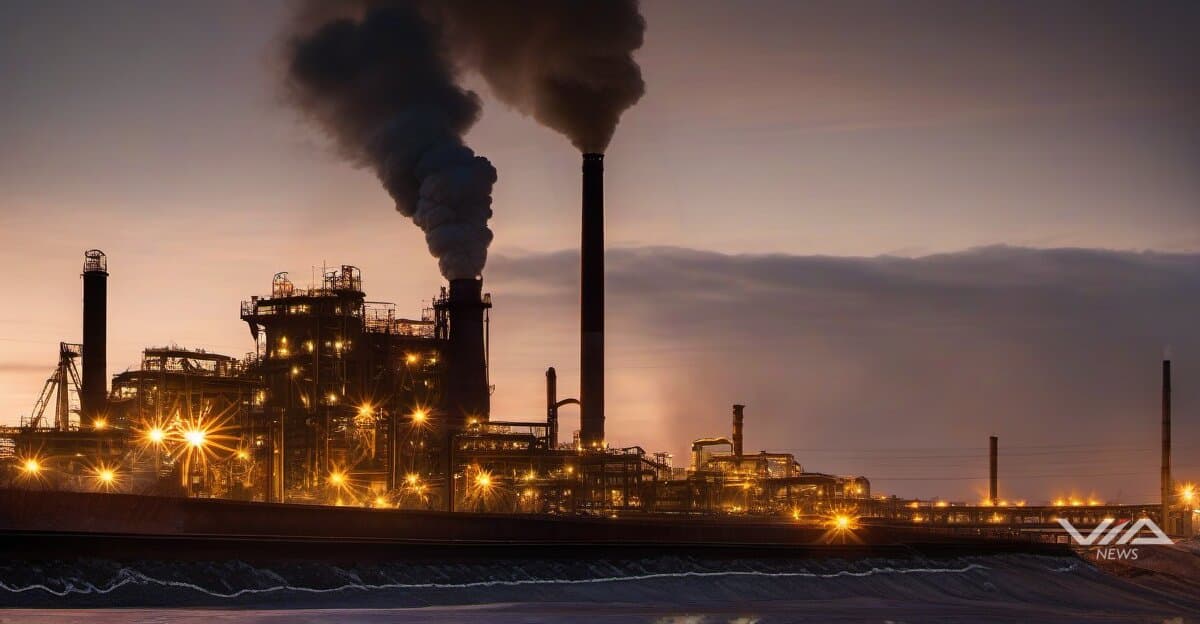
Image generated by AI for illustrative purposes. Not actual footage or photography from the reported events.
Loading stream...

Alpha Metallurgical Resources, Inc. received a catastrophic climate transition risk assessment with 70% confidence as the steel industry accelerates away from metallurgical coal. The regulatory risk centers on steel manufacturers adopting hydrogen-based direct reduction and electric arc furnace technologies that bypass traditional blast furnaces requiring met coal.

The Appalachian coal producer supplies metallurgical coal to steel mills that use blast furnace-basic oxygen furnace production methods. These facilities consume 770 kg of met coal per ton of steel. Hydrogen-based direct reduction eliminates this input entirely, replacing coal with green hydrogen to strip oxygen from iron ore.

ArcelorMittal's Hamburg plant and SSAB's Oxelösund facility already operate commercial-scale hydrogen steelmaking units. ThyssenKrupp committed €3 billion to convert two German blast furnaces by 2026. China Baowu Steel, producing 120 million tons annually, targets carbon neutrality by 2050 with hydrogen trials underway at multiple sites.

Met coal prices averaged $310 per ton in Q4 2025, down from $615 in Q1 2022. Alpha Metallurgical Resources maintains cost discipline with cash operating costs below $80 per ton at its Appalachian operations. The company shipped 14.2 million tons of met coal in 2025.

European Union carbon border adjustment mechanisms price steel imports based on production emissions. Steel made with met coal incurs €50-75 per ton in carbon costs at current EU allowance prices. Hydrogen-based steel avoids these charges, creating a €50-75 per ton cost advantage before coal input savings.

Industry analysts project met coal demand could decline 40% by 2040 as electric arc furnaces using scrap steel and direct reduced iron capture market share. Traditional blast furnaces represented 71% of global steel production in 2025. New blast furnace construction approvals dropped 83% from 2020 to 2025.

Alpha Metallurgical Resources generated $287 million free cash flow in the first nine months of 2025. The company returned capital through dividends and buybacks while maintaining operational efficiency. Management has not announced diversification plans beyond metallurgical coal mining operations.

What we know · the intelligence behind this page
Live from the substrate
What we're seeing
AI Leadership Exodus Rattles Investor Confidence Amid Capex Boom
High-profile departures at top AI labs — Brad Lightcap's exit from OpenAI and an unnamed researcher's departure from Alphabet/Google that triggered a share-price drop — are surfacing talent retention as a market risk factor even as hyperscalers pour record capital into AI infrastructure. The reaction shows investors treating key-person risk at frontier AI labs as material to valuation, a new fragility layered onto an otherwise bullish AI-driven capex cycle.
Our read on the data ›
Signals we're tracking
EPKINLY Regulatory-Clinical Success Cascade
High probability of expanded label indications, additional combination approvals, and competitive positioning strength in follicular lymphoma market. Predicts positive commercial uptake and potential accelerated review for related indications.
Patterns we're watching ›
Where sources disagree
Broadcom Inc.
Both facts report EPS for Broadcom Inc. for the same fiscal period (Q1 2026) observed on the same date (2026-02-01). However, they report conflicting values: 1.5 USD per share vs 2.05 USD per share. This is a 37% difference for the identical metric and time period, not a value change over time.
We flag conflicts openly ›
Recently verified
Checked against the original source
4,978
facts traced to their source — and we flag the ones that don't hold up.
101 entities tracked4,978 facts checked against source5,251 source documents archived
Query this data → isubstrate.com