
Monday, October 26, 2026

Gold Fields Halts Mining at Damang Operation in Ghana, Shifts to Stockpile Processing

Gold Fields stopped mining at its Damang operation in Ghana in early 2025, transitioning to stockpile processing as ore reserves deplete. The shift signals the wind-down phase for one of Ghana's established gold mines. The operational change reduces active gold production capacity in West Africa's mining sector.

Gold Fields Halts Mining at Damang Operation in Ghana, Shifts to Stockpile Processing
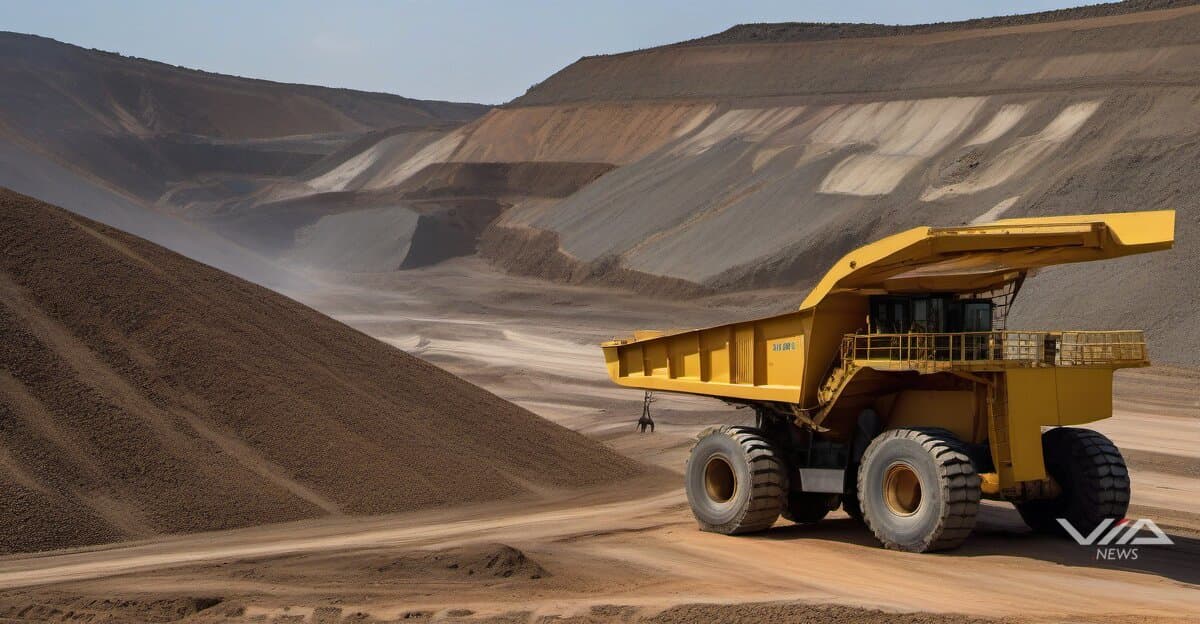
Image generated by AI for illustrative purposes. Not actual footage or photography from the reported events.
Loading stream...

Gold Fields ceased mining operations at Damang in Ghana early in 2025, shifting the site to stockpile processing only. The transition indicates ore body exhaustion at the mine, which has been a producing asset in Ghana's gold belt.

Mining companies typically move to stockpile processing when economically viable ore reserves are depleted. At Damang, this means no new material extraction—only processing of previously mined ore still on-site. Production volumes will decline as stockpiles run out.

The operational change affects Ghana's gold output. Ghana ranks among Africa's top gold producers, with mining contributing significantly to export revenue. Damang's transition removes active mining capacity from the country's production base.

Gold Fields operates multiple mines globally, including South Deep in South Africa and operations in Australia and Peru. Damang's shift to care-and-maintenance mode represents a portfolio adjustment as the company focuses capital on higher-grade deposits elsewhere.

Mine depletion timelines vary by deposit geology and economics. When gold prices rise, previously sub-economic ore can become viable, sometimes extending mine life. At current gold prices near record highs above $2,800 per ounce, the decision to halt mining at Damang suggests reserves fell below economic thresholds even in favorable market conditions.

The transition carries local economic implications. Mining operations employ more workers than stockpile processing. Communities near Damang face reduced employment and economic activity as the operation scales down.

For investors tracking gold mining stocks, Damang's operational shift is a reminder that mine life cycles affect company production profiles. Gold Fields' production guidance will reflect reduced output from Damang as stockpiles deplete over coming quarters.

The broader sector faces similar dynamics at aging mines. Replacing depleted reserves requires exploration success or acquisitions, both capital-intensive. Companies unable to replenish reserves see production decline over time, affecting valuations and cash flow.

What we know · the intelligence behind this page
Live from the substrate
What we're seeing
Q4 2026 Biotech Catalyst Window: ESMO Data, the Ivonescimab PDUFA and Small-Cap Delistings
Mid-October to November 2026 is a dense catalyst period for clinical-stage biotech. Positive late-stage readouts (ALOFT-IPF, TELIGAN, MIUDELLA, the duvakitug extension) and the ESMO 2026 presentations lead up to the FDA's 14 November PDUFA date for the ivonescimab BLA. At the opposite end of the market, Spago Nanomedical is moving to delist from Nasdaq First North, which shows how hard it is for micro-cap developers to fund themselves. Value is concentrating in companies with late-stage data and near-term regulatory outcomes.
Our read on the data ›
Signals we're tracking
EPKINLY Regulatory-Clinical Success Cascade
High probability of expanded label indications, additional combination approvals, and competitive positioning strength in follicular lymphoma market. Predicts positive commercial uptake and potential accelerated review for related indications.
Patterns we're watching ›
Where sources disagree
Ford Motor Company
Both facts give cash for Ford Motor Company at the same point in time (2025-12-31; FY 2025 year-end and Q4 2025 year-end are the same date). Both are labelled USD, but the values are 23,356,000,000 and 23.356, which cannot both be true in USD. The two numbers agree once the second is read as billions (23.356 bn = 23,356,000,000), so the economic content is consistent and the conflict is a unit/scale error in the Q4 2025 record. The period is not the reason for the conflict: a Q4 and an FY figure at the same year-end date should match.
We flag conflicts openly ›
Recently verified
✓ Checked against the original source
4,994
facts traced to their source — and we flag the ones that don't hold up.
101 entities tracked4,994 facts checked against source5,500 source documents archived
Query this data → isubstrate.com