
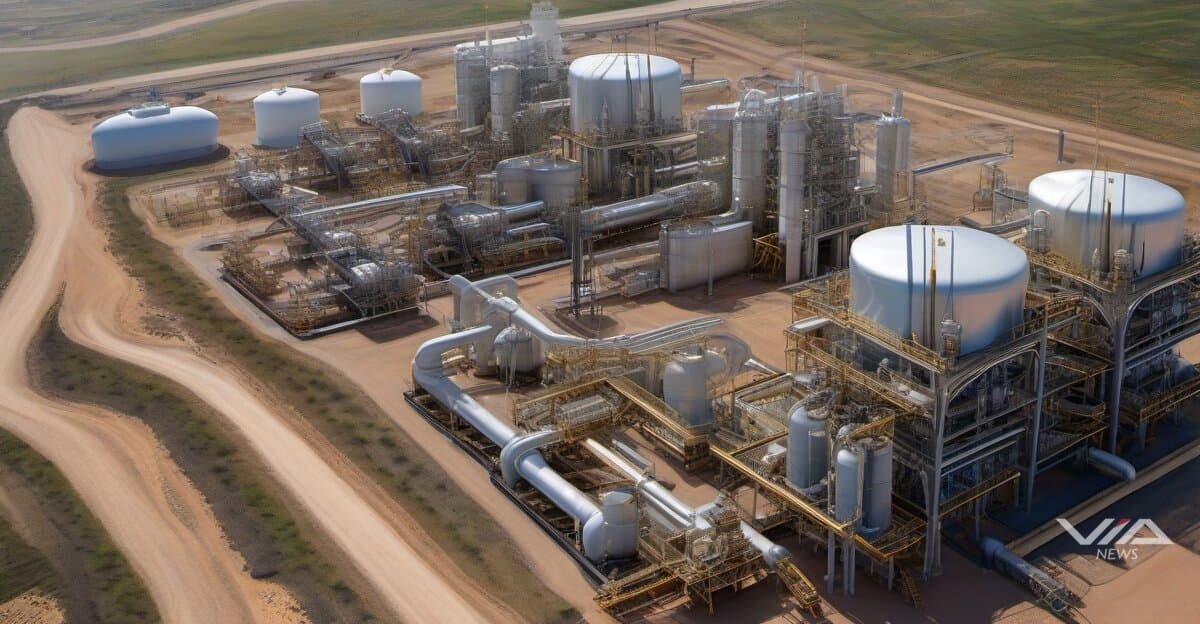
MPLX LP plans to launch its Secretariat I and II natural gas processing plants in the Permian Basin, adding a combined 500 million cubic feet per day (MMcf/d) of capacity. The facilities will come online between late 2026 and 2028.
The expansion targets the Permian's growing gas production, which has climbed alongside oil output. Processing capacity additions could ease regional bottlenecks that have periodically constrained takeaway options for producers.
Natural gas prices face headwinds from surging U.S. production. Henry Hub futures traded near $3.50 per million BTU in early 2026, down from 2022's peak above $9. New processing capacity entering a supply-heavy market may limit price recovery prospects through 2028.
MPLX, the midstream arm of Marathon Petroleum, operates gathering, processing, and pipeline assets across major U.S. shale plays. The company reported $2.8 billion in operating revenue for Q3 2024, with gathering and processing generating 40% of total segment income.
Permian gas output reached 22 billion cubic feet per day in late 2024, representing 20% of total U.S. production. Associated gas from oil drilling continues to grow faster than pipeline evacuation capacity in some areas, creating periodic basis differentials of $1-2 per MMBtu below Henry Hub.
The Secretariat plants will process raw natural gas into pipeline-quality methane while extracting natural gas liquids including ethane, propane, and butane. NGL prices have weakened alongside crude oil, with propane averaging $0.80 per gallon in early 2026 versus $1.20 in 2022.
Midstream companies face margin pressure as commodity price volatility impacts fee structures tied to percentage-of-proceeds contracts. Fixed-fee arrangements provide more stable cash flows but represent only 60% of MPLX's processing contracts.
The 2026-2028 timeline assumes regulatory approvals and construction proceed on schedule. Supply chain delays and permitting extensions have pushed similar projects back 6-12 months in recent years. Demand growth from LNG exports and industrial users will determine whether new capacity tightens or loosens regional markets.