
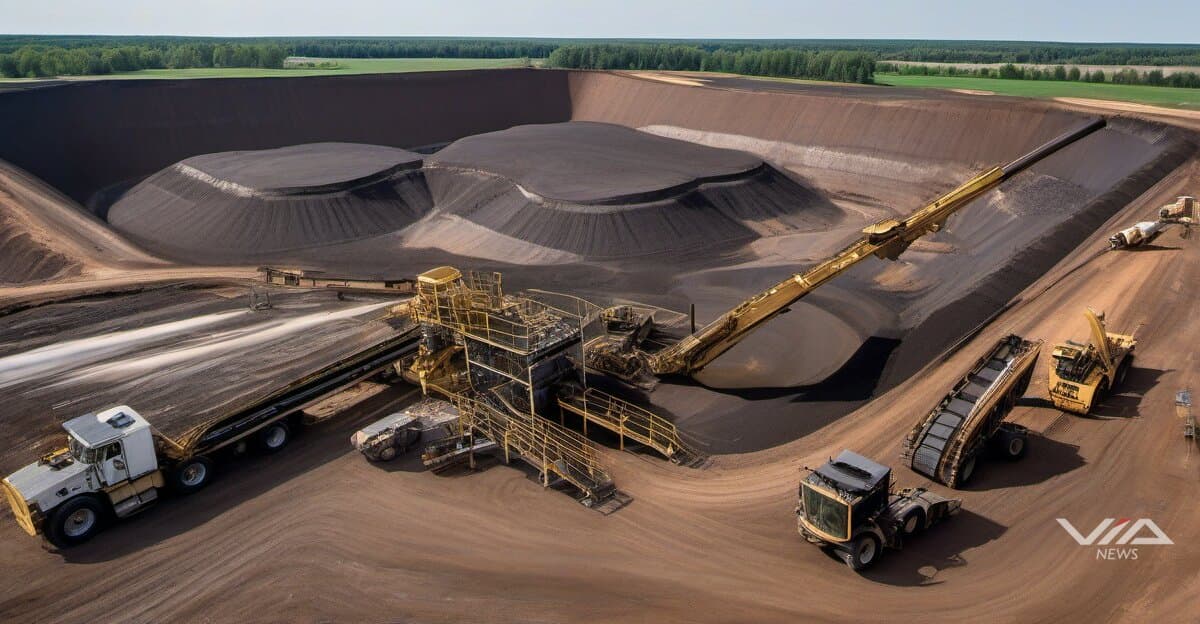
Talon Metals' Minnesota nickel project faces technology failure risks that could derail domestic battery supply ambitions, despite a low likelihood assessment. The company's processing methods must economically extract nickel from ore bodies while meeting battery manufacturers' quality specifications.
The primary risk involves ore characteristics differing from proven deposits. If extraction proves uneconomical or output fails quality tests, the project could collapse entirely. Battery-grade nickel requires 99.8% purity minimum—processing failures below this threshold eliminate market viability.
North American automakers pursuing EV production rely on domestic nickel sources to reduce China supply chain exposure. Talon's Minnesota deposit represents one of few U.S. nickel projects in development. A technology failure would force manufacturers back to Indonesian or Russian suppliers, increasing price volatility and geopolitical risk.
Nickel prices trade at $16,500 per metric ton as of February 2026. A major U.S. project failure could spike prices 15-20% short-term as traders price in continued import dependence. The EV battery industry consumes 300,000 tons of nickel annually, growing 25% yearly through 2030.
Processing technology risks stem from scaling lab results to commercial production. Ore mineralization, sulfur content, and trace elements impact extraction efficiency. Minnesota's Duluth Complex geology differs from proven Canadian Shield deposits where most nickel processing methods were developed.
Battery manufacturers including LG Energy Solution and Panasonic require multi-year supply contracts with penalty clauses for quality failures. A processing breakdown would trigger contract defaults, credit downgrades, and project financing collapses. Talon would face restructuring or asset sales.
The 0.7 confidence assessment reflects limited production data from similar ore types. Pilot plant results provide initial validation, but commercial-scale operations reveal problems invisible at smaller volumes. The severity rating as catastrophic acknowledges the binary outcome—the technology either works economically or it doesn't.
Investors pricing Talon equity must weigh this tail risk against domestic supply premiums. The company's valuation assumes successful production, but a tech failure zeroes the Minnesota asset value overnight.