
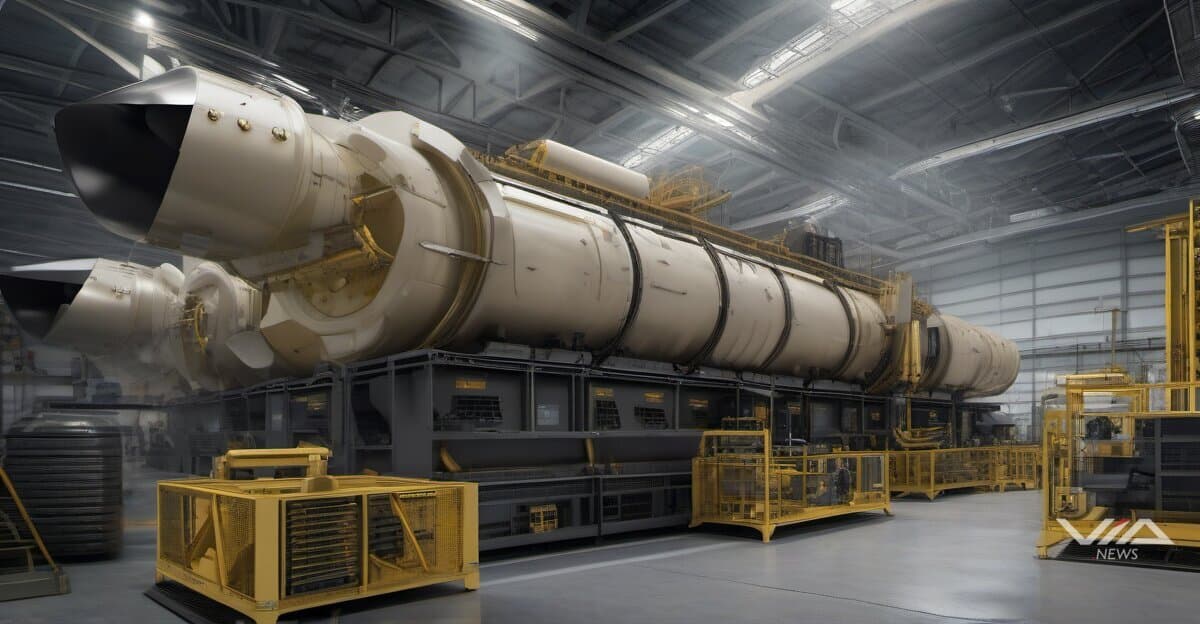
When Tailan New Energy unveiled its solid-state prototype cell in April 2024 with a verified energy density of 720 Wh/kg, the announcement reverberated through the global battery technology community. For context, today's best-in-class lithium-ion cells — the kind powering Tesla vehicles and grid storage systems — typically achieve 250 to 300 Wh/kg. Tailan's figure, if reproducible at scale, would represent a generational leap in energy storage capability.
But the investment community has seen this movie before. The graveyard of battery startups is littered with companies that achieved genuine laboratory breakthroughs yet failed to survive the brutal economics of manufacturing scale-up. For Tailan New Energy, the central risk is not scientific — it is financial, and its severity is assessed as catastrophic.
The Valley of Death Between Lab and Gigafactory
The capital requirements to advance a battery technology through three distinct phases — prototype validation, pilot production, and gigascale manufacturing — are staggering. Industry analysts estimate that building a single gigawatt-hour of solid-state battery production capacity can require upward of $200 million to $500 million in capital expenditure, depending on cell chemistry and automation levels. A commercially relevant gigafactory typically targets 10 GWh or more.
Tailan, as a startup without established revenue streams, must source this capital entirely from external investors, strategic partners, or state-backed Chinese industrial funds. Each of those pathways carries its own set of risks for outside investors: venture and private equity financing can be heavily dilutive across multiple rounds, while strategic partnerships — particularly with large automotive OEMs — often require ceding significant control over intellectual property, licensing terms, or production exclusivity.
China's Industrial Policy: Tailwind or Tether?
One factor that partially mitigates Tailan's funding risk is China's well-documented state support for domestic battery champions. Beijing has identified solid-state batteries as a strategic technology priority, and provincial governments have demonstrated willingness to co-invest in facilities and subsidize R&D. CATL, BYD, and a cohort of state-adjacent startups have all benefited from this industrial policy architecture.
However, state support is neither guaranteed nor unconditional. Companies that fail to meet production milestones or demonstrate commercial traction can find government backing withdrawn or redirected. For foreign investors — particularly those in the U.S. or EU navigating export control and national security frameworks — exposure to a Chinese battery startup adds geopolitical risk on top of the already formidable technology commercialization risk.
What Investors Should Watch
The likelihood of Tailan encountering severe capital constraints is assessed at medium probability, reflecting the genuine possibility that Chinese industrial funding channels absorb much of the financing burden. But the severity of the outcome if funding does not materialize — or arrives with terms that effectively transfer value away from early stakeholders — is categorized as catastrophic, not merely significant.
Investors and analysts tracking the solid-state battery sector should treat Tailan's 720 Wh/kg figure as a scientific milestone worth monitoring, not as a commercial investment thesis in isolation. Key indicators to watch include: the announcement of binding offtake agreements with automotive or energy storage customers, disclosure of pilot line capacity and yield rates, and the structure of any financing rounds — particularly whether they include participation from credible international strategic investors or remain predominantly state-directed.
The solid-state battery race is real, the stakes are enormous, and Tailan New Energy holds a genuinely impressive technical card. Whether it can finance the hand to its conclusion is the question that matters most for market participants.