
Wednesday, August 26, 2026

Bloom Energy Locks $1.7B Nebius Deal, Signals AI Firms Will Pay to Skip the Grid

Bloom Energy signed a $1.7 billion fuel-cell agreement with Nebius AI and a strategic deal with utility AEP, both aimed at powering AI data centers on-site. The company also expanded South Korea distribution through SK Ecoplant and SK Eternix, pointing to demand growth that runs independent of grid buildout timelines.

LM Salvado
LM Salvado

August 8, 2026

Bloom Energy Locks $1.7B Nebius Deal, Signals AI Firms Will Pay to Skip the Grid
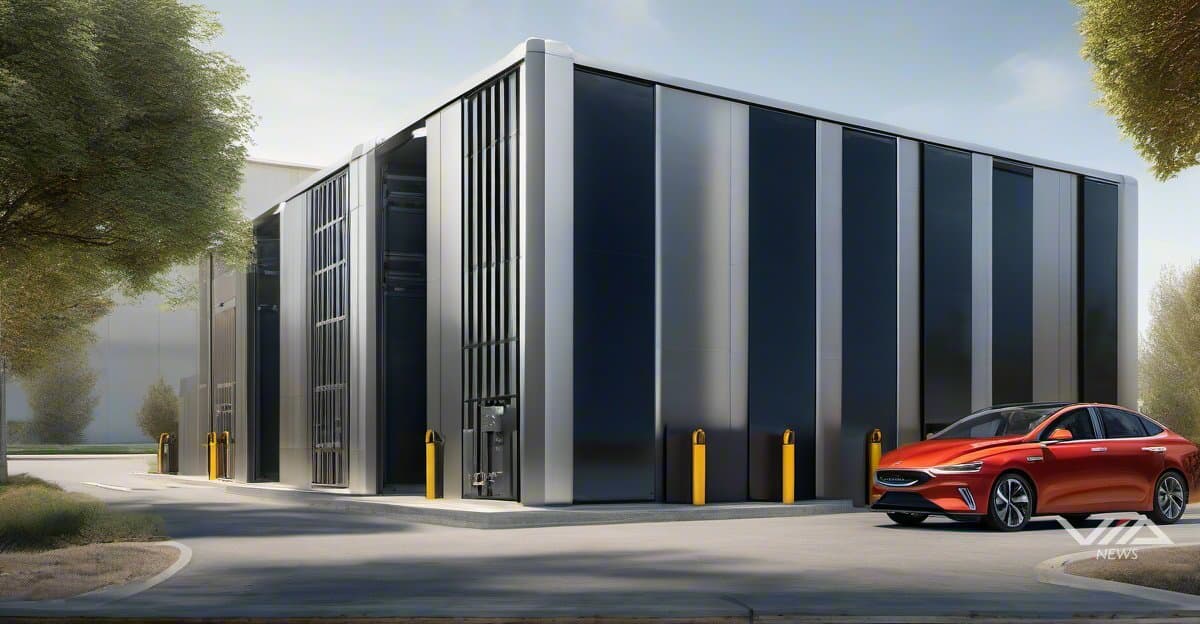
Image generated by AI for illustrative purposes. Not actual footage or photography from the reported events.
Loading stream...

Bloom Energy signed a $1.7 billion fuel-cell power agreement with Nebius AI, one of the largest single contracts in the company's history.1 The deal supplies on-site generation for AI compute infrastructure rather than grid-delivered power.

American Electric Power, one of the largest U.S. utilities, separately struck a strategic agreement with Bloom Energy targeting AI-focused fuel cell deployment.2 A utility partnering with a distributed-generation vendor signals grid interconnection queues are now a business constraint, not just an engineering one.

Bloom Energy also expanded its South Korea footprint through SK Ecoplant and SK Eternix, broadening distribution beyond the U.S. market.3 The company already supplies fuel cell systems to Oracle Corp, an existing hyperscale customer relationship.4

For investors, the pattern matters more than any single contract. Three separate customer types — a cloud compute firm, a regulated utility, and industrial partners in Asia — are all buying the same product for the same reason: AI data centers cannot wait years for grid capacity upgrades.

That reframes Bloom Energy's revenue growth. If fuel-cell orders track hyperscaler capex commitments, such as the roughly $220 billion in 2026 capital spending Amazon has signaled, rather than general utility demand, the stock trades less like a niche power-equipment supplier and more like an AI infrastructure proxy.

The test is straightforward and near-term. Bloom Energy's order backlog and AI/data-center revenue disclosures over the next two to four quarters should show whether contract growth correlates with hyperscaler capex increases specifically, rather than broader utility-sector demand. A tight correlation would confirm distributed generation has become a binding constraint on AI buildout, independent of grid expansion timelines.5

Until that data arrives, the three deals stand as directional evidence: AI compute customers are increasingly willing to pay a premium for power they can control and site themselves, rather than wait in a utility interconnection queue.

In this story · Knowledge Files

About this analysis

This is a Via News analysis. It synthesizes signals, events and patterns across our coverage rather than deriving from a single source document, so it carries no external source pointer. Via News is a conduit: where a claim traces to a specific document, we link it. How we source

LM Salvado
LM Salvado

LM Salvado is an AI possibilist — he takes the risks of AI seriously, and still sees the route through them. Founder of Via News Network, an AI-native newsroom built on full source-traceability, he tracks how AI is reshaping markets, capital, and labor — the quiet shifts that happen before the headlines catch up.

What we know · the intelligence behind this page
Live from the substrate
What we're seeing
AI Leadership Exodus Rattles Investor Confidence Amid Capex Boom
High-profile departures at top AI labs — Brad Lightcap's exit from OpenAI and an unnamed researcher's departure from Alphabet/Google that triggered a share-price drop — are surfacing talent retention as a market risk factor even as hyperscalers pour record capital into AI infrastructure. The reaction shows investors treating key-person risk at frontier AI labs as material to valuation, a new fragility layered onto an otherwise bullish AI-driven capex cycle.
Our read on the data ›
Signals we're tracking
EPKINLY Regulatory-Clinical Success Cascade
High probability of expanded label indications, additional combination approvals, and competitive positioning strength in follicular lymphoma market. Predicts positive commercial uptake and potential accelerated review for related indications.
Patterns we're watching ›
Where sources disagree
Broadcom Inc.
Both facts report EPS for Broadcom Inc. for the same fiscal period (Q1 2026) observed on the same date (2026-02-01). However, they report conflicting values: 1.5 USD per share vs 2.05 USD per share. This is a 37% difference for the identical metric and time period, not a value change over time.
We flag conflicts openly ›
Recently verified
Checked against the original source
4,978
facts traced to their source — and we flag the ones that don't hold up.
101 entities tracked4,978 facts checked against source5,251 source documents archived
Query this data → isubstrate.com