
Wednesday, August 26, 2026

Strait of Hormuz Closure Enters Week Nine, Pushing US Gas to $4 and Stoking Stagflation Fears

A US-Israel strike on Iran has kept the Strait of Hormuz closed for nine weeks, driving US gasoline to $4 per gallon. Leading economists warn the shock could rival the 1970s oil crises in severity. The Federal Reserve is holding rates steady as equity markets hit yearly lows and stagflation risks mount.

LM Salvado
LM Salvado

April 27, 2026

Strait of Hormuz Closure Enters Week Nine, Pushing US Gas to $4 and Stoking Stagflation Fears
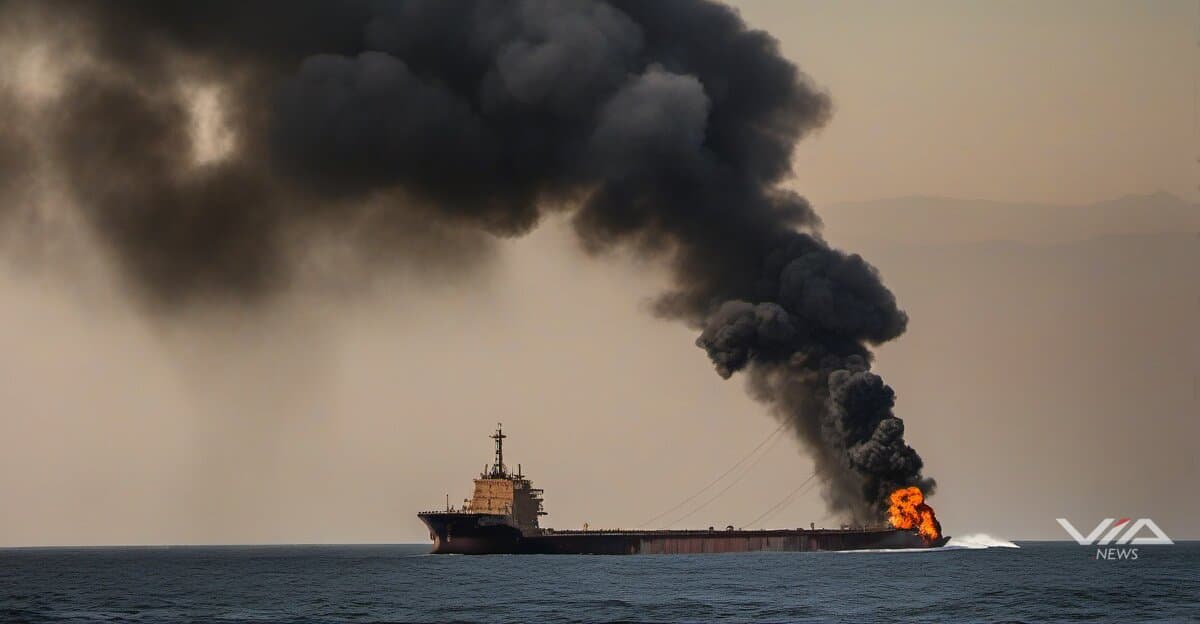
Image generated by AI for illustrative purposes. Not actual footage or photography from the reported events.
Loading stream...

Nine weeks after a US-Israel military strike on Iran triggered a Strait of Hormuz closure, US gasoline has reached $4 per gallon and no resolution is in sight.

The Federal Reserve is holding rates steady, caught between fighting inflation and avoiding recession. Equity markets have touched yearly lows. Stagflation — high inflation paired with stagnant growth — is now the baseline fear among economists.

IMF chief economist Pierre-Olivier Gourinchas warned the crisis could rival the severity of the 1970s oil shocks.1 Those crises rewrote global monetary policy and produced years of economic stagnation. Gourinchas also flagged elevated unemployment and food insecurity as downstream risks, particularly for vulnerable economies.1

Economist Justin Wolfers was direct: "If we don't get a satisfactory resolution, then that concern remains."2 Expensive energy, he warned, could persist for years. He added that cost pressures Americans are feeling are "very real" — showing up in consumer sentiment data and retail spending figures.2

Demand destruction has spread from Asian petrochemical markets into Western consumer economies. Higher input costs are now rippling through manufacturing, transport, and retail supply chains.

The Fed's dilemma has no clean exit. Rate hikes to curb energy-driven inflation risk tipping the economy into recession. Holding steady allows inflation expectations to drift higher. Markets have priced in the paralysis.

The Strait of Hormuz handles roughly 20% of global oil trade. Nine weeks of closure is without modern precedent in duration. The longer it holds, the more supply chains reprice around it — spot charters, alternative routing costs, and insurance premiums are all elevated.

Energy futures curves reflect sustained pressure through at least mid-year. Traders are not pricing a quick resolution. Military postures remain hardened with no diplomatic breakthrough visible.

The 1970s analogy is instructive but sobering. Those crises ended — but only after years of economic pain and a hard policy reset. If this disruption follows a similar arc, markets are still in the early innings.

Source documents

Via News is a conduit. We point to the source documents behind this report — we don't replace them. Trace any claim to its source and decide what to trust. How we source

Source Trace Score6 source documents6 with a live linkVerifiability: Strong
  1. [1]News articleYahoo Finance· April 24, 2026
    Economist Justin Wolfers Says Trump Policies Are 'Hurting The American People And He Doesn't Want To Admit It,' Instead Calling It 'Fake Inflation'
  2. [2]News articleYahoo Finance· April 18, 2026
    Experts Warn That Recession Risks Are Increasing. Here's What That Means for Investors
  3. [3]News articleYahoo Finance· April 24, 2026
    Big Four accounting chooses AI over humans, cuts benefits & hiring
  4. [4]News articleNasdaq· April 25, 2026
    How Netflix Could Perform in a Mild vs. a Severe Recession
  5. [5]News articleYahoo Finance· April 25, 2026
    'I Would Not Be Thinking About Long-Term,' 'Ramsey Show' Host Tells $90K Earner Dating Jobless Boyfriend Who Won't Take A Lower-Paying Job
  6. [6]News articleYahoo Finance· April 25, 2026
    The Billion-Barrel Hormuz Oil Shock Is About to Crash Demand

In this story · Knowledge Files

LM Salvado
LM Salvado

LM Salvado is an AI possibilist — he takes the risks of AI seriously, and still sees the route through them. Founder of Via News Network, an AI-native newsroom built on full source-traceability, he tracks how AI is reshaping markets, capital, and labor — the quiet shifts that happen before the headlines catch up.

What we know · the intelligence behind this page
Live from the substrate
What we're seeing
AI Leadership Exodus Rattles Investor Confidence Amid Capex Boom
High-profile departures at top AI labs — Brad Lightcap's exit from OpenAI and an unnamed researcher's departure from Alphabet/Google that triggered a share-price drop — are surfacing talent retention as a market risk factor even as hyperscalers pour record capital into AI infrastructure. The reaction shows investors treating key-person risk at frontier AI labs as material to valuation, a new fragility layered onto an otherwise bullish AI-driven capex cycle.
Our read on the data ›
Signals we're tracking
EPKINLY Regulatory-Clinical Success Cascade
High probability of expanded label indications, additional combination approvals, and competitive positioning strength in follicular lymphoma market. Predicts positive commercial uptake and potential accelerated review for related indications.
Patterns we're watching ›
Where sources disagree
Broadcom Inc.
Both facts report EPS for Broadcom Inc. for the same fiscal period (Q1 2026) observed on the same date (2026-02-01). However, they report conflicting values: 1.5 USD per share vs 2.05 USD per share. This is a 37% difference for the identical metric and time period, not a value change over time.
We flag conflicts openly ›
Recently verified
Checked against the original source
4,978
facts traced to their source — and we flag the ones that don't hold up.
101 entities tracked4,978 facts checked against source5,251 source documents archived
Query this data → isubstrate.com