
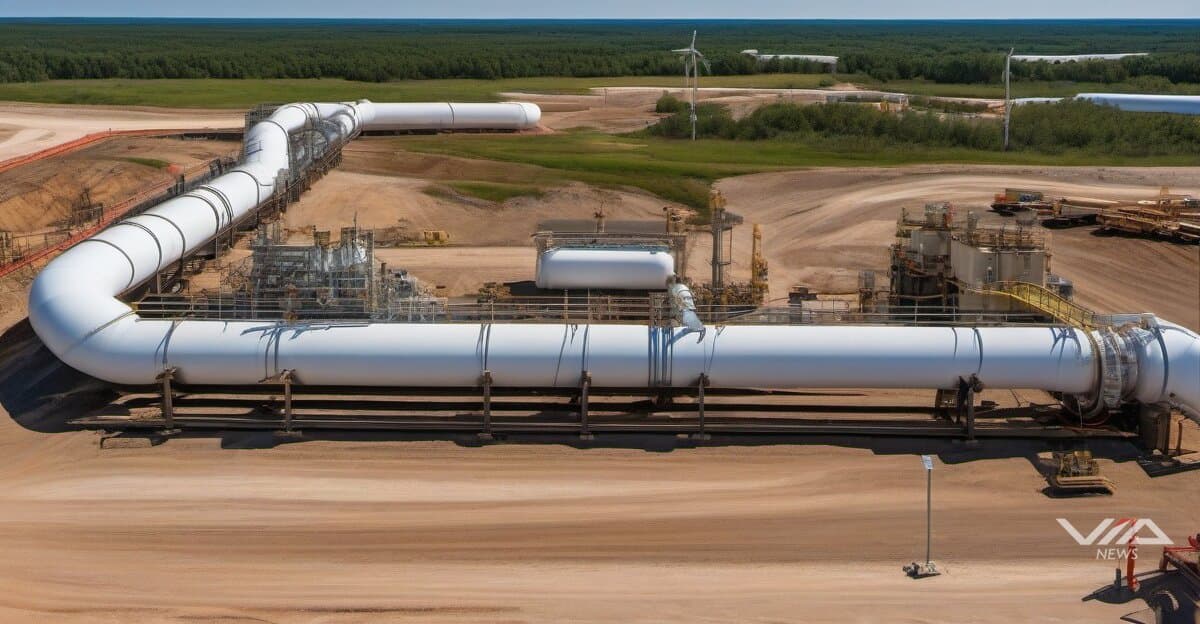
The Blackcomb Pipeline will deliver 2.5 billion cubic feet per day of natural gas from the Permian Basin to Gulf Coast liquefied natural gas terminals when commissioned in December 2028. The project addresses transportation bottlenecks that have historically kept Permian gas prices at discounts exceeding $1.00 per MMBtu versus Henry Hub.
U.S. LNG export capacity is projected to reach 14.7 Bcf/d by 2028, up from 11.4 Bcf/d currently. Each new pipeline link reduces basis differentials between producing regions and export hubs, compressing spreads that averaged $0.87 per MMBtu in 2025. Traders positioning in Henry Hub futures should monitor how additional takeaway capacity affects supply-demand balances at the benchmark.
Midstream partnerships operating fee-based pipeline networks gain revenue visibility from long-term shipping contracts. MPLX, which owns stakes in multiple Permian gas gathering systems, trades at 8.2x forward EBITDA with a 9.1% distribution yield. Enterprise Products Partners and Energy Transfer also hold pipeline assets positioned to capture volume growth as Permian gas production climbs toward 17 Bcf/d by decade-end.
Natural gas futures markets are pricing in a $3.20-$3.80 per MMBtu range through 2028, reflecting export demand growth offsetting domestic consumption declines in power generation. Each 1 Bcf/d of new LNG capacity removes domestic supply, supporting floor prices. Infrastructure delays or export permit restrictions represent downside risks to this thesis.
Equity investors should weigh pipeline counterparty credit quality and contract structures. Take-or-pay agreements with investment-grade LNG developers provide cash flow stability. Companies with diversified asset footprints across multiple basins reduce exposure to single-region production volatility.
The 2028 commissioning timeline positions the Blackcomb system ahead of anticipated LNG demand peaks. Investors holding energy infrastructure equities or natural gas futures should track construction milestones and shipper commitments disclosed in quarterly filings. Basis spread compression between Waha and Henry Hub will signal whether pipeline capacity is effectively reaching export markets.