
Wednesday, August 26, 2026

IRA Rollback or Tariff Cut Could Collapse U.S. Solar Manufacturing Economics

U.S. domestic solar manufacturing depends almost entirely on Section 201/301 tariffs and IRA manufacturing tax credits to compete against imports. A policy reversal under a new administration carries catastrophic risk for energy stocks tied to domestic solar production. Suniva CEO Tony Etnyre leads a sector where the margin for error is zero.

LM Salvado
LM Salvado

June 15, 2026

IRA Rollback or Tariff Cut Could Collapse U.S. Solar Manufacturing Economics
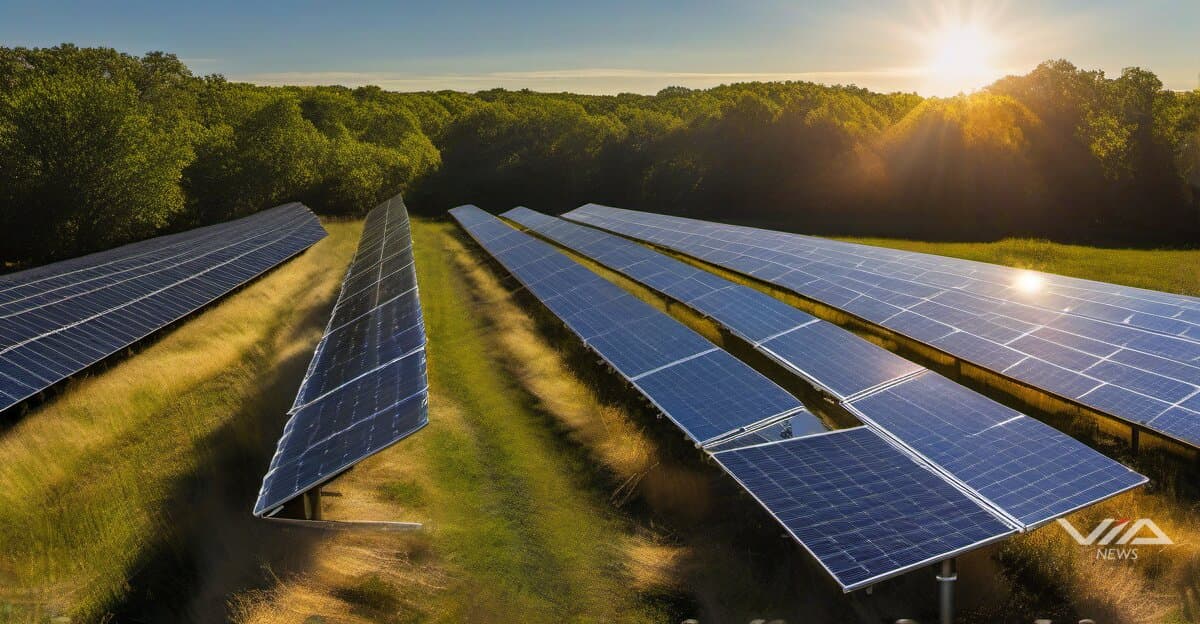
Image generated by AI for illustrative purposes. Not actual footage or photography from the reported events.
Loading stream...

U.S. solar manufacturers have no pricing buffer without federal support. Section 201 and 301 tariffs, combined with IRA manufacturing tax credits, are the sole reason domestically produced solar cells can compete with cheaper imports.1

Remove either lever, and the economics collapse. That is the central finding of a risk assessment covering Suniva and its leadership under CEO Tony Etnyre.1

The risk is rated catastrophic in severity with medium likelihood — a combination that puts solar manufacturing stocks in a structurally vulnerable position heading into any election cycle or budget negotiation.1

What's Actually at Stake

The IRA's Section 45X manufacturing credit pays producers per watt of solar cells made in the U.S. Without it, domestic manufacturers cannot undercut — or even match — the landed cost of Chinese-made panels.

Section 201 tariffs, first imposed in 2018, added a blanket surcharge on imported crystalline silicon solar products. Section 301 tariffs layered additional duties on Chinese goods specifically. Both have been extended under successive administrations, but neither is permanent.1

A single policy reversal — tariff reduction, IRA credit phase-out, or executive reinterpretation — could render U.S. solar cell production economically nonviable overnight.

Market Implications

Investors in U.S.-listed solar manufacturers face direct exposure to legislative risk, not just operational risk. Earnings models built on IRA credit flows are vulnerable to budget reconciliation processes. Tariff continuity depends on trade policy decisions that can shift between administrations.

Commodity markets feel this too. Polysilicon, wafers, and solar glass trade differently depending on whether U.S. tariff walls hold. A rollback would likely suppress domestic input demand while boosting import volumes — a deflationary signal for U.S.-centric supply chains.

Downstream installers and utility-scale project developers could actually benefit from lower panel costs if protections drop. The sector would bifurcate: manufacturers lose, installers gain.

Who Watches This Closely

Suniva, once a Chapter 11 casualty of the original Chinese import wave, was central to the original Section 201 petition. Its revival under current leadership tracks directly against the tariff regime. Tony Etnyre operates a business that exists only because that policy framework exists.1

For energy stock traders, the Suniva case is a proxy for the broader U.S. solar manufacturing bet. Any signal on IRA reauthorization or tariff review is a material event for this segment.

About this analysis

This is a Via News analysis. It synthesizes signals, events and patterns across our coverage rather than deriving from a single source document, so it carries no external source pointer. Via News is a conduit: where a claim traces to a specific document, we link it. How we source

LM Salvado
LM Salvado

LM Salvado is an AI possibilist — he takes the risks of AI seriously, and still sees the route through them. Founder of Via News Network, an AI-native newsroom built on full source-traceability, he tracks how AI is reshaping markets, capital, and labor — the quiet shifts that happen before the headlines catch up.

What we know · the intelligence behind this page
Live from the substrate
What we're seeing
AI Leadership Exodus Rattles Investor Confidence Amid Capex Boom
High-profile departures at top AI labs — Brad Lightcap's exit from OpenAI and an unnamed researcher's departure from Alphabet/Google that triggered a share-price drop — are surfacing talent retention as a market risk factor even as hyperscalers pour record capital into AI infrastructure. The reaction shows investors treating key-person risk at frontier AI labs as material to valuation, a new fragility layered onto an otherwise bullish AI-driven capex cycle.
Our read on the data ›
Signals we're tracking
EPKINLY Regulatory-Clinical Success Cascade
High probability of expanded label indications, additional combination approvals, and competitive positioning strength in follicular lymphoma market. Predicts positive commercial uptake and potential accelerated review for related indications.
Patterns we're watching ›
Where sources disagree
Broadcom Inc.
Both facts report EPS for Broadcom Inc. for the same fiscal period (Q1 2026) observed on the same date (2026-02-01). However, they report conflicting values: 1.5 USD per share vs 2.05 USD per share. This is a 37% difference for the identical metric and time period, not a value change over time.
We flag conflicts openly ›
Recently verified
Checked against the original source
4,978
facts traced to their source — and we flag the ones that don't hold up.
101 entities tracked4,978 facts checked against source5,251 source documents archived
Query this data → isubstrate.com