
The Hub-and-Spoke Achilles Heel
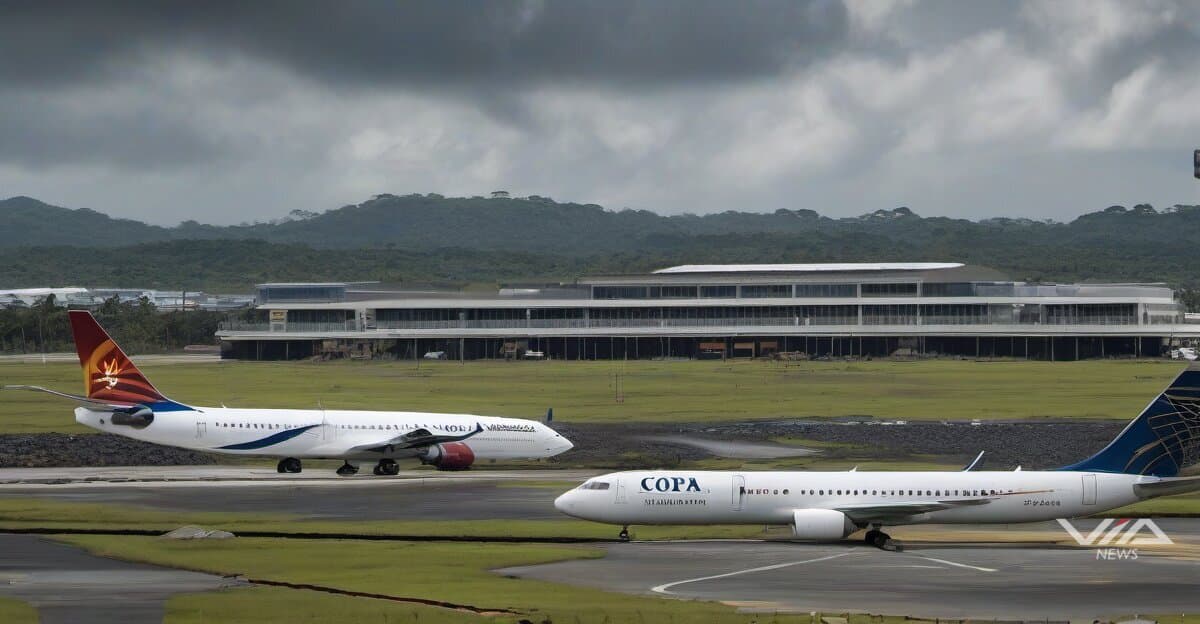
Copa Holdings has built its competitive identity on the efficiency of its Panama hub model. Tocumen International Airport sits at the geographic midpoint of the Americas, giving Copa a routing advantage that few regional carriers can replicate. The airline connects more than 80 destinations across North, Central, and South America and the Caribbean — and the overwhelming majority of those routes funnel through a single node: Tocumen.
That structural elegance is also a structural risk. In network theory, any system where traffic concentrates through a single point is defined by the resilience of that point. For Copa, Tocumen is not just a hub — it is the network.
Assessing the Risk Profile
A recent operational risk assessment of Copa Holdings rates the Tocumen concentration scenario at catastrophic severity with low likelihood. That combination — high impact, low probability — is precisely the type of tail risk that tends to be systematically underpriced in equity markets until it materializes.
The disruption scenarios are not hypothetical. Panama's tropical geography exposes Tocumen to seasonal weather events, including tropical storm systems that can ground fleets for extended periods. Infrastructure failures — from runway closures to terminal outages — at a single-airport hub have no fallback routing. Air traffic control disruptions, whether from labor actions, technical failures, or regional airspace restrictions, would similarly propagate through Copa's entire schedule rather than remaining contained to one route cluster.
Financial Exposure for CPA Shareholders
For equity investors, the financial mechanics of a Tocumen disruption are straightforward and severe. Copa's revenue model depends on passenger connectivity — travelers booking Copa specifically for its hub-enabled one-stop routing across Latin America. A multi-day hub shutdown would not only ground Copa's own fleet but would eliminate the transit passenger segment that drives a significant portion of load factors on many routes.
Copa Holdings reported operating revenues of approximately $3.2 billion in its most recent fiscal year, with operating margins consistently among the strongest in the region — typically in the 15–20% range. A sustained hub disruption lasting one to two weeks could represent revenue impact measured in the tens of millions of dollars, with limited ability to reroute traffic to alternative airports given the geographic centrality of Panama's position in Copa's network design.
Unlike multi-hub carriers such as American Airlines or LATAM, Copa does not maintain a secondary hub capable of absorbing diverted demand. This is a deliberate strategic choice that has historically rewarded efficiency — but it leaves no operational buffer when the primary node is compromised.
Investor Considerations
The concentration risk does not argue against Copa as an investment. The airline's execution record, balance sheet discipline, and network position remain genuine competitive strengths. However, investors pricing CPA shares should factor in the asymmetric downside that a Tocumen event represents — particularly in a macro environment where insurance and hedging costs for operational tail risks are rising across the aviation sector.
Portfolio managers with Latin American aviation exposure should monitor Tocumen's infrastructure investment pipeline, Panama's disaster preparedness protocols, and Copa's own contingency disclosures in its annual risk filings. The risk is low-probability — but in aviation, low-probability and catastrophic is the combination that defines career-defining drawdowns.