
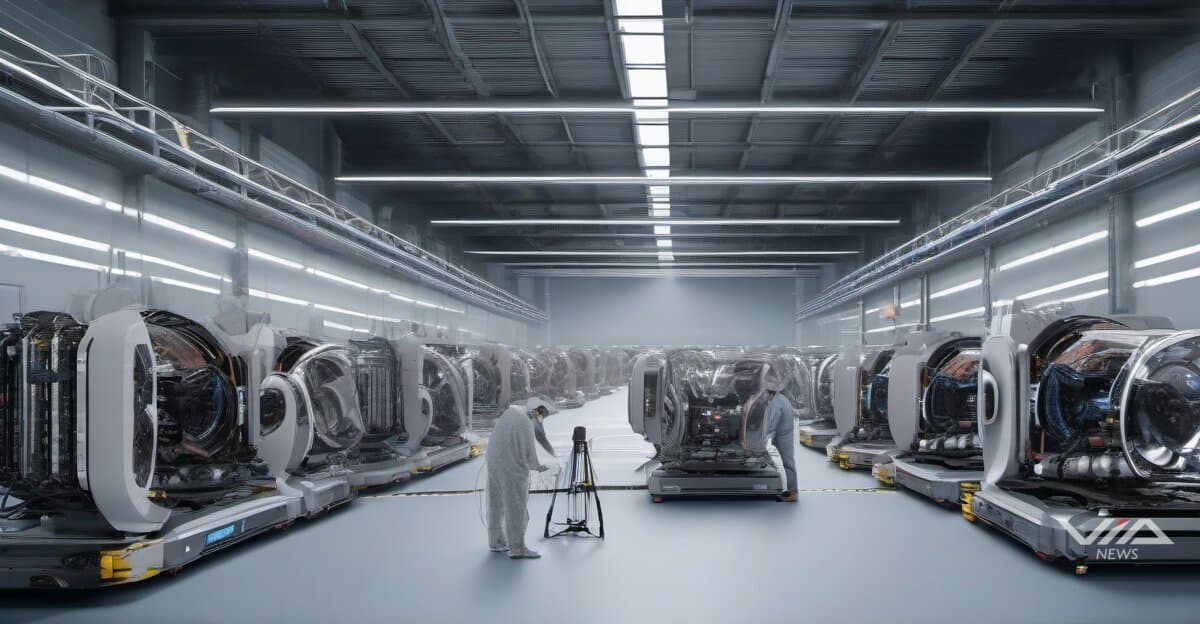
A wave of AI talent is flowing from research institutions into robotics startups focused on warehouse automation and autonomous logistics. The migration marks a transition from foundational AI research to commercial physical AI systems operating in factories and distribution centers.
Nomagic's Shoebox Picker handles more than 98% of shoeboxes on the market, demonstrating the precision required for warehouse-scale automation. Kacper Nowicki, a leader in the space, stated the goal is "to bring physical AI into the heart of warehouse and logistics operations, where intelligent, autonomous systems can finally bridge the gap between digital optimization and real-world execution."
Nuro is conducting autonomous on-road testing as part of safety validation frameworks developed through years of commercial autonomous deployments. The company's shift from research to operational testing reflects broader industry maturation in autonomous vehicle logistics.
In Saudi Arabia's Vision 2030 initiative, Chinese robots already support logistics, smart manufacturing, healthcare, and smart city services. Mohammed Alsolami noted these systems allow "local companies and government entities to experiment, pilot, and scale automation solutions in months instead of years."
The talent migration creates competitive advantages for public companies with existing warehouse networks and automation partnerships. Firms that integrate these systems early can reduce labor costs, improve throughput accuracy, and scale operations faster than competitors stuck in manual workflows.
Logistics and e-commerce companies with capital to deploy robotics infrastructure stand to benefit most. The 28 claims backing this trend across 4 sources show 82% confidence in sustained momentum. Public companies in warehouse automation equipment, autonomous vehicle components, and logistics services face accelerating demand as the technology proves commercial viability.
The shift from research labs to industrial deployment compresses the timeline from prototype to production. Companies positioned in supply chains for robotics components, vision systems, and fleet management software gain exposure to this industrialization wave. Market implications center on operational efficiency gains for automation adopters and revenue growth for robotics infrastructure providers.