
Wednesday, August 26, 2026

Warsh Takes Fed Chair Amid Three-Year Inflation High and Treasury Selloff

Kevin Warsh is sworn in as Federal Reserve Chairman as inflation hits a three-year high and a Treasury selloff pressures bond markets. Iran-driven energy price shocks compound the challenge, while markets price in December rate cuts even as the Fed is expected to hold rates at its current meeting. Analyst James Clouse warns Warsh faces "conflicting pressures from the White House" with limited political cover.

LM Salvado
LM Salvado

June 25, 2026

Warsh Takes Fed Chair Amid Three-Year Inflation High and Treasury Selloff
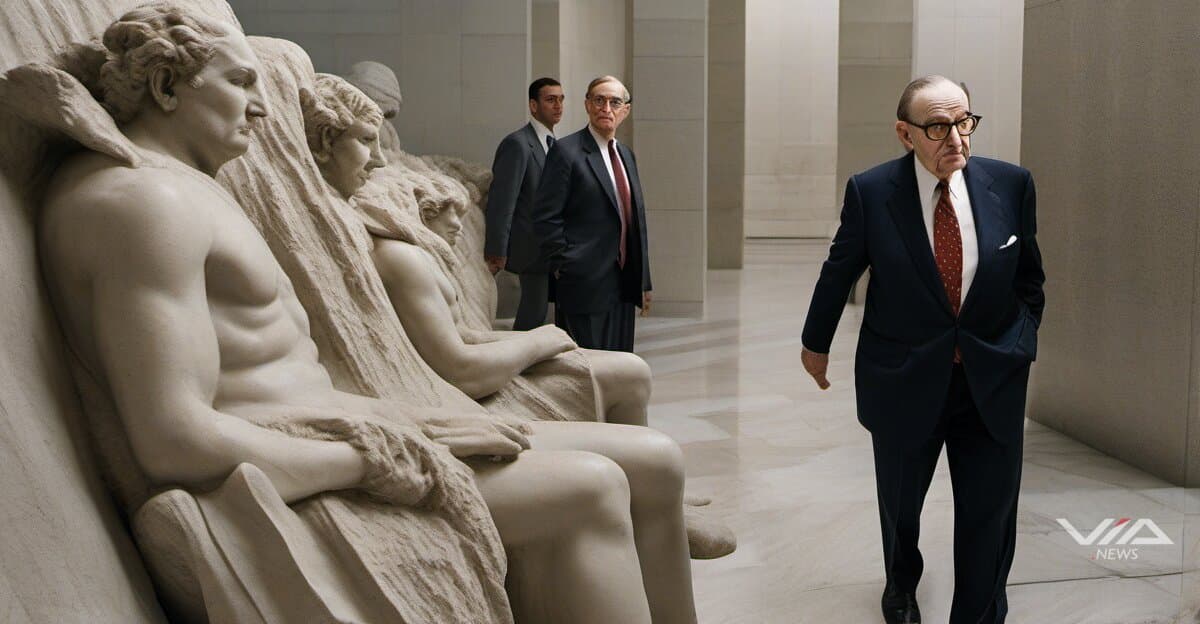
Image generated by AI for illustrative purposes. Not actual footage or photography from the reported events.
Loading stream...

Kevin Warsh is now Federal Reserve Chairman, inheriting a balance sheet under siege. Inflation is at a three-year high. Treasuries are selling off. Energy prices are surging on Iran-related supply disruptions.1

Warsh previously served as a Fed Governor under Alan Greenspan from 2006 to 2011. Greenspan died on June 22, 2026, at age 100, closing the chapter he defined across five presidencies and multiple crises.1

The parallel is stark. Greenspan titled his 2007 memoir The Age of Turbulence. Warsh steps into the chair during a convergence that mirrors it: geopolitical energy shock, surging consumer prices, bond market stress, and overt White House pressure on monetary policy.1

For traders, the rate path is the central question. Markets are currently pricing in December cuts. The Fed is expected to hold at its present meeting. That gap — between what investors want and what the data permits — defines Warsh's immediate credibility test.1

Analyst James Clouse identified the bind directly. Warsh must manage pressure from both the White House and bond markets moving in opposite directions. "It's just a very difficult position for him all the way around," Clouse said.1

Energy is the live variable in the inflation calculus. Iran-driven price shocks feed directly into headline CPI and transportation costs. If energy remains elevated, the Fed's path to cuts narrows. If Warsh pivots early under political pressure, bond markets may reprice yields sharply higher.

Treasury yields are already under pressure from the current selloff. A credibility gap at the Fed — any signal that rate decisions track White House preferences rather than data — would accelerate that move. Long-duration bonds carry the most exposure.

Equity markets face a dual headwind. Higher-for-longer rates compress multiples. Energy cost pass-through squeezes margins in transport, manufacturing, and consumer discretionary sectors. The sectors most sensitive to rate expectations — utilities, REITs, and growth tech — are the ones to watch.

Warsh's first public statements as Chair will be parsed closely for any shift in forward guidance language. Any deviation from data-dependency framing will move markets fast.

Source documents

Via News is a conduit. We point to the source documents behind this report — we don't replace them. Trace any claim to its source and decide what to trust. How we source

Source Trace Score2 source documents2 with a live linkVerifiability: Strong
  1. [1]News articleYahoo Finance· June 14, 2026
    Warsh Caught Between Trump and Bond Market Betting on Rate Hikes
  2. [2]News articleYahoo Finance· June 22, 2026
    Alan Greenspan, who steered the Federal Reserve through both boom and crisis, dies at 100

In this story · Knowledge Files

LM Salvado
LM Salvado

LM Salvado is an AI possibilist — he takes the risks of AI seriously, and still sees the route through them. Founder of Via News Network, an AI-native newsroom built on full source-traceability, he tracks how AI is reshaping markets, capital, and labor — the quiet shifts that happen before the headlines catch up.

What we know · the intelligence behind this page
Live from the substrate
What we're seeing
AI Leadership Exodus Rattles Investor Confidence Amid Capex Boom
High-profile departures at top AI labs — Brad Lightcap's exit from OpenAI and an unnamed researcher's departure from Alphabet/Google that triggered a share-price drop — are surfacing talent retention as a market risk factor even as hyperscalers pour record capital into AI infrastructure. The reaction shows investors treating key-person risk at frontier AI labs as material to valuation, a new fragility layered onto an otherwise bullish AI-driven capex cycle.
Our read on the data ›
Signals we're tracking
EPKINLY Regulatory-Clinical Success Cascade
High probability of expanded label indications, additional combination approvals, and competitive positioning strength in follicular lymphoma market. Predicts positive commercial uptake and potential accelerated review for related indications.
Patterns we're watching ›
Where sources disagree
Broadcom Inc.
Both facts report EPS for Broadcom Inc. for the same fiscal period (Q1 2026) observed on the same date (2026-02-01). However, they report conflicting values: 1.5 USD per share vs 2.05 USD per share. This is a 37% difference for the identical metric and time period, not a value change over time.
We flag conflicts openly ›
Recently verified
Checked against the original source
4,978
facts traced to their source — and we flag the ones that don't hold up.
101 entities tracked4,978 facts checked against source5,251 source documents archived
Query this data → isubstrate.com