
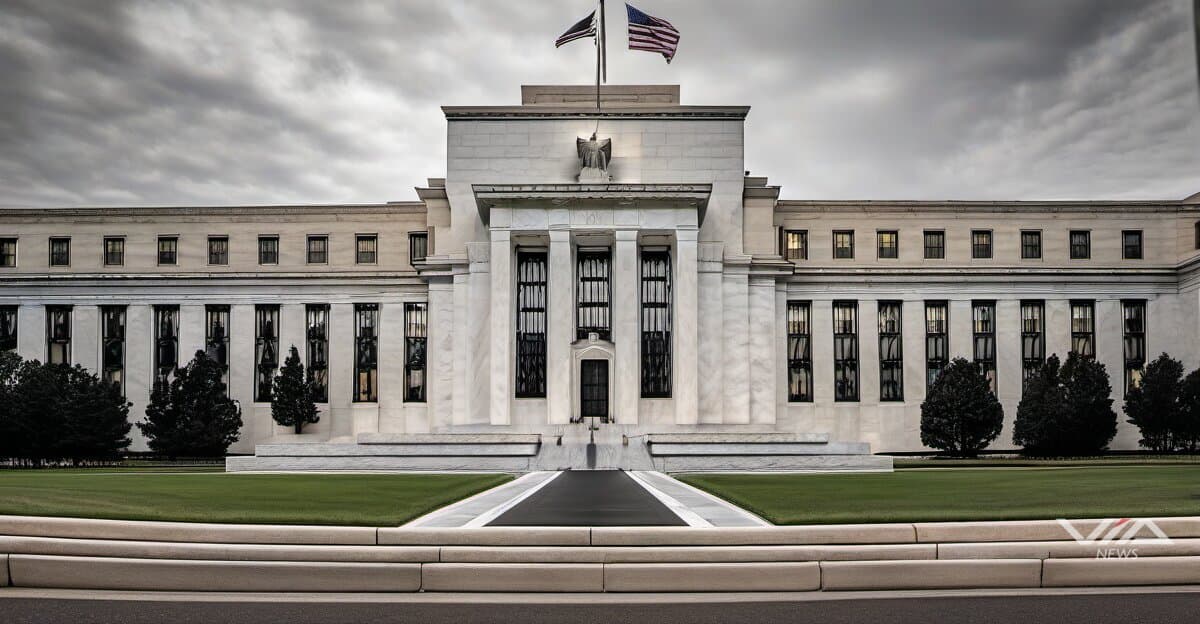
The Federal Reserve's decision to hold rates steady is doing more than managing inflation — it is quietly underwriting one of the most concentrated capital allocation events in recent market history. As policymakers signal an extended pause, institutional money is flooding into artificial intelligence infrastructure at a pace that is reshaping deal flow, equity valuations, and the very structure of the broader economy.
Two transactions illustrate the dynamic with particular clarity. CoreWeave, the AI cloud infrastructure provider, secured a $1.17 billion contract that underscores the insatiable enterprise appetite for GPU-dense computing capacity. Meanwhile, SoftBank is in discussions for a potential acquisition of Marvell Technology, a deal that would consolidate two of the most strategically positioned players in AI chip customization and networking. Together, these moves reflect a deliberate rotation of capital toward the infrastructure layer of the AI stack — the picks-and-shovels bet of this technology cycle.
The monetary policy context matters here. Fed Governor Philip Jefferson recently signaled that rates are in a "neutral range," raising the bar for further cuts. With borrowing costs stable rather than falling, deal economics for highly profitable or contracted AI businesses remain attractive even without the tailwind of cheaper debt. CoreWeave's contract revenue provides the kind of visibility that justifies large-scale financing; Marvell's custom silicon roadmap offers SoftBank a direct line into hyperscaler spending that shows no signs of slowing.
Former Fed Governor Lael Brainard captured the underlying tension precisely: "The economy at the top level is strong, but it's being driven by this really important set of investments in AI. The rest of the economy under the hood is really stuck." That bifurcation is now visible in M&A activity. Dealmaking in traditional industrials, consumer discretionary, and regional banking remains subdued, while AI infrastructure, data center REITs, and semiconductor M&A are accelerating.
Macro risks have not disappeared. Trump administration tariffs and ongoing Supreme Court deliberations over regulatory authority are introducing uncertainty that complicates the Fed's calculus. Inflation has remained stubbornly near 3% for close to four years, constraining the Fed's ability to ease even if growth softens outside the AI-driven segments. IMF First Deputy Managing Director Gita Gopinath has warned that an equity correction of dot-com magnitude could erase $20 trillion in U.S. household wealth — a tail risk that looms larger as AI valuations stretch.
For investors, the signal from current deal flow is unambiguous: capital is concentrating in companies with direct exposure to AI compute, custom silicon, and cloud infrastructure. The CoreWeave and Marvell transactions are not isolated events — they are leading indicators of a broader M&A wave that will likely accelerate through 2026 as hyperscalers compete to lock in supply chain advantages and sovereign wealth funds seek AI exposure.
The Fed's pause, paradoxically, may be the most bullish force in the AI deal market right now. Rate stability reduces refinancing risk for leveraged acquirers, supports equity valuations used as deal currency, and signals to boards that the macro floor is unlikely to drop suddenly. Until inflation breaks decisively lower or growth cracks beyond the AI sector, expect the current deal frenzy to continue — and the structural divergence between AI winners and the broader economy to deepen.