
Wednesday, August 26, 2026

Social Security Insolvency Risk by 2032 Drives Defensive Rotation as $1.1T Healthcare Cuts Loom

The One Big Beautiful Bill Act could accelerate Social Security fund depletion to 2032, threatening 33% benefit cuts for recipients. Combined with $1.1 trillion in healthcare spending cuts affecting 11.8 million Americans, the fiscal trajectory is pushing institutional investors toward defensive sectors and inflation hedges as Fed Chair Powell's May 2026 departure adds monetary policy uncertainty.

Social Security Insolvency Risk by 2032 Drives Defensive Rotation as $1.1T Healthcare Cuts Loom
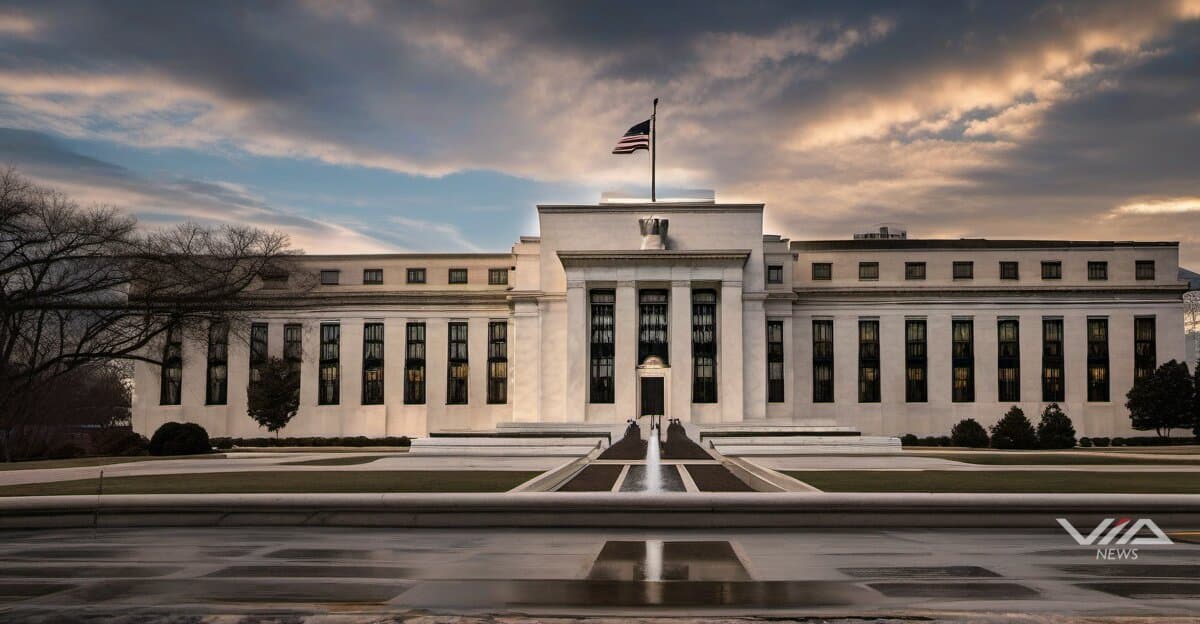
Image generated by AI for illustrative purposes. Not actual footage or photography from the reported events.
Loading stream...

Social Security trust funds may become insolvent by 2032 under the One Big Beautiful Bill Act, six years earlier than prior projections, triggering a mandatory 33% benefit reduction for current recipients. The legislation pairs tax cuts with spending reductions that accelerate fund depletion while cutting $1.1 trillion from healthcare programs.

Only 24% of Social Security recipients will see reduced taxable income from the new law, according to the Center for Budget and Policy Priorities. Meanwhile, 11.8 million Americans could lose health insurance by 2034 due to Medicaid cuts, per Congressional Budget Office forecasts.

The fiscal pressure arrives as Fed Chair Jerome Powell's term ends May 2026, raising concerns about central bank independence. "This is an existential moment for the Fed in our democracy. He needs to prevent the president from getting a majority on the board," said David Wessel of the Brookings Institution.

Bond markets are pricing in heightened fiscal risk. Treasury yields have widened on long-dated securities as investors demand premium for funding expanding deficits without corresponding revenue offsets. The tax relief measures reduce federal revenue while accelerating entitlement program insolvency.

Equity strategists recommend rotating into healthcare providers and pharmaceutical companies positioned to absorb Medicaid patients into commercial plans, though reimbursement rates will pressure margins. Consumer staples offer defensive positioning against benefit cut risk for 67 million Social Security recipients.

Energy and materials sectors provide inflation hedges if fiscal dominance forces Fed accommodation. Real assets including infrastructure REITs and commodities exposure hedge against currency debasement risks from unresolved fiscal imbalances.

Financial sector positioning depends on Fed leadership transition. A politically influenced central bank could compress net interest margins through yield curve control, while an independent Fed defending price stability supports traditional bank earnings models.

The converging fiscal and monetary uncertainty creates asymmetric risks favoring capital preservation over growth exposure. Portfolio construction should emphasize quality balance sheets, pricing power, and non-cyclical revenue streams until the 2032 Social Security cliff and Fed leadership succession resolve.

Source documents

Via News is a conduit. We point to the source documents behind this report — we don't replace them. Trace any claim to its source and decide what to trust. How we source

Source Trace Score11 source documents11 with a live linkVerifiability: Strong
  1. [1]News articleYahoo Finance· November 30, 2025
    Can you retire comfortably on Social Security alone? We asked seniors.
  2. [2]News articleYahoo Finance· December 10, 2025
    Fed has no 'tools' to solve affordability crisis: Torsten Sløk
  3. [3]News articleYahoo Finance· January 26, 2026
    How many rate cuts in 2026? These mounting pressures will put the Fed at a crossroads this year
  4. [4]News articleYahoo Finance· December 10, 2025
    How Much You Can Save on New Car Purchases in Every State Under Trump’s Tax Bill
  5. [5]News articleYahoo Finance· February 2, 2026
    Kevin Warsh’s Fed Will End the War on Main Street and Trucking
  6. [6]News articleYahoo Finance· January 20, 2026
    Taxes are going to change for retirees under Trump’s ‘big beautiful bill’. Here’s why you can’t afford to waste time
  7. [7]News articleYahoo Finance· January 23, 2026
    Trump says 88% of retirees will pay zero taxes on Social Security, calls it ‘the largest tax break in American history'
  8. [8]News articleYahoo Finance· November 8, 2025
    Trump says 88% of US retirees will now pay zero taxes on Social Security, but can the One Big Beautiful Bill hurt you?
  9. [9]News articleYahoo Finance· February 21, 2026
    Germany About to Find Out Whether Its Recovery Is Real
  10. [10]News articleYahoo Finance· February 25, 2026
    I’m 50 years old with $400K in savings, but I’ve heard the magic number for retirement is $1.26 million. Will I be okay?
  11. [11]News articleYahoo Finance· November 26, 2025
    UK budget: financial services sector reaction
What we know · the intelligence behind this page
Live from the substrate
What we're seeing
AI Leadership Exodus Rattles Investor Confidence Amid Capex Boom
High-profile departures at top AI labs — Brad Lightcap's exit from OpenAI and an unnamed researcher's departure from Alphabet/Google that triggered a share-price drop — are surfacing talent retention as a market risk factor even as hyperscalers pour record capital into AI infrastructure. The reaction shows investors treating key-person risk at frontier AI labs as material to valuation, a new fragility layered onto an otherwise bullish AI-driven capex cycle.
Our read on the data ›
Signals we're tracking
EPKINLY Regulatory-Clinical Success Cascade
High probability of expanded label indications, additional combination approvals, and competitive positioning strength in follicular lymphoma market. Predicts positive commercial uptake and potential accelerated review for related indications.
Patterns we're watching ›
Where sources disagree
Broadcom Inc.
Both facts report EPS for Broadcom Inc. for the same fiscal period (Q1 2026) observed on the same date (2026-02-01). However, they report conflicting values: 1.5 USD per share vs 2.05 USD per share. This is a 37% difference for the identical metric and time period, not a value change over time.
We flag conflicts openly ›
Recently verified
Checked against the original source
4,978
facts traced to their source — and we flag the ones that don't hold up.
101 entities tracked4,978 facts checked against source5,251 source documents archived
Query this data → isubstrate.com