
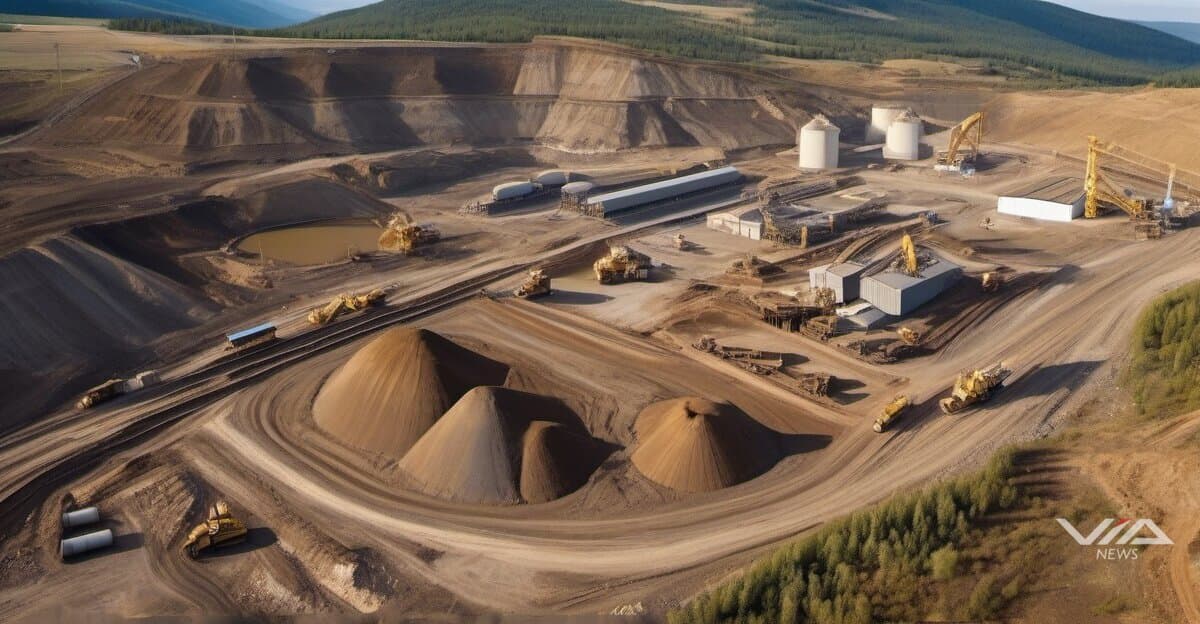
DPM Metals has secured positive feasibility results for its Čoka Rakita gold project in Serbia, marking a significant step toward bringing a major new gold producer online in Eastern Europe. The study demonstrates strong project economics that could support self-funded development by the company.
The feasibility study shows the project generating a net present value of $782 million with a 36% internal rate of return, assuming a gold price of $1,900 per ounce. Probable mineral reserves total 1.52 million ounces of contained gold, an 11% increase over preliminary estimates, underscoring improved geological confidence as the project advanced through study phases.
All-in sustaining costs are projected at $644 per ounce, positioning Čoka Rakita in the first quartile of global gold operations by cost competitiveness. This cost profile provides substantial margin even in weaker gold price environments, a key consideration for project financing and long-term viability.
Initial capital requirements are estimated at $448 million, with the study projecting an 1.8-year payback period once production begins. DPM Metals currently holds $414 million in cash with zero debt, giving the company significant financial flexibility to self-fund development without requiring external financing or dilutive equity raises.
The company is targeting first concentrate production in 2029, contingent on advancing through permitting and final investment decision stages. Serbia has emerged as an increasingly important jurisdiction for European gold production as the continent seeks to reduce dependence on imported metals amid geopolitical tensions and supply chain concerns.
The feasibility completion represents the final major technical milestone before potential construction, moving Čoka Rakita from the study phase into permitting and financing considerations. For DPM Metals, the project represents a pathway to production-stage operations with economics that compare favorably to peer projects globally.
Gold projects achieving feasibility with sub-$700 per ounce sustaining costs have attracted significant investor interest in recent years, particularly those located in stable jurisdictions with existing mining infrastructure. Serbia's mining sector has undergone regulatory modernization in recent years, though permitting timelines remain a variable for project schedules.
The increased reserve estimate reflects additional drilling and geological modeling since preliminary assessments, a positive indicator for resource expansion potential as the project advances. Higher-confidence reserve figures typically improve access to project financing and reduce perceived development risk for potential partners or lenders.