
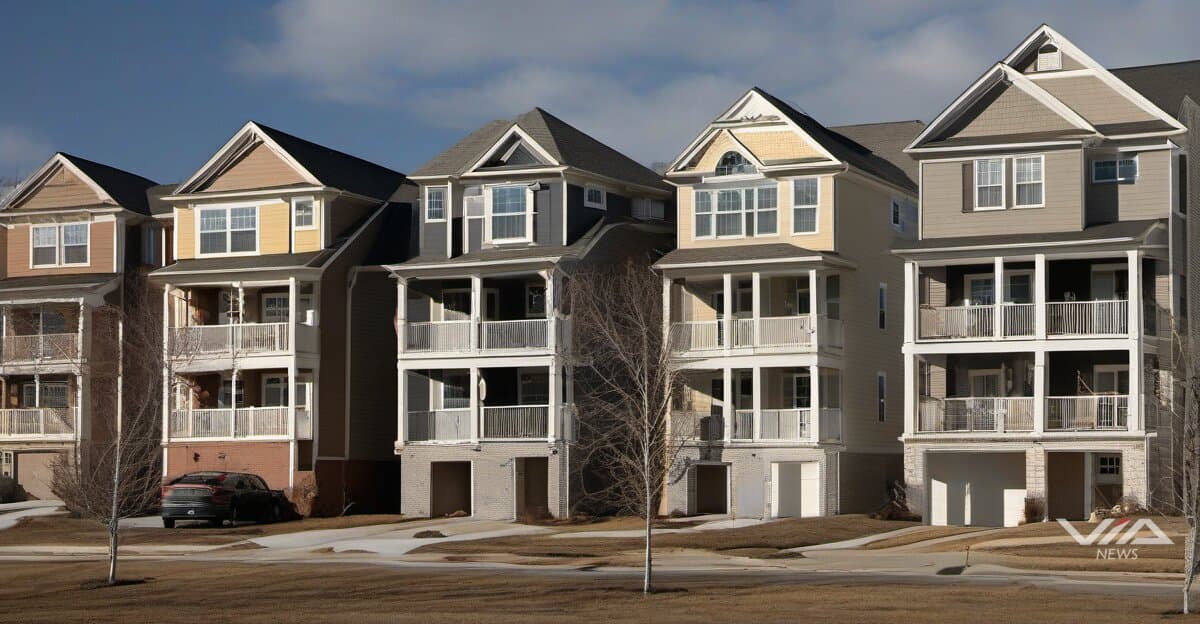
US home sales are forecast to increase 14% in 2026 as inventory expands and the mortgage lock-in effect weakens, according to economists tracking the sector. The projection signals potential upside for homebuilders, mortgage originators, and real estate services companies navigating a market where affordability remains severely constrained.
Middle-income buyers can afford just 21% of homes currently for sale, down from approximately 50% before the pandemic, according to National Association of Realtors economist Nadia Evangelou. Median home prices stand at a record $412,500, while mortgage rates hover above 6%, creating persistent headwinds for residential construction stocks and lending platforms.
"We are seeing a little better condition for more home sales with more inventory and the lock in effect steadily disappearing because life changing events are making more people list their property to move on to their next home," said Lawrence Yun, NAR chief economist.
The easing lock-in effect—where homeowners with sub-4% mortgages have been reluctant to sell and take on higher rates—could unlock supply that benefits brokerage firms and home improvement retailers. Jessica Lautz, NAR deputy chief economist, noted that "the historically low share of first-time buyers underscores the real-world consequences of a housing market starved for affordable inventory."
Price growth is expected to moderate to 2-3% in coming quarters, below the 5-7% annual appreciation seen in recent years. Crucially, wage growth is projected to outpace both inflation and home price increases, gradually improving affordability metrics that have weighed on homebuilder sentiment and mortgage lender volumes.
St. Joe Company repurchased 798,622 shares in 2025 at an average $50.10 per share, up from 70,985 shares in 2024, signaling management confidence amid housing market volatility. The Florida-based developer noted it is maintaining HUD-insured apartment financing with low fixed rates while potentially paying down shorter-duration, higher-interest project debt.
For housing equities, the 14% sales growth forecast depends on inventory continuing to build and mortgage rates stabilizing near current levels. REITs focused on single-family rentals may face headwinds if improved affordability shifts renters toward ownership, while homebuilders with land banks and starter-home exposure could see margin expansion as transaction volumes recover.