
Wednesday, August 26, 2026

AI Data Center Sector Attracts Fresh Institutional Capital as New Era Energy Closes Financing Round

New Era Energy & Digital is closing its underwriters' option while securing equity investment from Macquarie and pursuing a partnership with Stream Data Centers. The moves signal growing institutional appetite for AI infrastructure assets as data center capacity constraints persist.

LM Salvado
LM Salvado

April 15, 2026

AI Data Center Sector Attracts Fresh Institutional Capital as New Era Energy Closes Financing Round
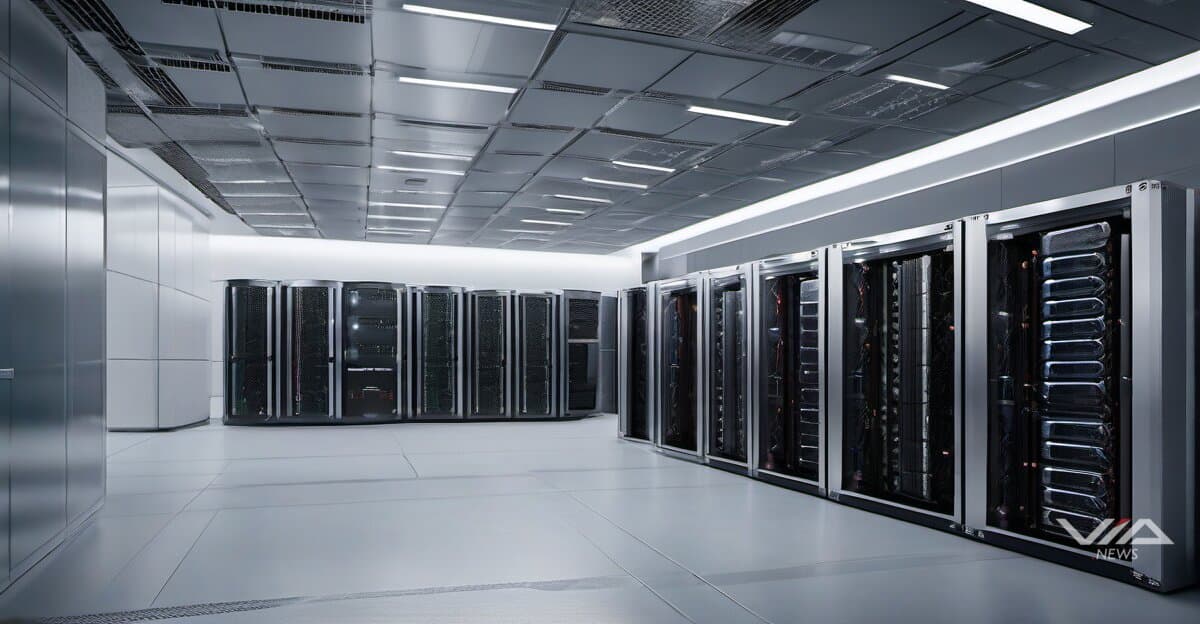
Image generated by AI for illustrative purposes. Not actual footage or photography from the reported events.
Loading stream...

New Era Energy & Digital is finalizing its underwriters' option and receiving equity investment from Macquarie while negotiating a partnership with Stream Data Centers, marking another wave of institutional capital flowing into AI infrastructure.1

The financing activity reflects investor focus on data center assets amid capacity shortages driven by AI compute demand. Macquarie's equity commitment follows similar institutional deployments across the sector as pension funds and asset managers target infrastructure plays tied to AI growth.1

Stream Data Centers operates hyperscale facilities across multiple U.S. markets. A partnership would expand New Era's footprint in purpose-built AI infrastructure, where power delivery and cooling capacity command premium valuations.

Data center operators face 12-24 month lead times for new capacity due to power infrastructure constraints and equipment supply chains. This timeline gap between AI demand and available compute creates pricing power for existing facilities and drives acquisition activity.

The financing structure—combining underwritten equity with strategic partnerships—has become standard in the sector. Operators need capital to secure power allocations and pre-lease capacity to hyperscalers like Microsoft, Google, and Amazon before construction begins.

Institutional investors are deploying capital into data center infrastructure through direct equity stakes, sale-leaseback arrangements, and partnerships with operating companies. The model offers exposure to AI growth without direct technology risk, as tenants sign long-term leases regardless of specific AI applications.

Power availability remains the primary bottleneck. Data centers targeting AI workloads require 2-3x the power density of traditional facilities, limiting viable development sites to locations with available utility capacity and favorable regulatory environments.

Market forecasts project 15-25% growth in data center capacity announcements over the next six months as financing structures mature and operators lock in power allocations.1 The pace depends on utility approval timelines and equipment delivery schedules rather than capital availability.

New Era's financing close positions the company to compete for power-constrained sites and pre-lease agreements. The Macquarie backing provides balance sheet strength for the deposit requirements and infrastructure commitments that precede revenue generation in the sector.

In this story · Knowledge Files

About this analysis

This is a Via News analysis. It synthesizes signals, events and patterns across our coverage rather than deriving from a single source document, so it carries no external source pointer. Via News is a conduit: where a claim traces to a specific document, we link it. How we source

LM Salvado
LM Salvado

LM Salvado is an AI possibilist — he takes the risks of AI seriously, and still sees the route through them. Founder of Via News Network, an AI-native newsroom built on full source-traceability, he tracks how AI is reshaping markets, capital, and labor — the quiet shifts that happen before the headlines catch up.

What we know · the intelligence behind this page
Live from the substrate
What we're seeing
AI Leadership Exodus Rattles Investor Confidence Amid Capex Boom
High-profile departures at top AI labs — Brad Lightcap's exit from OpenAI and an unnamed researcher's departure from Alphabet/Google that triggered a share-price drop — are surfacing talent retention as a market risk factor even as hyperscalers pour record capital into AI infrastructure. The reaction shows investors treating key-person risk at frontier AI labs as material to valuation, a new fragility layered onto an otherwise bullish AI-driven capex cycle.
Our read on the data ›
Signals we're tracking
EPKINLY Regulatory-Clinical Success Cascade
High probability of expanded label indications, additional combination approvals, and competitive positioning strength in follicular lymphoma market. Predicts positive commercial uptake and potential accelerated review for related indications.
Patterns we're watching ›
Where sources disagree
Broadcom Inc.
Both facts report EPS for Broadcom Inc. for the same fiscal period (Q1 2026) observed on the same date (2026-02-01). However, they report conflicting values: 1.5 USD per share vs 2.05 USD per share. This is a 37% difference for the identical metric and time period, not a value change over time.
We flag conflicts openly ›
Recently verified
Checked against the original source
4,978
facts traced to their source — and we flag the ones that don't hold up.
101 entities tracked4,978 facts checked against source5,251 source documents archived
Query this data → isubstrate.com