
Wednesday, August 26, 2026

One Million Car Buyers Exit U.S. Market as Tariff Inflation Hits 3-Year High

U.S. inflation reached a 3-year high of 3.8% as home furnishings import tariffs doubled since Q1 2025, eroding real wages and pushing one million new-car buyers out of the market. Wayfair and Lowe's are pivoting defensively as broad consumer demand contracts. Investors face deteriorating earnings prospects across auto and home retail sectors.

LM Salvado
LM Salvado

June 13, 2026

One Million Car Buyers Exit U.S. Market as Tariff Inflation Hits 3-Year High
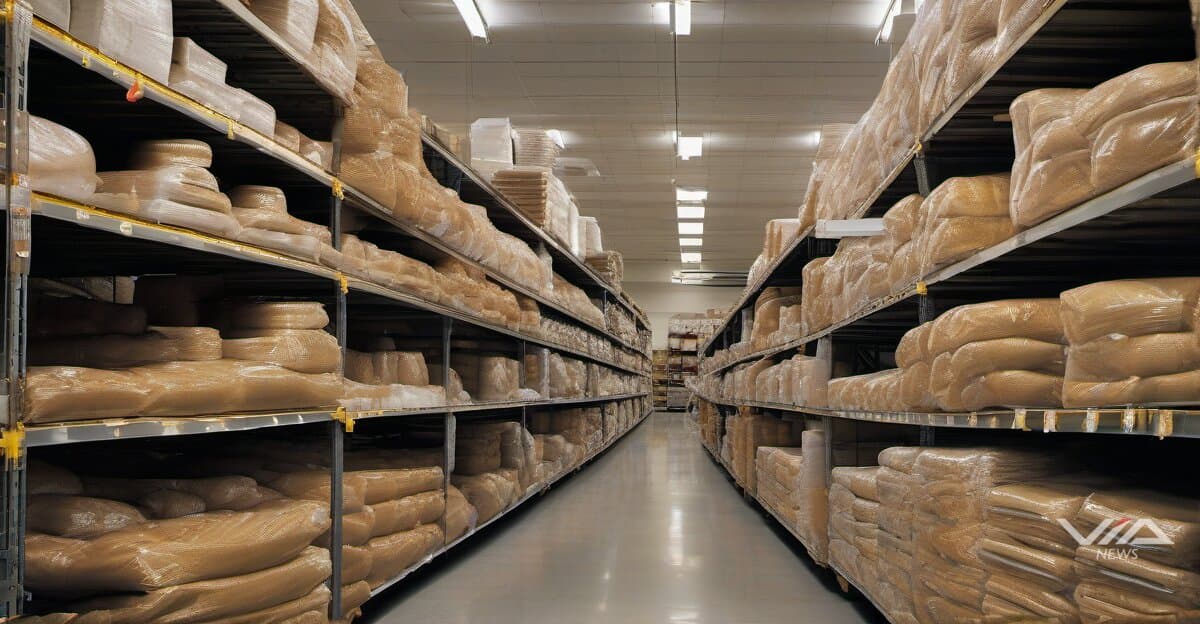
Image generated by AI for illustrative purposes. Not actual footage or photography from the reported events.
Loading stream...

U.S. inflation hit a 3-year high of 3.8%, driven in part by home furnishings import tariffs that have doubled since Q1 2025, eroding real wage growth and triggering structural demand destruction across consumer retail.1

The auto market absorbed the sharpest blow. One million prospective new-car buyers have exited the market as vehicle prices climbed beyond reach for middle-income households.1 That demand loss is not cyclical—it signals permanent consumer exit at current price levels.

Home retail faces parallel pressure. Higher import costs on furniture and fixtures are compressing margins as household budgets stretch thin. Two major retailers are adapting rather than waiting for relief.

Wayfair is testing physical stores to reduce dependence on digital acquisition costs, which have climbed as online ad competition intensifies.1 The move is a structural rethink of how the company reaches price-sensitive customers in a contracting market.

Lowe's moved more aggressively, acquiring Artison Design to capture premium home spending—a segment still showing resilience even as the broader market pulls back.1 The deal is a defensive play: concentrate on high-margin buyers as volume customers disappear.

The Federal Reserve faces a difficult position. Rate hikes to combat 3.8% inflation risk accelerating the demand destruction already underway.1 Holding rates risks embedding inflation further into consumer expectations. Neither path is clean.

For investors, the outlook is bearish and deteriorating. Retailers exposed to entry-level or mid-market price points face compounding pressure: tariff pass-through limits volume, while volume declines limit pricing power. Earnings revisions in auto and home retail are likely to move lower.

The structural question is whether the consumer exits of 2025–2026 are recoverable once tariffs stabilize, or whether spending habits have permanently reset. One million buyers leaving the new-car market suggests the latter is already underway.

Premium positioning—targeted by Lowe's through the Artison Design acquisition—offers a partial hedge for investors, but narrows the addressable market considerably for companies previously operating across income brackets.

As long as home furnishings tariffs remain doubled from Q1 2025 levels, the inflation-tariff feedback loop continues—and the structural contraction in consumer retail deepens.1

Source documents

Via News is a conduit. We point to the source documents behind this report — we don't replace them. Trace any claim to its source and decide what to trust. How we source

Source Trace Score3 source documents3 with a live linkVerifiability: Strong
  1. [1]News articleYahoo Finance· June 10, 2026
    3 Home Furnishing Stocks Poised to Thrive Against the Odds
  2. [2]News articleYahoo Finance· June 10, 2026
    'Dead money': 3 financial advisors reveal where they're parking cash as inflation hits a 3-year high
  3. [3]News articleYahoo Finance· June 3, 2026
    One million Americans have vanished from the new-car market — and it’s exposing a chilling US middle-class crisis

In this story · Knowledge Files

LM Salvado
LM Salvado

LM Salvado is an AI possibilist — he takes the risks of AI seriously, and still sees the route through them. Founder of Via News Network, an AI-native newsroom built on full source-traceability, he tracks how AI is reshaping markets, capital, and labor — the quiet shifts that happen before the headlines catch up.

What we know · the intelligence behind this page
Live from the substrate
What we're seeing
AI Leadership Exodus Rattles Investor Confidence Amid Capex Boom
High-profile departures at top AI labs — Brad Lightcap's exit from OpenAI and an unnamed researcher's departure from Alphabet/Google that triggered a share-price drop — are surfacing talent retention as a market risk factor even as hyperscalers pour record capital into AI infrastructure. The reaction shows investors treating key-person risk at frontier AI labs as material to valuation, a new fragility layered onto an otherwise bullish AI-driven capex cycle.
Our read on the data ›
Signals we're tracking
EPKINLY Regulatory-Clinical Success Cascade
High probability of expanded label indications, additional combination approvals, and competitive positioning strength in follicular lymphoma market. Predicts positive commercial uptake and potential accelerated review for related indications.
Patterns we're watching ›
Where sources disagree
Broadcom Inc.
Both facts report EPS for Broadcom Inc. for the same fiscal period (Q1 2026) observed on the same date (2026-02-01). However, they report conflicting values: 1.5 USD per share vs 2.05 USD per share. This is a 37% difference for the identical metric and time period, not a value change over time.
We flag conflicts openly ›
Recently verified
Checked against the original source
4,978
facts traced to their source — and we flag the ones that don't hold up.
101 entities tracked4,978 facts checked against source5,251 source documents archived
Query this data → isubstrate.com