
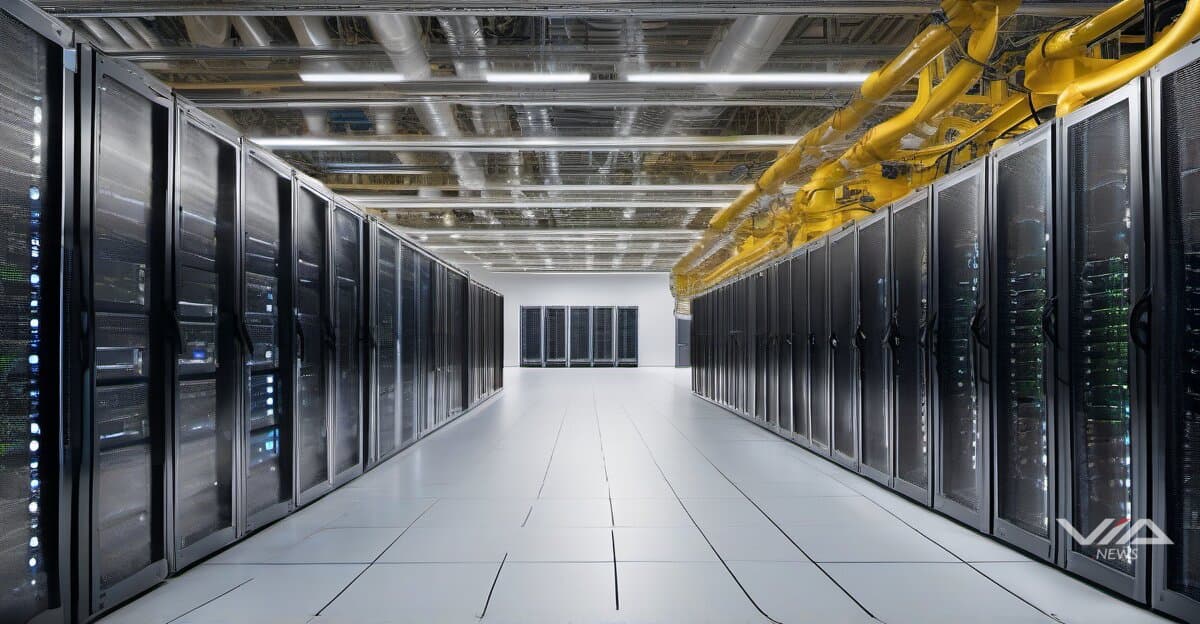
The AI infrastructure arms race is entering a new phase where traditional enterprise technology vendors are racing to rebrand themselves as indispensable suppliers to the AI economy, even as physical constraints threaten to slow the industry's breakneck expansion.
Cisco's latest announcement of its Silicon One G300 chipset and N9000 series switches targeting 1.6T scale-out performance represents a strategic pivot from general-purpose networking to AI-specific infrastructure. "AI at scale demands open, standards-based networking that customers can deploy with confidence across diverse environments," said Yousuf Khan, signaling the company's bid to capture AI data center budgets. David Driggers emphasized that the G300-powered N9000 series "dramatically expands what's possible for AI infrastructure."
The urgency behind these product launches reflects a fundamental shift in AI economics: performance is no longer GPU-limited but infrastructure-constrained. "At AI-factory scale, performance is no longer determined by the network or the data layer alone—it's defined by how tightly they work together," noted Sven Oehme, articulating the new competitive reality where integration trumps component performance.
This repositioning extends beyond networking. Storage providers NetApp and VAST are similarly marketing AI-optimized solutions, while Equinix is expanding its data center footprint to accommodate AI workloads. Even cryptocurrency miners are pivoting: Bitfarms announced plans to rebrand as Keel Infrastructure, with CEO Ben Gagnon positioning the company as "an infrastructure partner that enables customers to achieve their goals in the HPC/AI revolution." CleanSpark is pursuing a similar strategy, with Matt Schultz confirming that "scaled bitcoin mining operations continue to generate durable cash flows" being "redeployed into long-duration infrastructure opportunities."
The financial stakes are enormous. Industry forecasts project the data center market reaching multi-trillion-dollar valuations, while OpenAI and competitors are securing multi-gigawatt GPU partnerships to power next-generation models. This capital intensity is driving consolidation pressure as smaller players lack the balance sheet strength to compete at scale.
However, the buildout faces mounting headwinds. Regulatory friction is increasing, from Pentagon tensions with Anthropic to chipmaker lawsuits over Russian weapons systems. Local opposition to data center construction is intensifying as communities balk at energy demands and environmental impacts. Energy availability itself is emerging as a binding constraint, with AI training clusters requiring power equivalent to small cities.
Market Implications
For investors, the infrastructure layer presents a differentiated exposure to AI growth. While semiconductor valuations reflect euphoria, infrastructure providers trade at more modest multiples despite offering mission-critical choke points. Companies successfully executing the AI-native transition could capture outsized margins as hyperscalers prioritize supply chain reliability.
The risk lies in commoditization. As standards emerge and integration complexity falls, today's premium infrastructure solutions may face price compression. The winners will be those who lock in customers through proprietary integration layers—precisely what Cisco, NetApp, and others are now racing to build.
The next 18 months will determine whether legacy infrastructure vendors can successfully reinvent themselves as AI-era kingmakers, or whether they'll be displaced by cloud-native competitors and vertically integrated hyperscalers building proprietary solutions.