
Wednesday, August 26, 2026

Qatar EV Supply Chain Faces Catastrophic Risk If Gulf Diplomatic Ties Break Down Again

A geopolitical risk assessment identifies UAE logistics hubs as the primary chokepoint for EV components entering Qatar. A recurrence of the 2017–2021 GCC blockade could sever component flows and freeze long-term technology contracts. Qatar's national electrification drive amplifies exposure to this low-probability, high-severity scenario.

LM Salvado
LM Salvado

May 21, 2026

Qatar EV Supply Chain Faces Catastrophic Risk If Gulf Diplomatic Ties Break Down Again
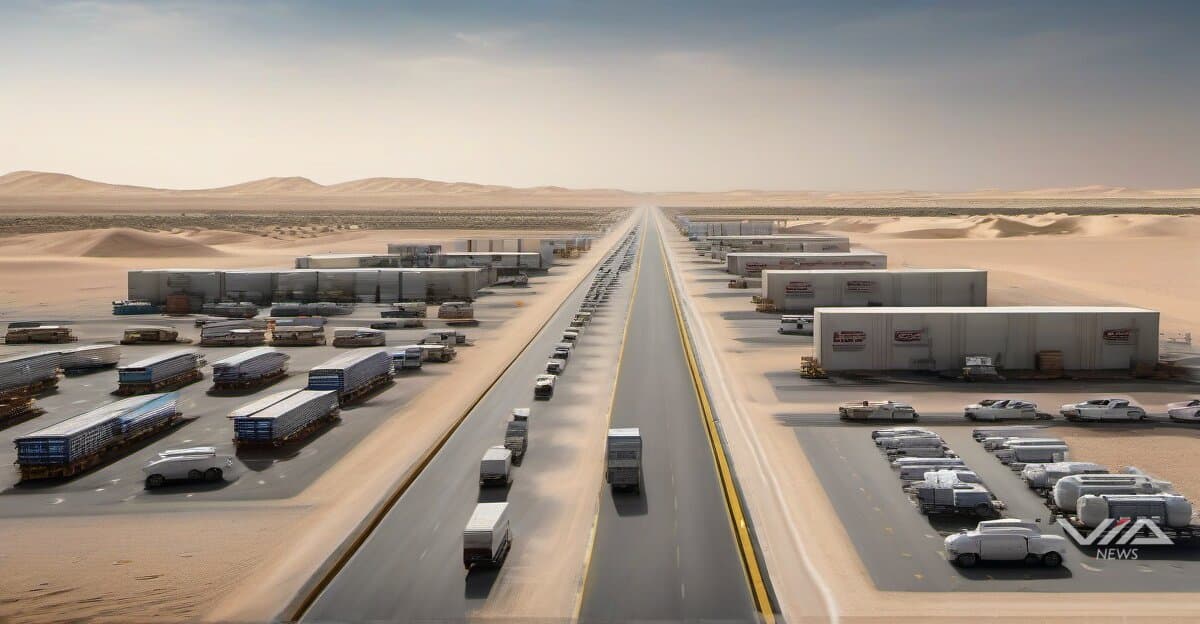
Image generated by AI for illustrative purposes. Not actual footage or photography from the reported events.
Loading stream...

Qatar's EV infrastructure push carries a supply chain vulnerability: most EV components flowing into the country transit UAE logistics hubs.1

A risk assessment dated May 20, 2026 rates another GCC diplomatic breakdown as low probability but catastrophic in potential impact.1

The 2017–2021 blockade—when Saudi Arabia, the UAE, Bahrain, and Egypt severed ties with Qatar—offers the clearest precedent. That isolation choked trade routes and forced rapid supply chain improvisation. An equivalent rupture today would hit harder. Qatar is now midway through a national electrification drive spanning EV infrastructure investment and public transport electrification.1

UAE ports, particularly Jebel Ali, serve as the primary transshipment gateway for EV components destined for Gulf markets. Battery cells, power electronics, and drivetrain parts typically route through Dubai before reaching Qatar. Diplomatic breakdown would force rerouting through Oman or direct long-haul shipping—adding cost and lead time at scale.

Foreign technology partners face a parallel exposure. Charging network contracts, grid integration projects, and fleet electrification programs require multi-year commitments. Regional instability—or sustained uncertainty—deters the long-horizon investment these projects require.1 That deters suppliers before any blockade actually materialises.

For commodity markets, the downstream effects run through copper, lithium, and cobalt demand. Qatar's electrification program represents a consistent demand signal for EV-critical materials. Supply chain disruption would delay or redirect that demand, creating uncertainty for manufacturers with Gulf exposure.

Route concentration is the core risk. When a single logistics corridor handles the majority of component flow for a national infrastructure program, geopolitical friction translates directly into procurement failure. Qatar has limited redundancy built into current supply arrangements.1

Analysts tracking Middle East trade flows should monitor diplomatic signals between Doha and Abu Dhabi as a leading indicator. Deterioration in bilateral relations historically precedes logistics disruption by weeks, not months—giving manufacturers and procurement teams a narrow window to adjust.

About this analysis

This is a Via News analysis. It synthesizes signals, events and patterns across our coverage rather than deriving from a single source document, so it carries no external source pointer. Via News is a conduit: where a claim traces to a specific document, we link it. How we source

LM Salvado
LM Salvado

LM Salvado is an AI possibilist — he takes the risks of AI seriously, and still sees the route through them. Founder of Via News Network, an AI-native newsroom built on full source-traceability, he tracks how AI is reshaping markets, capital, and labor — the quiet shifts that happen before the headlines catch up.

What we know · the intelligence behind this page
Live from the substrate
What we're seeing
AI Leadership Exodus Rattles Investor Confidence Amid Capex Boom
High-profile departures at top AI labs — Brad Lightcap's exit from OpenAI and an unnamed researcher's departure from Alphabet/Google that triggered a share-price drop — are surfacing talent retention as a market risk factor even as hyperscalers pour record capital into AI infrastructure. The reaction shows investors treating key-person risk at frontier AI labs as material to valuation, a new fragility layered onto an otherwise bullish AI-driven capex cycle.
Our read on the data ›
Signals we're tracking
EPKINLY Regulatory-Clinical Success Cascade
High probability of expanded label indications, additional combination approvals, and competitive positioning strength in follicular lymphoma market. Predicts positive commercial uptake and potential accelerated review for related indications.
Patterns we're watching ›
Where sources disagree
Broadcom Inc.
Both facts report EPS for Broadcom Inc. for the same fiscal period (Q1 2026) observed on the same date (2026-02-01). However, they report conflicting values: 1.5 USD per share vs 2.05 USD per share. This is a 37% difference for the identical metric and time period, not a value change over time.
We flag conflicts openly ›
Recently verified
Checked against the original source
4,978
facts traced to their source — and we flag the ones that don't hold up.
101 entities tracked4,978 facts checked against source5,251 source documents archived
Query this data → isubstrate.com