
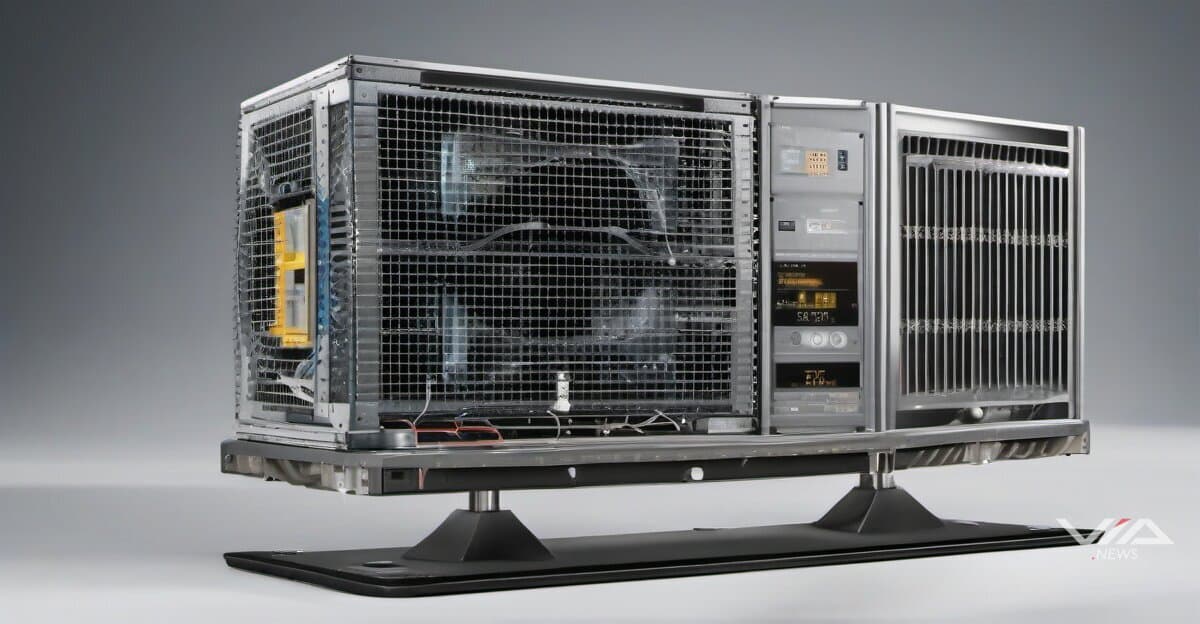
When VisionWave Holdings absorbed QuantumSpeed into its portfolio, it assigned the AI acceleration firm a valuation of $99.6 million. That figure reflects confidence in qSpeed, QuantumSpeed's flagship — and only named — product. For investors tracking VisionWave's exposure, that single-product dependency deserves scrutiny.
Risk analysts assessing QuantumSpeed have categorized its core technological exposure as catastrophic in severity, even while rating its likelihood as low. The concern is straightforward: QuantumSpeed's commercial identity, its customer relationships, its revenue pipeline, and by extension VisionWave's balance sheet entry, all trace back to qSpeed.
The Single-Product Problem
In technology investing, single-product concentration risk is a well-documented valuation hazard. Companies whose entire enterprise value derives from one product face an asymmetric downside: diversified firms can absorb a product failure; single-product firms cannot. QuantumSpeed sits squarely in that second category.
The risk vectors are multiple. Technology obsolescence is perhaps the most gradual — a competitor releasing a faster, cheaper, or more energy-efficient AI acceleration solution could erode qSpeed's market position over quarters or years. But the more abrupt scenarios carry greater near-term valuation risk. A critical software bug discovered in production deployments, or a security vulnerability — particularly concerning given QuantumSpeed's presence in the defense technology domain — could trigger immediate customer attrition and contract cancellations.
Defense-sector clients are especially unforgiving in this regard. A security flaw in a product touching defense infrastructure does not result in a patch cycle and continued deployment. It results in contract termination, potential liability exposure, and reputational damage that is extraordinarily difficult to reverse. For a company operating at the intersection of AI acceleration and defense technology, this is not a theoretical scenario.
Valuation Implications
The $99.6 million figure VisionWave has attached to QuantumSpeed is only defensible as long as qSpeed retains its technical standing and customer base. Unlike a company with diversified revenue streams — where a single product failure might impair 20% or 30% of enterprise value — a negative qSpeed event would likely impair the full valuation. There is no offsetting product line to soften the impact.
Market participants evaluating VisionWave's consolidated position should therefore treat QuantumSpeed's contribution as carrying embedded optionality risk: the value is real under current conditions, but discontinuous rather than gradual in how it could deteriorate.
What to Watch
Investors should monitor three indicators: first, whether QuantumSpeed announces any secondary products or platform extensions that would dilute single-product dependency; second, any disclosed security audits or certifications for qSpeed, particularly in the defense-sector context; and third, VisionWave's own disclosures around how it has stress-tested or hedged the QuantumSpeed position within its portfolio.
For now, the assessed probability remains low. But in technology markets, low-probability catastrophic events have a way of arriving without warning — and a $99.6 million line item with no product diversification is exactly the kind of exposure that warrants a closer look before it does.