
Wednesday, August 26, 2026

AI Data Centers Draw $67B in Contracts as Hyperscalers Bypass Traditional Cloud Infrastructure

Meta committed $27 billion over five years to Nebius for AI-optimized data centers, while Alphabet pledged $40 billion for Texas AI facilities. The deals signal a shift in infrastructure investment from general-purpose cloud providers to specialized AI capacity developers.

LM Salvado
LM Salvado

April 18, 2026

AI Data Centers Draw $67B in Contracts as Hyperscalers Bypass Traditional Cloud Infrastructure
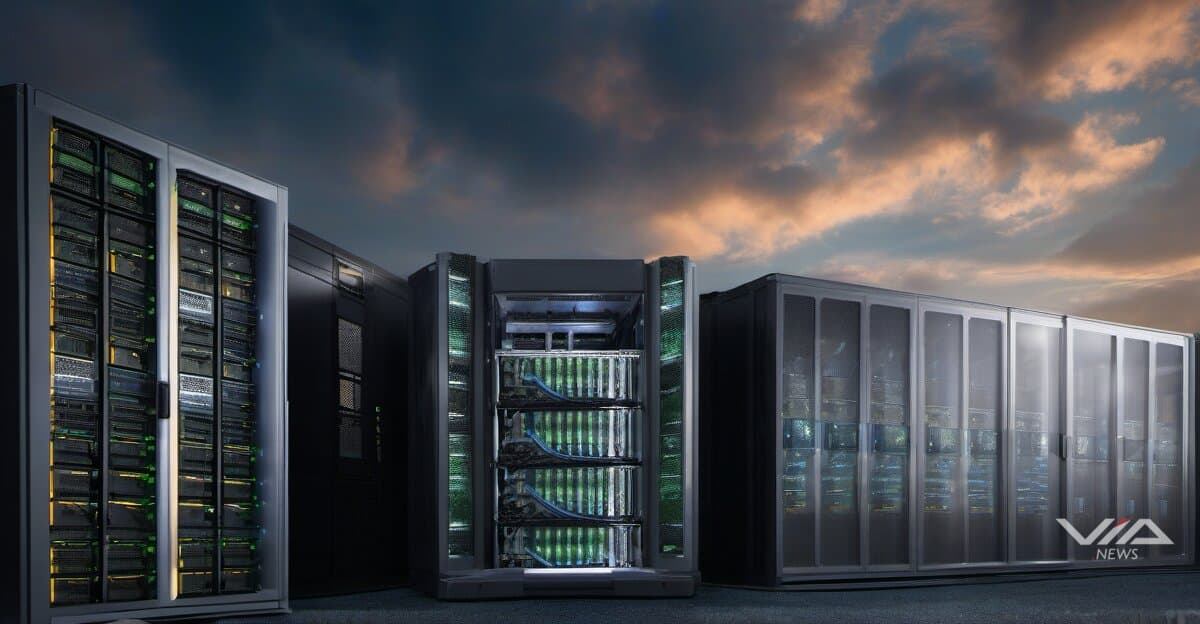
Image generated by AI for illustrative purposes. Not actual footage or photography from the reported events.
Loading stream...

Meta Platforms signed a $27 billion five-year contract with Nebius for AI-specific data center capacity1, marking one of the largest infrastructure commitments in the sector's history. Alphabet separately announced $40 billion in investments for AI data centers in Texas1.

The contracts represent a departure from traditional cloud infrastructure models. Hyperscalers are now committing multi-year agreements exceeding $20 billion with specialized developers rather than expanding in-house capacity or leasing from established data center REITs1.

New Era Energy & Digital closed multiple financings and signed a non-binding letter of intent with Stream Data Centers for Texas Critical Data Centers LLC1. E. Will Gray II noted the facility is "strategically positioned for near-term development and power delivery, presenting a compelling opportunity for data center operators"1.

Power capacity has become the critical constraint. IREN acquired a 1.6-gigawatt site in Oklahoma to meet AI workload demands1. NN, Inc. indicated that "Electric Grid and Data Center is on a plan to become NN's #1 end market"1, reflecting broader supply chain realignment toward AI infrastructure.

The investment pattern creates distinct winners among infrastructure providers. Companies offering AI-optimized facilities with secured power capacity are attracting capital at scale, while traditional data center operators face questions about their positioning for AI workloads.

For cloud infrastructure investors, the shift requires evaluating exposure differently. Traditional metrics like square footage and occupancy rates matter less than power capacity, cooling systems designed for high-density GPU clusters, and proximity to energy sources. Specialized developers with these capabilities are capturing commitments that dwarf typical data center lease agreements.

The trend also impacts component suppliers. Electrical grid infrastructure and high-capacity cooling systems are seeing accelerated demand, creating secondary investment opportunities beyond the data center operators themselves.

In this story · Knowledge Files

About this analysis

This is a Via News analysis. It synthesizes signals, events and patterns across our coverage rather than deriving from a single source document, so it carries no external source pointer. Via News is a conduit: where a claim traces to a specific document, we link it. How we source

LM Salvado
LM Salvado

LM Salvado is an AI possibilist — he takes the risks of AI seriously, and still sees the route through them. Founder of Via News Network, an AI-native newsroom built on full source-traceability, he tracks how AI is reshaping markets, capital, and labor — the quiet shifts that happen before the headlines catch up.

What we know · the intelligence behind this page
Live from the substrate
What we're seeing
AI Leadership Exodus Rattles Investor Confidence Amid Capex Boom
High-profile departures at top AI labs — Brad Lightcap's exit from OpenAI and an unnamed researcher's departure from Alphabet/Google that triggered a share-price drop — are surfacing talent retention as a market risk factor even as hyperscalers pour record capital into AI infrastructure. The reaction shows investors treating key-person risk at frontier AI labs as material to valuation, a new fragility layered onto an otherwise bullish AI-driven capex cycle.
Our read on the data ›
Signals we're tracking
EPKINLY Regulatory-Clinical Success Cascade
High probability of expanded label indications, additional combination approvals, and competitive positioning strength in follicular lymphoma market. Predicts positive commercial uptake and potential accelerated review for related indications.
Patterns we're watching ›
Where sources disagree
Broadcom Inc.
Both facts report EPS for Broadcom Inc. for the same fiscal period (Q1 2026) observed on the same date (2026-02-01). However, they report conflicting values: 1.5 USD per share vs 2.05 USD per share. This is a 37% difference for the identical metric and time period, not a value change over time.
We flag conflicts openly ›
Recently verified
Checked against the original source
4,978
facts traced to their source — and we flag the ones that don't hold up.
101 entities tracked4,978 facts checked against source5,251 source documents archived
Query this data → isubstrate.com