
Wednesday, August 26, 2026

70% Grid Failure Rate Threatens $5.2T AI Infrastructure Buildout — and Hyperscaler Valuations

More than 70% of US grid interconnection requests are withdrawn before approval, according to Berkeley Lab, threatening the $5.2 trillion in AI data center capex planned through 2030. Goldman Sachs projects data center power demand to surge 165% by 2030 versus 2023 levels, but the grid was built for 1–2% annual growth. For Microsoft, Amazon, and Alphabet, the mismatch between capex deployment and capacity delivery is a direct threat to earnings visibility.

LM Salvado
LM Salvado

June 23, 2026

70% Grid Failure Rate Threatens $5.2T AI Infrastructure Buildout — and Hyperscaler Valuations
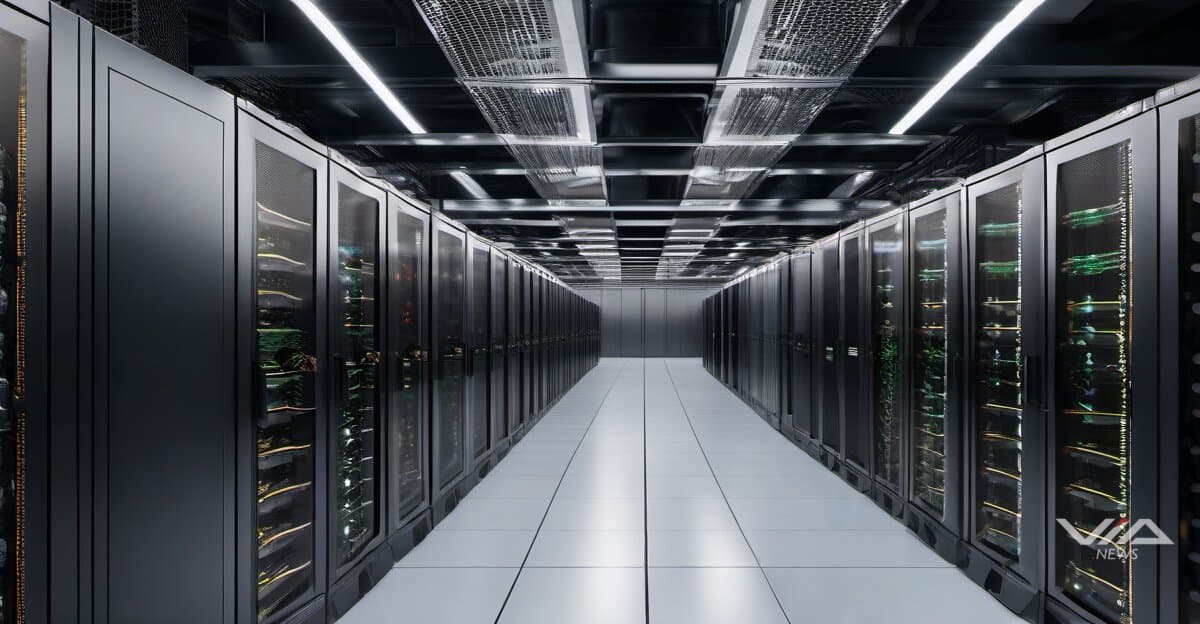
Image generated by AI for illustrative purposes. Not actual footage or photography from the reported events.
Loading stream...

70% of US grid interconnection requests are ultimately withdrawn, according to Berkeley Lab.1 That figure now sits at the center of the AI infrastructure investment thesis.

The industry has committed roughly $5.2 trillion in AI data center capex through 2030.2 Goldman Sachs projects global data center power demand to surge 165% by 2030 versus 2023 levels.3 The US power grid was built for 1% to 2% annual demand growth — not an exponential, decade-long surge.2

Investor Kevin O'Leary has argued publicly that 50% of planned US data centers will never be built due to grid constraints.4 Even a more conservative outcome — 30% to 50% reduction in commissioned capacity through 2030 — restructures hyperscaler return profiles.

Capex Without Capacity

Microsoft, Amazon, and Alphabet have each committed to aggressive multi-year AI infrastructure spending. Markets have priced in delivery. Grid delays break that assumption.

Power constraints compress returns in two stages. Capex deploys before facilities come online — land, permits, and hardware spend without revenue. Then delayed capacity delays AI service revenue. The gap between cash outflow and monetization widens quarter by quarter.

Actual data center completions versus quarterly capex guidance will become the sector's critical tracking metric. FERC interconnection queue approval rates are the leading signal. While withdrawal rates hold above 70%, build timelines slip.1

Valuation Exposure

Hyperscaler price-to-earnings multiples embed assumptions that AI monetization scales with infrastructure spend. A structural supply constraint breaks that model.

Current valuations imply capex translates into productive capacity on schedule. Grid bottlenecks mean capex is deployed but capacity is delayed by months or years. Return-on-invested-capital math shifts accordingly.

The 2027 to 2028 window is when AI infrastructure investment was expected to generate meaningful earnings contribution. That is also precisely when delayed facilities — from interconnection requests withdrawn today — would have come online.

The Binding Constraint

Chips are no longer the bottleneck. Power is. Semiconductor supply chains have improved substantially. Grid interconnection queues have not.

For hyperscaler stocks, the risk is not that AI demand disappoints. It is that infrastructure supply cannot keep pace with demand — and the capital committed delivers returns years late.

A 30% to 50% constraint on a $5.2 trillion buildout, sustained through 2030, is a structural downgrade to earnings visibility for the sector's largest names.2

In this story · Knowledge Files

About this analysis

This is a Via News analysis. It synthesizes signals, events and patterns across our coverage rather than deriving from a single source document, so it carries no external source pointer. Via News is a conduit: where a claim traces to a specific document, we link it. How we source

LM Salvado
LM Salvado

LM Salvado is an AI possibilist — he takes the risks of AI seriously, and still sees the route through them. Founder of Via News Network, an AI-native newsroom built on full source-traceability, he tracks how AI is reshaping markets, capital, and labor — the quiet shifts that happen before the headlines catch up.

What we know · the intelligence behind this page
Live from the substrate
What we're seeing
AI Leadership Exodus Rattles Investor Confidence Amid Capex Boom
High-profile departures at top AI labs — Brad Lightcap's exit from OpenAI and an unnamed researcher's departure from Alphabet/Google that triggered a share-price drop — are surfacing talent retention as a market risk factor even as hyperscalers pour record capital into AI infrastructure. The reaction shows investors treating key-person risk at frontier AI labs as material to valuation, a new fragility layered onto an otherwise bullish AI-driven capex cycle.
Our read on the data ›
Signals we're tracking
EPKINLY Regulatory-Clinical Success Cascade
High probability of expanded label indications, additional combination approvals, and competitive positioning strength in follicular lymphoma market. Predicts positive commercial uptake and potential accelerated review for related indications.
Patterns we're watching ›
Where sources disagree
Broadcom Inc.
Both facts report EPS for Broadcom Inc. for the same fiscal period (Q1 2026) observed on the same date (2026-02-01). However, they report conflicting values: 1.5 USD per share vs 2.05 USD per share. This is a 37% difference for the identical metric and time period, not a value change over time.
We flag conflicts openly ›
Recently verified
Checked against the original source
4,978
facts traced to their source — and we flag the ones that don't hold up.
101 entities tracked4,978 facts checked against source5,251 source documents archived
Query this data → isubstrate.com