
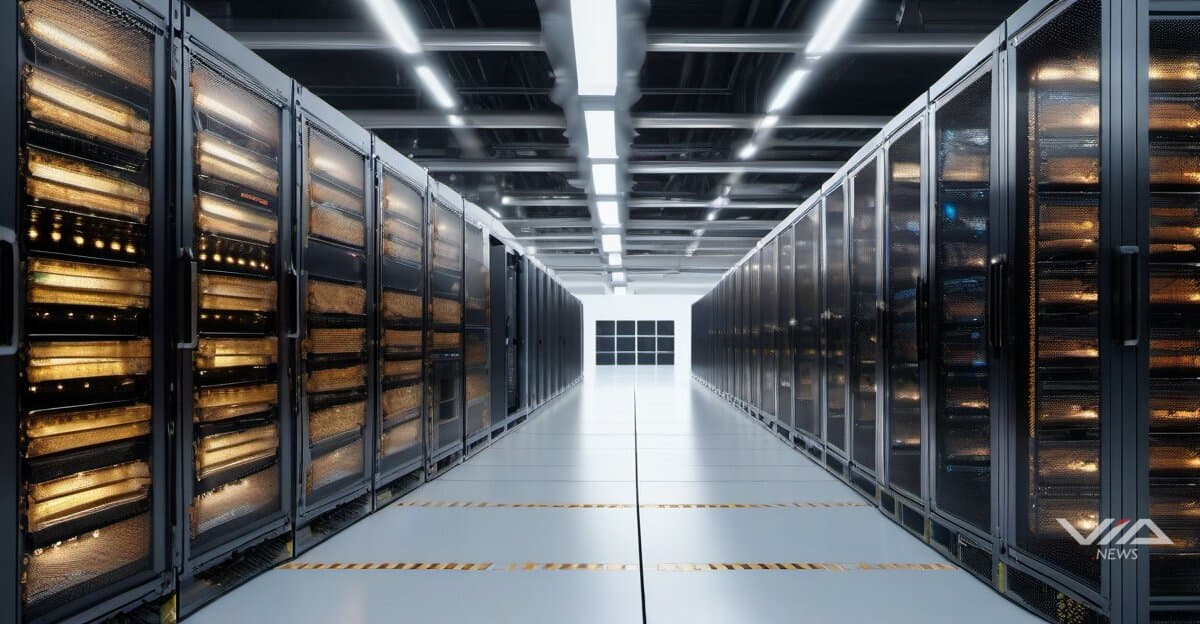
AI cloud providers are building their own data centers after infrastructure delivery delays overtook semiconductor shortages as the main constraint on AI hardware deployment. CoreWeave has developed internal self-build capabilities and diversified its data center supplier base to control the powered shell construction process.
The company identified powered shell infrastructure—not chips or power availability—as the critical bottleneck. CoreWeave executives said building internal construction expertise allows the firm to embed directly into the supply chain and reduce time-to-deployment for GPU clusters.
CoreWeave expects to clear most current infrastructure delays by Q1 2026. The timeline suggests specialized AI cloud providers are racing to match hyperscaler deployment speeds through vertical integration rather than relying on third-party data center operators.
This infrastructure pivot reflects a broader shift in AI capital expenditure allocation. Tech companies spent $200B+ on AI infrastructure in 2025, but deployment bottlenecks are pushing cloud providers to control more of the physical build process rather than outsourcing to established data center REITs.
The self-build strategy puts CoreWeave in direct competition with data center construction firms and real estate trusts that traditionally handled powered shell delivery. Equinix, Digital Realty, and other infrastructure specialists face pressure as cloud providers internalize capabilities previously outsourced.
For investors, the trend signals two opposing forces: increased capex requirements for AI cloud providers building construction teams, and potential margin compression for traditional data center operators losing high-value customers to vertical integration.
The infrastructure constraint also explains recent GPU utilization rate concerns. Chips sit idle when powered shells aren't ready, creating a mismatch between semiconductor production timelines and data center construction schedules that now average 18-24 months.
CoreWeave's supplier diversification strategy mirrors tactics used during the 2021-2023 chip shortage, when cloud providers pre-purchased allocations from multiple foundries. Applied to data centers, this approach spreads risk across contractors but requires more internal project management expertise.
The infrastructure bottleneck may persist through 2026 as AI demand continues outpacing construction capacity. Data center power infrastructure alone requires 12-18 month lead times for transformer installations and utility grid connections, independent of building construction schedules.