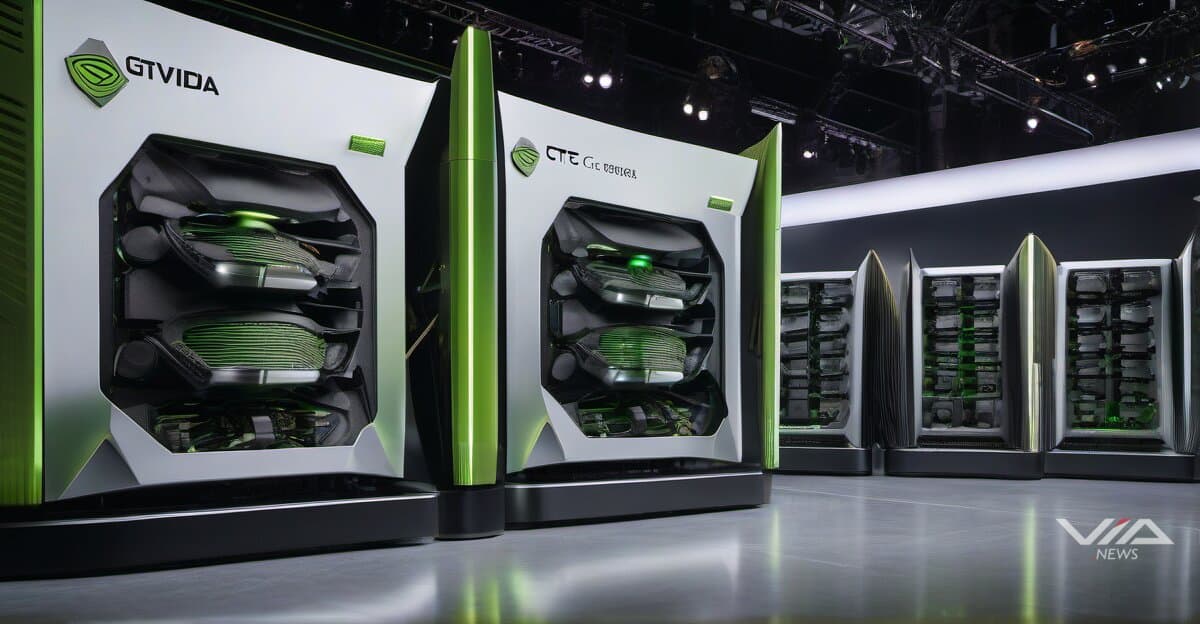
NVIDIA announced over 80 strategic partnerships at GTC 2026 on March 16, positioning itself as the central orchestrator of AI infrastructure rather than just a hardware supplier.
The partnerships span cloud providers, industrial software giants, robotics companies, and inference providers. This represents a strategic expansion from NVIDIA's traditional semiconductor business into platform-level ecosystem coordination.
Hardware announcements included Vera Rubin servers and Grace Blackwell chips, extending NVIDIA's AI infrastructure stack. The company also unveiled GR00T N2, a robotics foundation model designed for physical AI applications, and an Agent Toolkit for developers building AI systems.
The GTC 2026 announcements signal NVIDIA's intention to capture value across the entire AI stack, from silicon to software tools. By building partnerships with industrial software providers and cloud platforms, NVIDIA is embedding itself into enterprise workflows beyond raw compute power.
The robotics focus addresses the emerging market for physical AI systems, where foundation models need real-world deployment infrastructure. GR00T N2 targets industrial robotics, autonomous systems, and manufacturing applications where physical interaction requires specialized AI models.
The partnership strategy contrasts with vertical integration approaches from competitors. Rather than building competing cloud services or software applications, NVIDIA is enabling multiple players across domains including AI infrastructure, robotics, and enterprise AI deployment.
For investors, the 80+ partnerships create network effects that could strengthen NVIDIA's competitive position even as chip competition intensifies. The developer tools and robotics models create switching costs beyond hardware replacement cycles.
The announcements come as AI infrastructure spending remains elevated across hyperscalers and enterprises. NVIDIA's expansion into robotics and agent development tools targets markets adjacent to its core datacenter GPU business, where demand has driven recent revenue growth.