
Wednesday, August 26, 2026

Tiger Global Stacks Nvidia, Broadcom, TSMC as AI Chip Vertical Integration Accelerates

Tiger Global has simultaneously increased positions in Nvidia, Broadcom, and TSMC, tracking a structural wave of AI chip vertical integration. Nvidia acquired Groq, Broadcom is co-developing TPUs with Alphabet and custom processors with Arm and OpenAI, and Nvidia has begun shipping Vera CPUs. Analysts expect commoditization pressure on general-purpose GPU revenue to accelerate within 18 to 24 months.

LM Salvado
LM Salvado

May 25, 2026

Tiger Global Stacks Nvidia, Broadcom, TSMC as AI Chip Vertical Integration Accelerates
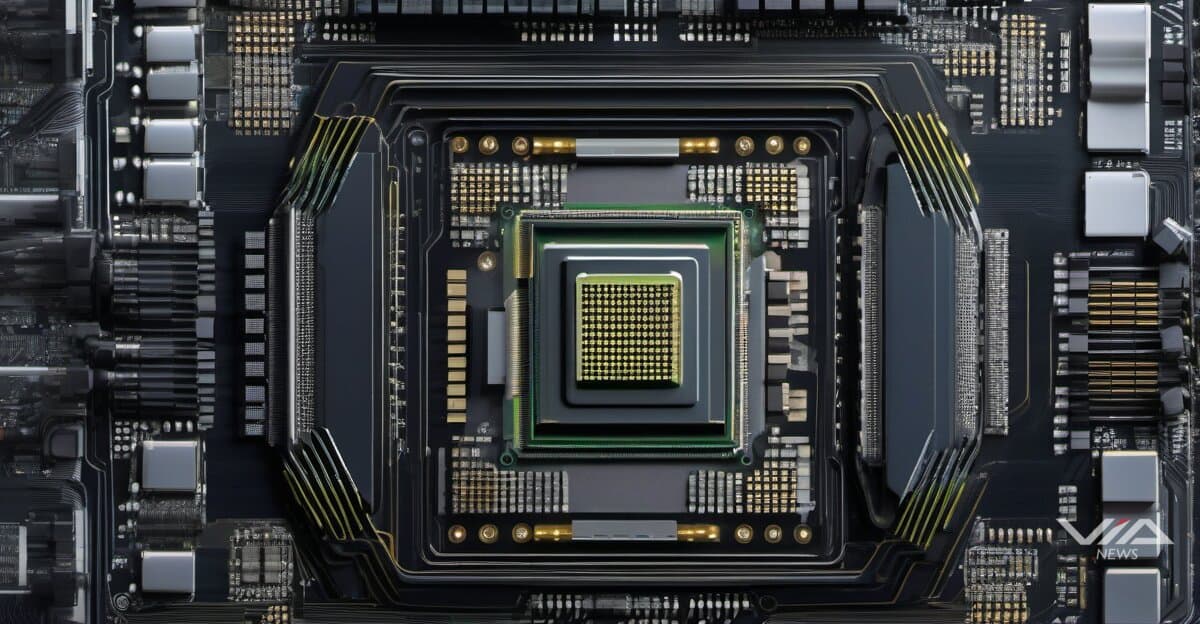
Image generated by AI for illustrative purposes. Not actual footage or photography from the reported events.
Loading stream...

Tiger Global has simultaneously increased its stakes in Nvidia, Broadcom, and TSMC — a coordinated position across the full semiconductor value chain as AI chip architectures shift away from commodity GPUs.1

The fund's move tracks a wave of vertical integration. Nvidia acquired Groq, the liquid processing unit specialist. Broadcom is co-developing TPUs with Alphabet and collaborating with Arm and OpenAI on custom processors. Nvidia has begun shipping Vera CPUs.1 Each deal extends chip designers deeper into the compute stack.

The trend points to one structural outcome: hyperscalers are reducing dependence on commodity GPU purchasing. Custom silicon gives cloud giants tighter control over performance, cost, and supply. That is a structural shift, not a cyclical one.

Tiger Global's three-name exposure maps cleanly onto the value chain. Nvidia holds the GPU and CPU design layer. TSMC manufactures virtually all advanced chips regardless of designer. Broadcom sits at the custom silicon bridge between hyperscaler demand and semiconductor supply.1 Together, the three positions cover design, fabrication, and custom ASIC capture.

Within 18 to 24 months, commoditization pressure on general-purpose GPU revenue is expected to accelerate.1 Hyperscalers building proprietary accelerators will need fewer off-the-shelf GPUs. That threatens Nvidia's core volume business — unless its own vertical moves (Groq acquisition, Vera CPUs) generate offsetting revenue streams.

Broadcom stands to gain most in the near term. Co-design relationships with Alphabet and OpenAI place it at the center of custom silicon demand growth. TSMC benefits from either outcome — every custom chip, regardless of designer, still requires advanced fabrication at scale.

Tiger Global's positioning reads as a hedge with structural conviction: bullish on sector growth, but betting that winners will be those with the deepest integration, not the broadest commodity exposure.

For market participants tracking institutional flows, the template is visible. Nvidia for compute dominance and vertical reach. TSMC for foundry irreplaceability. Broadcom for custom silicon capture as hyperscaler capex shifts from buying GPUs to co-designing chips.

In this story · Knowledge Files

About this analysis

This is a Via News analysis. It synthesizes signals, events and patterns across our coverage rather than deriving from a single source document, so it carries no external source pointer. Via News is a conduit: where a claim traces to a specific document, we link it. How we source

LM Salvado
LM Salvado

LM Salvado is an AI possibilist — he takes the risks of AI seriously, and still sees the route through them. Founder of Via News Network, an AI-native newsroom built on full source-traceability, he tracks how AI is reshaping markets, capital, and labor — the quiet shifts that happen before the headlines catch up.

What we know · the intelligence behind this page
Live from the substrate
What we're seeing
AI Leadership Exodus Rattles Investor Confidence Amid Capex Boom
High-profile departures at top AI labs — Brad Lightcap's exit from OpenAI and an unnamed researcher's departure from Alphabet/Google that triggered a share-price drop — are surfacing talent retention as a market risk factor even as hyperscalers pour record capital into AI infrastructure. The reaction shows investors treating key-person risk at frontier AI labs as material to valuation, a new fragility layered onto an otherwise bullish AI-driven capex cycle.
Our read on the data ›
Signals we're tracking
EPKINLY Regulatory-Clinical Success Cascade
High probability of expanded label indications, additional combination approvals, and competitive positioning strength in follicular lymphoma market. Predicts positive commercial uptake and potential accelerated review for related indications.
Patterns we're watching ›
Where sources disagree
Broadcom Inc.
Both facts report EPS for Broadcom Inc. for the same fiscal period (Q1 2026) observed on the same date (2026-02-01). However, they report conflicting values: 1.5 USD per share vs 2.05 USD per share. This is a 37% difference for the identical metric and time period, not a value change over time.
We flag conflicts openly ›
Recently verified
Checked against the original source
4,978
facts traced to their source — and we flag the ones that don't hold up.
101 entities tracked4,978 facts checked against source5,251 source documents archived
Query this data → isubstrate.com