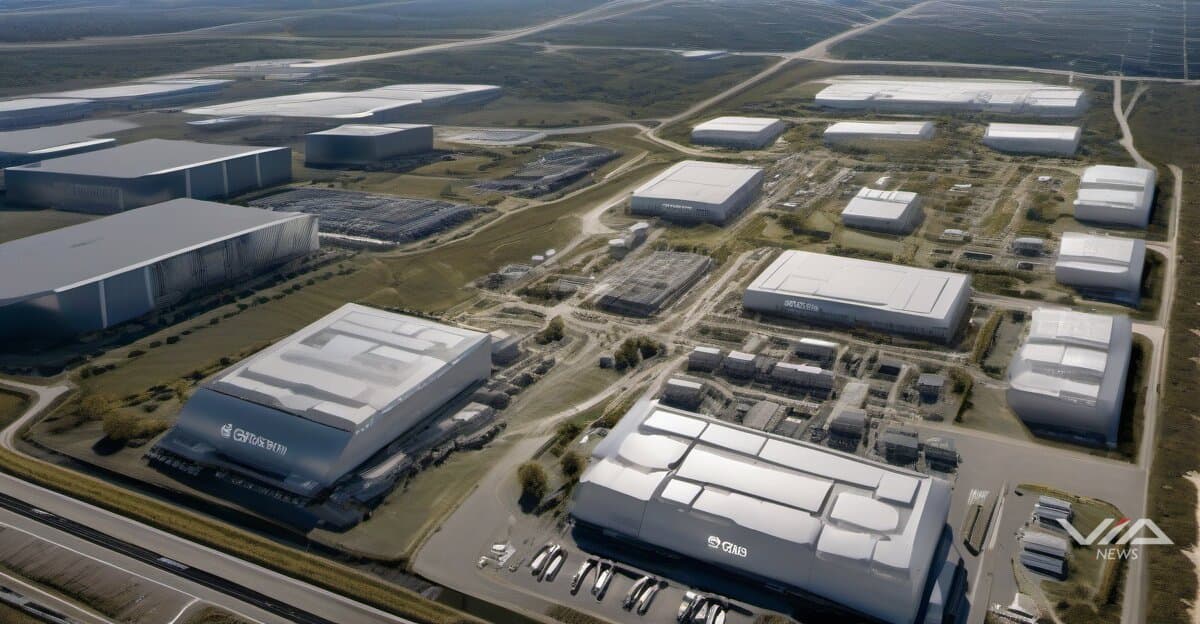
Olix plans to ship its first product in 20271, entering a semiconductor market projected to reach $1 trillion in cumulative chip sales through 2027. The startup joins an industry-wide capacity expansion as established players scale AI accelerator production and emerging firms develop specialized chips for next-generation workloads.
Nvidia's trillion-dollar forecast, announced at its GTC conference, has accelerated infrastructure investments across the supply chain. Micron is acquiring new fabrication facilities to expand High-Bandwidth Memory production, while Meta has committed $12B to AI infrastructure partnerships focused on chip development and deployment.
The capacity race spans multiple chip architectures. Traditional AI accelerators like GPUs and Tranium chips face growing competition from specialized designs including photonic processors and Language Processing Units optimized for inference workloads. Olix's entry positions it among companies developing inference-specific chips designed to handle deployed AI models more efficiently than general-purpose training hardware.
High-Bandwidth Memory production represents a critical bottleneck in AI chip manufacturing. Micron's fabrication facility acquisitions address supply constraints that have limited production of advanced AI accelerators requiring HBM integration. The memory component accounts for significant cost and performance differentiation in current-generation AI chips.
Meta's $12B infrastructure commitment extends beyond internal data center builds to external partnerships that could reshape chip design roadmaps. Hyperscale companies increasingly fund custom silicon development to optimize for their specific workloads rather than relying solely on merchant chip vendors.
The 2027 timeline for Olix's first product shipment aligns with industry expectations for next-generation AI infrastructure deployment. Companies launching specialized inference chips face competition from established GPU makers adding inference optimizations and startups developing alternative architectures like optical computing.
The semiconductor industry's transformation narrative includes both established players scaling existing AI chip designs and new entrants targeting specific workload optimizations. The $1 trillion revenue trajectory reflects demand across training, inference, and memory components as AI deployment expands beyond hyperscale data centers into enterprise and edge environments.