
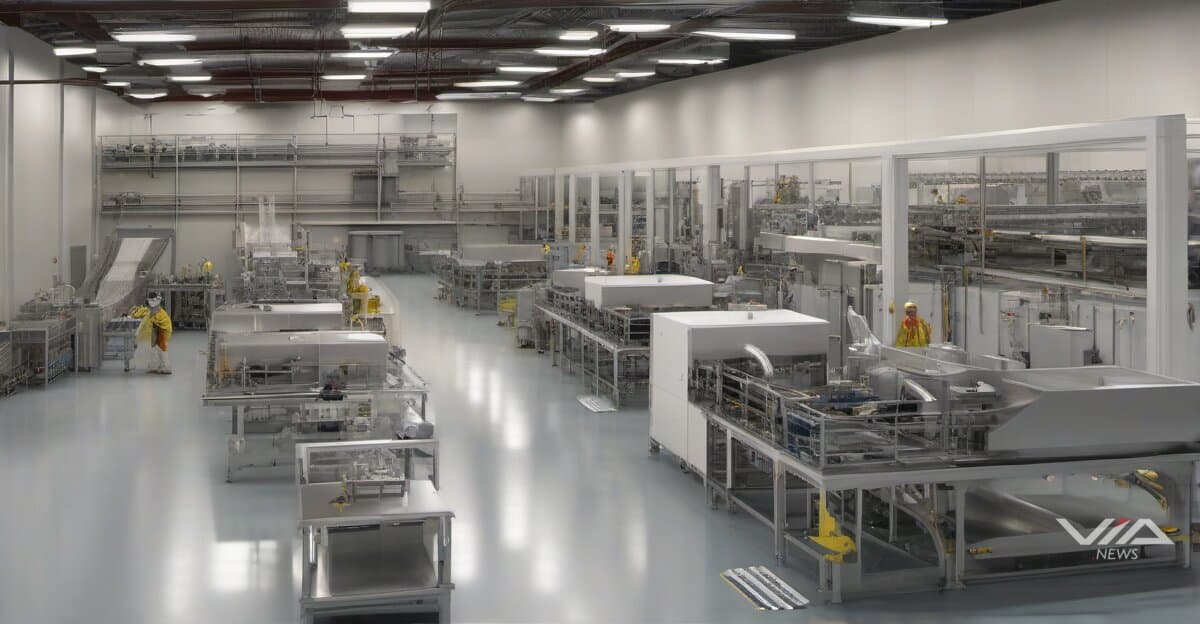
Amkor Technology's Arizona campus is scheduled to start production in January 2028 with 750,000 square feet of cleanroom capacity for semiconductor packaging operations.
The facility expands US-based advanced packaging infrastructure as companies diversify supply chains away from Taiwan and South Korea. Amkor operates as a contracted packaging provider for fabless chip designers and integrated device manufacturers requiring assembly, test, and packaging services.
Advanced packaging—stacking chips vertically or placing them side-by-side—has become critical for AI accelerators, data center processors, and mobile chips. TSMC, Intel, and Samsung compete in this segment, but outsourced assembly and test services (OSAT) providers like Amkor handle significant production volume.
The Arizona buildout follows CHIPS Act incentives promoting domestic semiconductor production. Apple's commitment to source US-packaged chips from the facility signals customer demand for stateside capacity. The plant will likely support mobile processors, automotive chips, and potentially AI hardware requiring domestic assembly.
Amkor's largest facilities remain in South Korea, Taiwan, and China, where established infrastructure and skilled labor pools offer cost advantages. The Arizona campus represents geographic hedging rather than wholesale relocation.
The 2028 timeline aligns with TSMC's Arizona fab ramp and Intel's Ohio facility plans. Coordinated domestic capacity across wafer fabrication and packaging reduces logistics complexity for customers prioritizing supply chain resilience.
Cleanroom square footage indicates capital intensity. Packaging facilities require controlled environments similar to wafer fabs, though less stringent. The 750,000 sq ft footprint suggests high-volume production capability competitive with Asian sites.
Semiconductor equipment suppliers like Disco Corporation and TOWA Corporation provide dicing saws, molding systems, and test handlers for packaging lines. US facility launches typically drive equipment orders 18-24 months before production starts, supporting capital equipment makers.
The plant's success depends on customer willingness to absorb higher US manufacturing costs versus Asian alternatives. Premium pricing for domestic packaging requires customers valuing supply security over cost optimization.