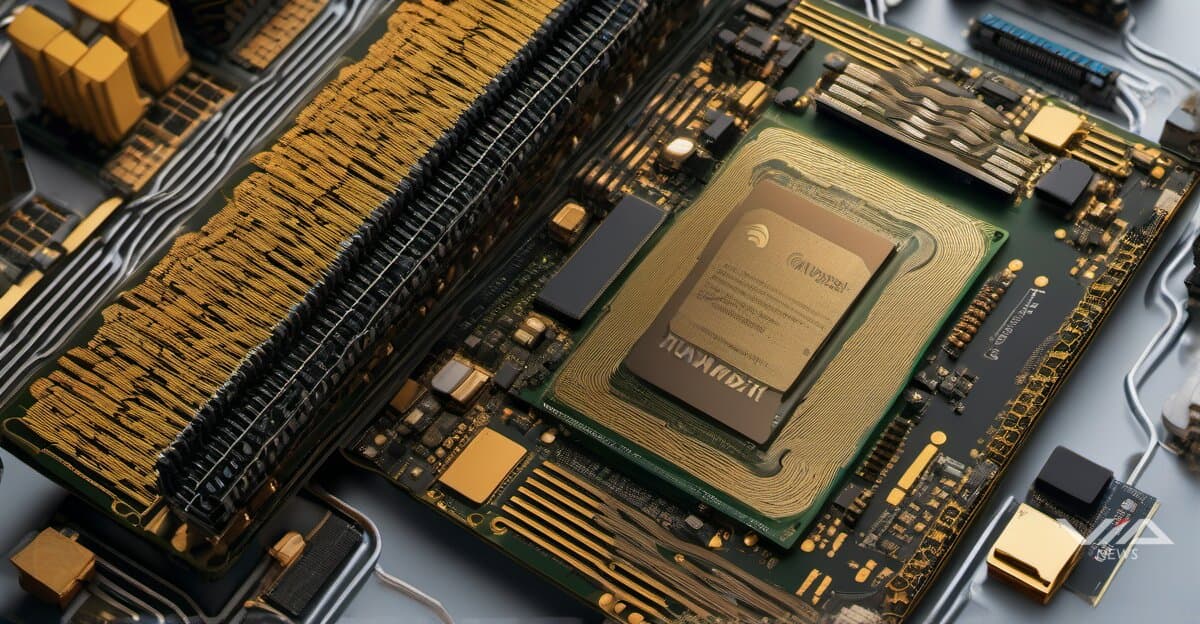
Huawei launched its 950PR AI chip to compete directly with Nvidia in inference workloads, according to recent reports.1 Alibaba and ByteDance are planning to place orders for the new chip, marking a significant competitive challenge to Nvidia's market position.1
The semiconductor equipment sector is experiencing robust growth alongside this intensifying chip competition. Lam Research and other chip equipment manufacturers are reporting strong performance as AI chip production scales globally.
Venture funding to foundational AI startups in Q1 2026 reached double the total for all of 2025, reflecting accelerating investment in the AI infrastructure layer.2 This funding surge supports the buildout of specialized AI-optimized chip architectures beyond traditional GPU designs.
The memory sector presents a divergent picture. While equipment makers serving memory production show strength, commodity memory companies face valuation pressure. Wall Street had expected Micron to stumble, though contrarian analysts argue the bearish case may be premature.3 This split suggests the market is differentiating between specialized AI memory solutions and traditional DRAM/NAND products.
Power Integrations introduced TOPSwitchGaN devices with pin-to-pin compatibility to existing TinySwitch-5 ICs, allowing designers to scale from 10W to 440W using common methodology.4 This standardization could reduce design complexity for AI chip power management systems.
The competitive dynamics reveal a market transitioning from Nvidia's near-monopoly toward a multi-vendor landscape. Huawei's 950PR targets inference workloads specifically, a different positioning than Nvidia's training-focused H100 and H200 chips. Chinese tech giants' willingness to adopt Huawei silicon indicates domestic substitution accelerating amid ongoing technology restrictions.
Equipment makers are positioned to benefit regardless of which chip vendor wins market share, as all competitors require advanced fabrication tools. The memory sector divergence points to margin compression in commodity products while specialized high-bandwidth memory for AI commands premium pricing.