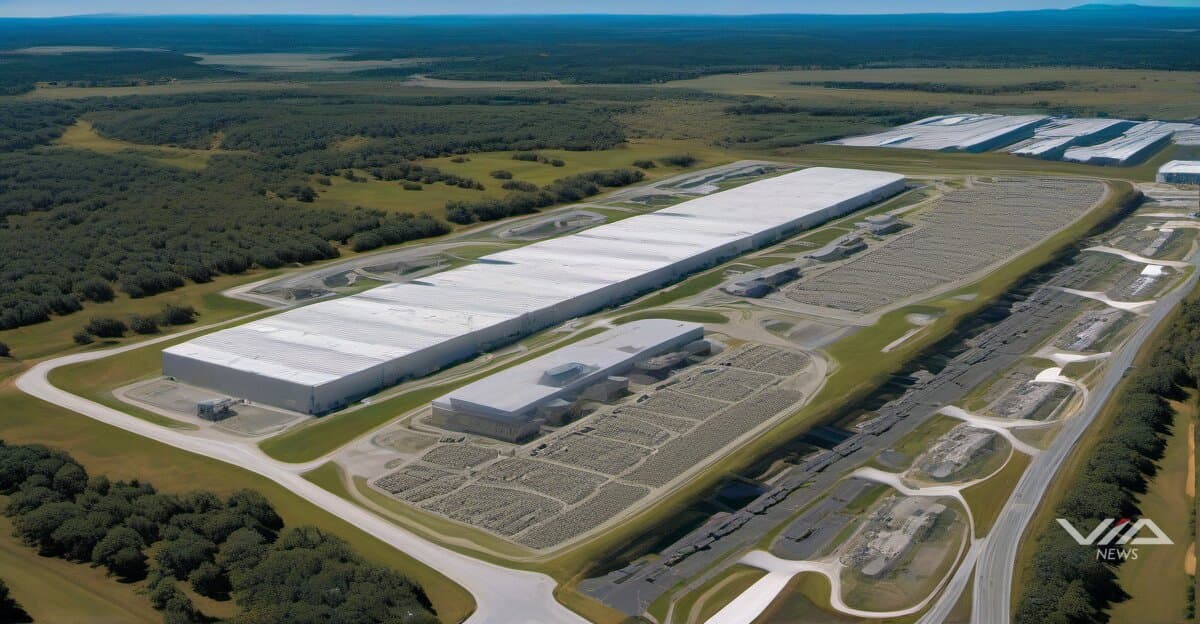
Nvidia announced a $1 trillion chip sales target through 2027 at its GTC conference, triggering an industry-wide expansion in AI semiconductor production capacity.1
The forecast is reshaping supply chains across multiple chip categories. Micron is acquiring new fabrication facilities dedicated to High-Bandwidth Memory production, a critical component for AI accelerators that require massive data throughput.2 Meta has committed $12B to AI infrastructure partnerships as hyperscalers race to secure chip supply.1
Traditional AI chip makers are scaling production of established architectures including Tranium processors and GPUs. These workhorse chips currently power most large language models and neural network training.2
Emerging players are targeting specialized niches. Olix is developing photonic chips and inference-optimized processors, with plans to ship its first product in 2027.1 Language Processing Units represent another category designed specifically for transformer models and natural language workloads.2
The capacity expansion spans the full semiconductor stack. High-Bandwidth Memory fabrication requires advanced packaging techniques that integrate memory dies directly with processing chips. Photonic chips use light instead of electricity for data transfer, promising lower power consumption for inference tasks.1
Market sentiment across semiconductor stocks has improved as the scale of AI infrastructure buildout becomes clear.2 The trillion-dollar forecast suggests sustained multi-year demand rather than a cyclical spike.
Investors face a bifurcated opportunity set. Established chipmakers like Nvidia and Micron offer exposure to near-term volume growth in proven architectures. Startups developing specialized processors present higher-risk bets on architectural shifts in AI computing.
The 2027 timeline for first-generation specialized chips means meaningful revenue contribution remains years away. Traditional GPU and HBM production will capture the majority of spending through at least 2026.1
Supply chain constraints remain a wildcard. Semiconductor fabrication capacity takes 18-24 months to bring online, creating potential bottlenecks if demand accelerates faster than Nvidia's forecast.