
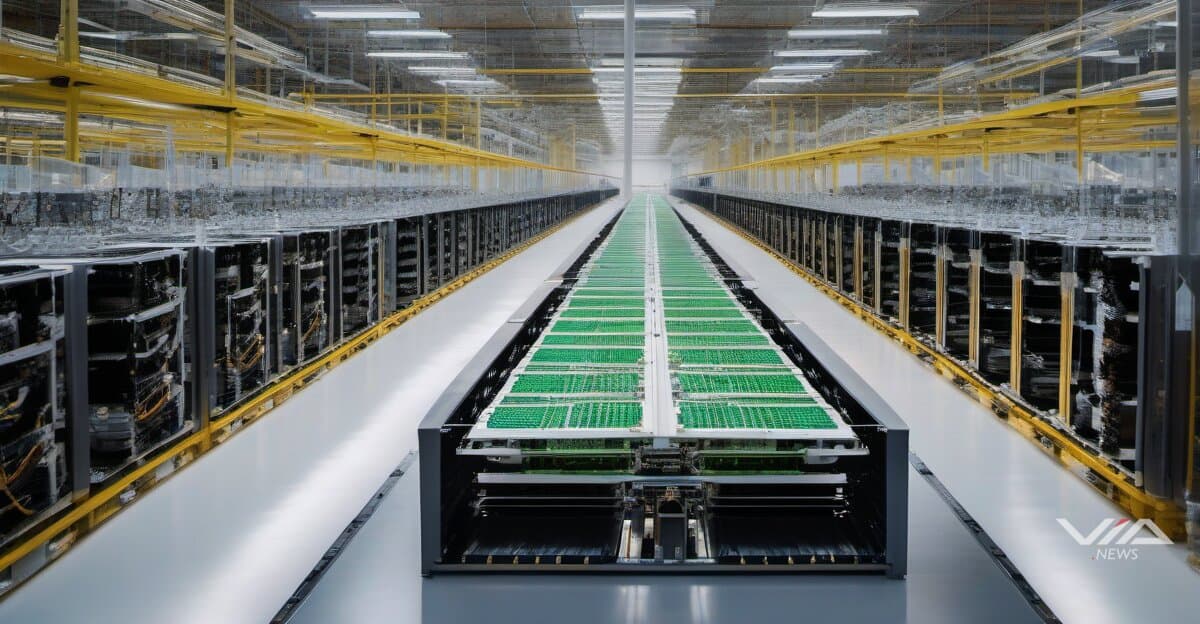
NVIDIA's roadmap targeting Rubin Ultra chip delivery in 2027 has escalated competition in next-generation AI processors, coinciding with billions in semiconductor manufacturing investments returning to US soil. TSMC and Apple are leading the reshoring push through major facility commitments, converging geopolitical supply chain restructuring with accelerating chip performance cycles.
AMD landed a significant Meta partnership for AI chip deployments, marking a competitive shift in a market where NVIDIA has maintained dominant positioning. The partnership signals enterprise customers are diversifying AI hardware suppliers as performance requirements intensify and supply chain security becomes critical.
TSMC's US manufacturing expansion addresses policy requirements forcing big tech companies to secure domestic chip production capacity. Apple's parallel investments in US-based semiconductor facilities underscore the strategic imperative, as federal incentives and geopolitical tensions reshape where advanced chips are manufactured.
The dual transformation creates distinct investment implications for semiconductor stocks. NVIDIA's aggressive roadmap pace maintains technological leadership but increases capital expenditure requirements and execution risk. AMD's Meta win validates its enterprise AI strategy, potentially expanding gross margins if deployment volumes scale as forecast.
TSMC faces the complex economics of operating advanced fabs in the US, where construction and labor costs run 30-40% higher than Taiwan facilities. The foundry's customer commitments and federal subsidies must offset these structural cost disadvantages to preserve operating margins that investors have priced into current valuations.
Big tech's new burden of securing power infrastructure for AI data centers adds another capital allocation challenge. Policy requirements are pushing companies to invest directly in power generation and grid connections, costs previously absorbed by utilities. This shifts capex profiles for hyperscale customers and creates demand for turnkey infrastructure solutions.
The convergence of chip performance acceleration and manufacturing reshoring creates a 2027 inflection point. Companies with both leading-edge design capabilities and secured US production capacity will command premium valuations. Those missing either element face margin compression or market share losses as enterprise buyers prioritize supply chain resilience alongside performance metrics.