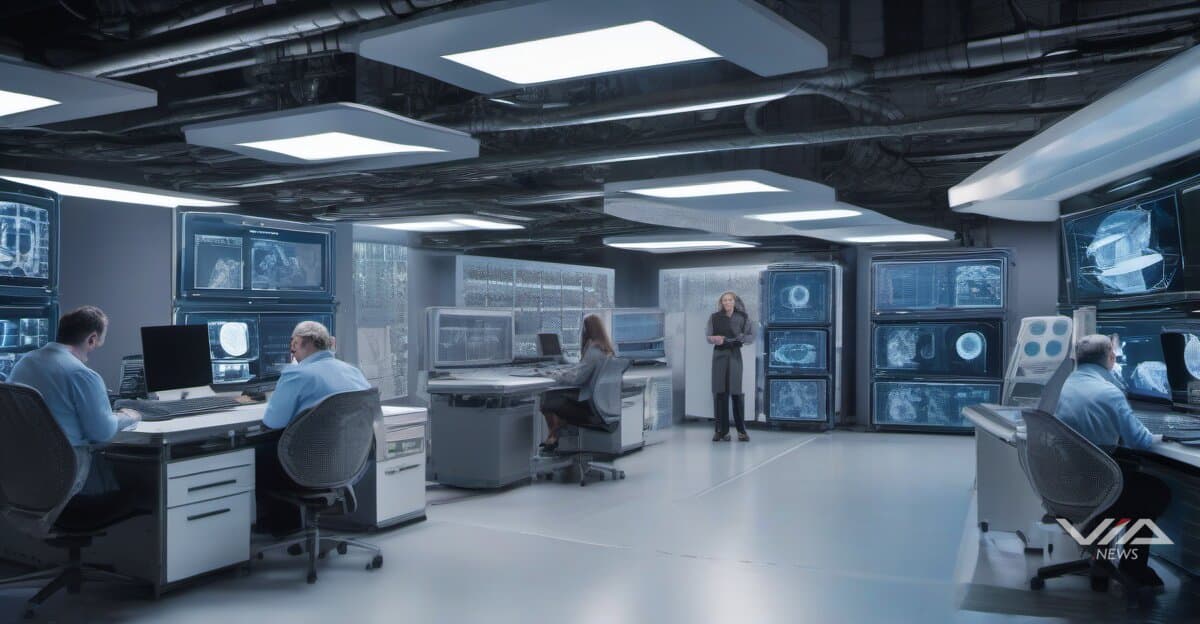
OpenAI's chief scientist Jakub Pachocki stated the company expects AI models capable of working indefinitely in a coherent way, predicting "a whole research lab in a data center."1 The forecast signals a shift from code assistance tools to autonomous research systems that operate without human supervision.
The transition hinges on reasoning models that maintain coherence across extended work sessions. Pachocki explained that capability improvements enable models to work longer without help, moving the industry beyond simple coding assistants.1
NVIDIA's RTX PRO 6000 Blackwell workstation edition targets this emerging market, designed specifically for data science workloads requiring sustained computation.2 The hardware infrastructure split creates two distinct markets: high-end training systems and efficient inference platforms for deployed models.
Palantir shares rose 6% as investors recognized the company's positioning in AI infrastructure deployment. The gain reflects growing demand for systems that orchestrate autonomous AI workloads across enterprise environments.
Advanced frameworks like DiLoCoX-107B for distributed training and RL-KPI for reinforcement learning enable the technical foundation for automated research systems. These technologies allow AI models to coordinate across multiple machines while maintaining training efficiency.
Pachocki acknowledged regulatory challenges, stating "this is a big challenge for governments to figure out."1 He advocated deploying powerful models in sandboxes isolated from systems they could damage or exploit.1
The research automation trajectory creates infrastructure demand spanning chip manufacturers, cloud providers, and software platforms that manage autonomous AI operations. Companies supplying components for extended AI reasoning tasks stand to benefit as organizations build capacity for systems that operate continuously.
The concentration of AI capabilities in data center environments raises questions about access and control as research automation scales. Pachocki's timeline suggests the technology for autonomous research labs is approaching readiness, though deployment timelines and regulatory frameworks remain uncertain.