
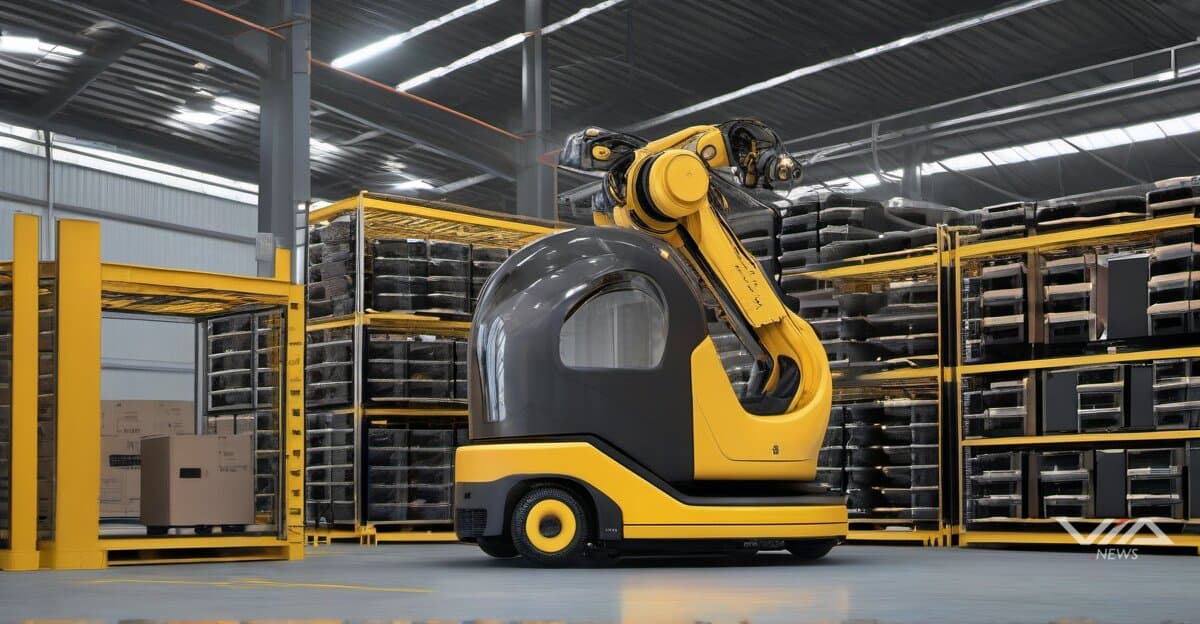
Nomagic's Shoebox Picker handles more than 98% of shoeboxes on the market, demonstrating specialized robotics are achieving commercial viability faster than general-purpose alternatives. The milestone comes as warehouse automation companies shift focus from versatile systems to task-specific solutions.
Nuro is conducting autonomous on-road testing as part of its safety framework developed through years of commercial deployments, with the company targeting commercial robotaxi operations by end-2026. The timeline reflects industry-wide acceleration in autonomous vehicle commercialization.
"Our vision is to bring physical AI into the heart of warehouse and logistics operations, where intelligent, autonomous systems can finally bridge the gap between digital optimization and real-world execution," said Kacper Nowicki, highlighting the convergence of AI capabilities with physical automation.
Deployment timelines are compressing rapidly in emerging markets. In Saudi Arabia, Chinese robots support logistics, smart manufacturing, healthcare, and smart city services across high-tech sectors. "They allow local companies and government entities to experiment, pilot, and scale automation solutions in months instead of years, which is exactly what Saudi Vision 2030 requires," said Mohammed Alsolami.
The robotics sector is experiencing significant talent migration between leading AI labs including OpenAI, Meta, and Covariant, suggesting increased cross-pollination between software AI and physical robotics development. This talent flow coincides with naval and manufacturing partnerships deploying physical AI systems.
The shift toward application-specific robotics creates investment implications across the supply chain. Companies developing specialized picking, sorting, and handling systems for defined use cases are demonstrating faster paths to commercial deployment than competitors pursuing general-purpose humanoid robots.
Autonomous vehicle stocks face bifurcating timelines, with commercial robotaxi operators like Nuro advancing toward 2026 launches while broader autonomous trucking and delivery applications extend further out. Warehouse automation providers benefit from immediate deployment opportunities as logistics operators seek labor alternatives and efficiency gains.
Industry consolidation appears likely as specialized robotics companies with proven deployment records attract acquisition interest from larger automation providers and logistics operators seeking vertical integration.