
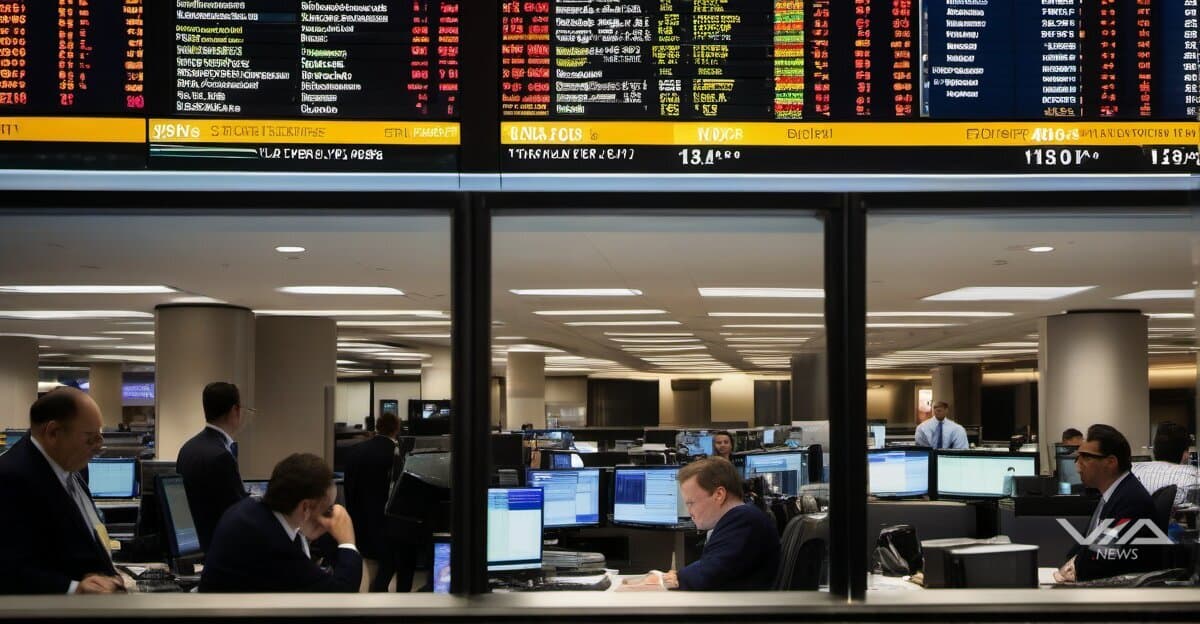
Shares slipped Friday in Asia after a tumultuous day on Wall Street, where Microsoft experienced its worst drop in nearly six years. Oil prices fell, and precious metals like gold and silver also saw their values decline. In a surprising move, the CEO of Indonesia's stock market, Imam Rachman, resigned, stating it was "part of a commitment toward recent market conditions." Following this news, Jakarta's benchmark index gained 1.2%, though it had previously sunk 7.4% on Wednesday.
The Optimistic View
The recent market volatility presents several opportunities for investors and the broader economy. Tech stocks, including resilient performers like IBM and Meta Platforms, could recover strongly from their recent corrections. This recovery could lead to a broader market rebound, supported by increased investment in emerging sectors such as artificial intelligence (AI) and robotics. Companies like Meta Platforms and Tesla are driving technological advancements, which could spur economic growth and innovation.
Emerging markets like Indonesia could also benefit from improved governance and transparency, attracting a surge in foreign investment. The AI and robotics sector is poised for accelerated growth, potentially driving economic expansion and creating new opportunities for businesses and investors alike.
The Pessimistic View
However, the current market volatility and uncertainty pose significant risks. There is a possibility of further declines in asset prices, particularly in technology stocks, which have already seen substantial drops. Political instability and geopolitical tensions, such as those between the U.S. and Iran, could disrupt global markets and increase risk aversion among investors.
A combination of rising interest rates, deteriorating economic fundamentals, and heightened geopolitical tensions could trigger a severe market correction. This scenario could potentially lead to a global recession, causing widespread financial distress and impacting various sectors of the economy.
System-Level Implications
The increased volatility in global markets may lead to more conservative investment strategies, affecting liquidity and investment flows. Investors might shift their focus towards safer assets like gold, which could impact the valuation of tech stocks and other growth sectors. Tech giants like Microsoft and Tesla, facing significant stock drops, could see a shift in market leadership and influence. This could open opportunities for competitors or new entrants to gain a foothold in the market.
The Contrarian Perspective
While the recent declines in tech stocks have been significant, some analysts argue that these drops may be more about sector-specific issues rather than broader economic concerns. The geopolitical tensions with Iran could be a catalyst for market movements but are not necessarily the root cause. Additionally, rising gold prices might be influenced by speculative investment flows rather than fundamental economic factors.
This contrarian view suggests that the current market volatility might be overblown and that underlying economic fundamentals remain strong. As such, investors might find value in holding onto quality tech stocks and waiting for a potential recovery.
Multiple Perspectives
The Optimistic Case
Bulls in the market are optimistic about the potential recovery in tech stocks following recent corrections. They believe that resilient companies like IBM and Meta Platforms will lead this resurgence, supported by increased investments in cutting-edge sectors such as AI and robotics. This growth is expected to drive technological advancements and stimulate economic expansion. Additionally, emerging markets like Indonesia, which have shown improvements in governance and transparency, are likely to attract significant foreign investment. Bulls argue that a strong rebound in tech stocks could catalyze a broader market recovery, fostering a positive economic environment.
The Pessimistic Case
Bears are concerned about the risks posed by market volatility and uncertainty, particularly in the technology sector. They fear that rising interest rates, deteriorating economic fundamentals, and heightened geopolitical tensions—such as those between the U.S. and Iran—could trigger a severe market correction. This scenario could lead to a global recession, causing widespread financial distress and instability. Bears warn that political instability and geopolitical conflicts could disrupt global markets, increasing risk aversion among investors and leading to further declines in asset prices.
The Contrarian Take
The contrarian view challenges the market consensus that recent volatility and declines in major tech stocks are indicative of broader economic concerns. Instead, they suggest that these declines may be more related to sector-specific issues rather than systemic economic problems. Contrarians point out that while geopolitical tensions with Iran could influence market movements, they are not necessarily the underlying cause of the current market conditions. Furthermore, rising gold prices might be driven by speculative investment flows rather than genuine economic fears. This perspective highlights that the market might be overreacting to certain factors, and there could be opportunities for those who bet against the prevailing consensus.
Deeper Analysis
Second-Order Effects
The recent volatility in global markets, particularly the significant drop in tech giants like Microsoft, can have several ripple effects. One key consequence is the potential shift in investment strategies towards safer assets. Investors might move away from high-risk tech stocks to more stable investments such as bonds or precious metals like gold and silver. This shift could lead to reduced liquidity in tech-heavy sectors, impacting not just individual companies but also broader economic indicators.
Another indirect consequence is the effect on emerging markets. Countries heavily reliant on technology exports or foreign direct investment in tech sectors might experience economic slowdowns if multinational corporations reassess their investments due to market instability. This could lead to a domino effect, influencing trade balances and currency values globally.
Stakeholder Reality Check
The fluctuation in stock markets has immediate implications for stakeholders including workers, consumers, and communities. For workers, the impact varies widely depending on their industry and company performance. In tech companies experiencing significant stock drops, there might be increased uncertainty about job security and future growth prospects. Conversely, in companies showing positive performance, employees might benefit from enhanced job security and potential wage increases.
Consumers are indirectly affected by changes in the stock market through shifts in consumer confidence and spending patterns. A decline in market confidence can lead to reduced consumer spending, impacting retail and service industries. Additionally, fluctuations in the value of retirement funds and savings accounts can affect long-term financial planning and stability for individuals and families.
Global Context
- Asian Markets: The mixed reactions across Asian markets highlight the diverse economic conditions and resilience among different countries. South Korea's Kospi setting records contrasts sharply with declines in Japan, China, and Australia, reflecting varying levels of economic stability and investor sentiment.
- Geopolitical Tensions: The volatility in global markets is partly driven by geopolitical tensions, especially those involving the United States. Concerns over trade policies, sanctions, and diplomatic relations can significantly impact investor confidence and market stability, leading to unpredictable outcomes in international trade and finance.
- Economic Stability: The broader concern about global economic stability is evident in the varied responses from different regions. As major economies like the U.S. and China navigate complex political landscapes, the ripple effects on smaller economies and emerging markets become increasingly pronounced, highlighting the interconnectedness of the global economy.
What Could Happen Next
Scenario Planning: What Could Happen Next
Best Case Scenario (Probability: 25%)
In this scenario, tech stocks recover strongly, leading to a broader market rebound. Improved governance and transparency in emerging markets like Indonesia attract substantial foreign investment, boosting their economies. The AI and robotics sector experiences accelerated growth, driving innovation and economic expansion. This scenario would likely be supported by positive macroeconomic indicators, such as stable interest rates and reduced geopolitical tensions, fostering an environment conducive to risk-taking and investment.
Most Likely Scenario (Probability: 50%)
A balanced assessment suggests that while there might be some recovery in tech stocks and emerging markets, it will be gradual and cautious. Investors may adopt more conservative strategies, leading to increased volatility but not necessarily a full-scale market correction. The AI and robotics sector continues to grow, albeit at a measured pace, as companies navigate regulatory challenges and market uncertainties. This scenario reflects a mixed bag of outcomes where both positive and negative factors play a role, resulting in a somewhat stable yet unpredictable market environment.
Worst Case Scenario (Probability: 20%)
In this scenario, a combination of rising interest rates, deteriorating economic fundamentals, and heightened geopolitical tensions leads to a severe market correction. This could trigger a global recession, causing widespread financial distress. The impact would be felt across various sectors, with tech giants like Microsoft and Tesla experiencing significant stock drops, leading to a shift in market leadership and influence. This scenario highlights the potential for systemic risks to materialize, leading to a downturn that could affect both developed and emerging markets.
Black Swan (Probability: 5%)
An unexpected outcome that nobody is discussing could be a sudden technological breakthrough that disrupts existing industries and markets. For instance, a major advancement in quantum computing could rapidly change the landscape of technology and finance, leading to unforeseen shifts in market dynamics and investor behavior. This scenario represents a low-probability, high-impact event that could reshape the global economy in ways that are currently hard to predict.
Actionable Insights
Actionable Insights
For Investors
Portfolio Implications: Consider rebalancing your portfolio to include resilient tech stocks like IBM and Meta Platforms, which have shown growth despite market volatility. Keep an eye on AI and robotics sectors for long-term growth opportunities.
What to Watch: Monitor political instability and geopolitical tensions, as they can significantly affect market conditions. Stay informed about any regulatory changes that might impact tech investments.
For Business Leaders
Strategic Considerations: Evaluate your company's exposure to market volatility and consider diversifying your investment portfolio. Focus on innovation and technological advancements, particularly in AI and robotics, to stay competitive.
Competitive Responses: Strengthen partnerships and collaborations within the tech ecosystem to mitigate risks associated with market fluctuations. Invest in employee training and development to ensure your workforce is equipped to handle new technologies.
For Workers & Consumers
Employment: The current market volatility may lead to uncertainty in some sectors, particularly in technology. However, companies showing resilience, like IBM, may offer more stable employment opportunities. Keep an eye on job markets and consider upskilling in emerging tech areas.
Pricing: Market volatility can influence pricing across various industries. Be prepared for potential price adjustments, especially in tech products and services. Look for value-added services and products that offer long-term benefits.
For Policy Makers
Regulatory Considerations: Assess the need for regulatory measures that can stabilize the market during periods of high volatility. Consider policies that support innovation and growth in emerging tech sectors like AI and robotics.
Economic Stability: Develop strategies to address political instability and geopolitical tensions that can impact economic stability. Implement measures to protect workers and consumers from adverse effects of market fluctuations.
Signal vs Noise
The Real Signal
The genuine concern in today’s financial news revolves around the resilience of tech stocks amidst recent volatility. While there has been a noticeable decline in major tech stocks, the underlying economic fundamentals remain stable. This suggests that the current downturn might be more about sector-specific issues rather than broader economic concerns.
The Noise
The media hype surrounding geopolitical tensions with Iran and their immediate impact on market movements can be seen as noise. While these tensions do influence investor sentiment, they are not the primary drivers of the recent market fluctuations. Similarly, the rise in gold prices, often seen as a safe haven asset, might be more influenced by speculative investment flows rather than actual economic instability.
Metrics That Actually Matter
- Tech Sector Performance: Monitor the performance of tech stocks, especially those showing resilience such as IBM and Meta Platforms.
- Economic Indicators: Keep an eye on broader economic indicators like GDP growth rates and unemployment figures to gauge overall economic health.
- Inflation Rates: Inflation trends are crucial as they can affect interest rates and consumer spending power, impacting stock markets.
Red Flags
A warning sign that many are overlooking is the potential for overreaction in the market due to short-term events. Investors should be cautious of making long-term decisions based on short-term volatility. Additionally, the concentration of investments in a few dominant tech stocks could lead to significant losses if these stocks continue to underperform.
Historical Context
Historical Context
Similar Past Events:
The current market volatility echoes events such as the 2008 financial crisis and the dot-com bubble burst in 2000. Both periods were marked by significant drops in major tech stocks and widespread market uncertainty.
What Happened Then:
In 2000, the NASDAQ Composite Index, heavily weighted with technology stocks, saw a sharp decline, leading to a prolonged bear market. Similarly, the 2008 financial crisis resulted in a global economic downturn, with the S&P 500 experiencing a steep decline of over 50% from its peak.
Key Differences This Time:
This time, the market faces unique challenges such as unprecedented monetary policies, geopolitical tensions, and the ongoing impact of the pandemic. Additionally, the resilience shown by tech giants like Microsoft in previous downturns suggests a potentially different trajectory compared to past crises.
Lessons from History:
Past market crashes highlight the importance of diversification and long-term investment strategies. They also underscore the need for robust regulatory frameworks to prevent systemic risks. Today, investors should be cautious but not necessarily pessimistic, considering the adaptive nature of modern economies and markets.