
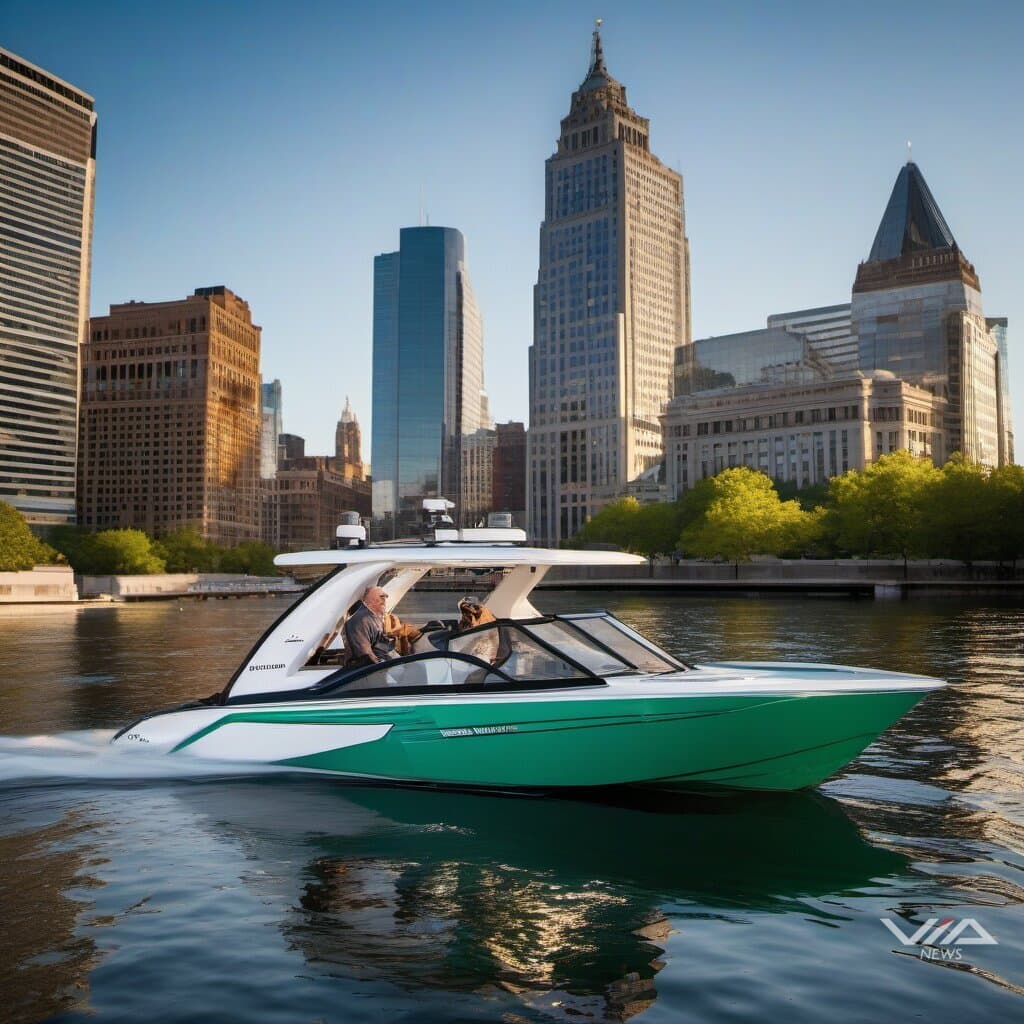
Carving silently across Lake Mead, an all-electric wake sport boat is making waves in the marine industry. Built by California-based startup Arc, the 23-foot Arc Sport EV is designed by a team of former Tesla and Rivian engineers, bringing Silicon Valley's innovation to the water.
The Optimistic View
The launch of the Arc Sport EV signals a promising shift towards cleaner, quieter alternatives in the marine world. With a growing consumer preference for electric vehicles across various sectors, the electric boat market is expected to see significant growth. This transition could lead to a substantial reduction in marine pollution and noise, fostering a healthier aquatic environment.
Moreover, the expansion into new markets such as commercial marine operations like tugboats and ferries could drive substantial growth for Arc and other manufacturers. This growth would create new industries around charging infrastructure and foster innovation in marine technology, potentially transforming how we interact with water bodies.
The Pessimistic View
Despite the potential benefits, there are significant risks associated with the widespread adoption of electric boats. The high initial cost and limited affordability may restrict market penetration, making it difficult for many consumers to afford these eco-friendly alternatives. Additionally, the lack of adequate charging infrastructure and grid capacity poses a challenge for widespread adoption.
If these issues persist, they could lead to low adoption rates, causing significant financial losses for Arc and other electric boat manufacturers. In such a scenario, traditional boat makers might remain unaffected, and consumers could be left without affordable electric alternatives.
System-Level Implications
The introduction of electric boats by Arc could have far-reaching implications. There could be an increased demand for lithium-ion batteries and related materials, potentially leading to supply shortages and price increases. This shift could also accelerate the transition away from fossil fuels across different sectors, including marine, as consumers increasingly prefer electric vehicles.
Traditional marine manufacturers who rely on internal combustion engines might face disruption, potentially shifting market leadership towards companies with expertise in electric propulsion and software integration. This could lead to a redefinition of the marine industry landscape, with new players emerging and established ones adapting to stay relevant.
The Contrarian Perspective
While electric boats offer numerous environmental and operational benefits, the high upfront costs and limited charging infrastructure could hinder their rapid adoption and market penetration. Critics argue that until these barriers are addressed, the impact of electric boats on the marine industry might be limited, and traditional boat makers could maintain their dominant position.
However, proponents of electric boats believe that with continued innovation and investment in infrastructure, these challenges can be overcome, paving the way for a more sustainable and technologically advanced future in marine transportation.
Multiple Perspectives
The Optimistic Case
Bulls in the electric boat market see a bright future ahead, driven by the potential for significant growth and innovation. They believe that expansion into new markets, such as commercial marine operations like tugboats and ferries, will open up vast opportunities for companies like Arc. As the global push towards cleaner, quieter alternatives gains momentum, electric boats are expected to become widely adopted. This transition not only promises a significant reduction in marine pollution and noise but also paves the way for substantial growth in the industry. Bulls envision a future where this growth creates new industries around charging infrastructure and fosters continuous innovation in marine technology, making electric boats an integral part of our daily lives.
The Pessimistic Case
Bears in the electric boat market are concerned about several key risks that could hinder its growth. One major concern is the high initial cost and limited affordability, which may restrict market penetration. Additionally, the lack of widespread infrastructure support, including charging stations and adequate grid capacity, poses a significant challenge. Bears argue that if these issues are not addressed, the high costs and limited infrastructure could lead to low adoption rates. This scenario would result in significant financial losses for companies like Arc and other electric boat manufacturers, potentially causing a market failure. In this pessimistic view, traditional boat makers remain unaffected, and consumers continue to lack affordable electric alternatives.
The Contrarian Take
While the consensus among many analysts is that the electric boat industry, led by innovative startups like Arc, is set to revolutionize water sports and transportation, there is a contrarian view that highlights some overlooked aspects. This perspective acknowledges the environmental and operational benefits of electric boats but raises concerns about the high upfront costs and the current limitations of charging infrastructure. These factors could significantly hinder rapid adoption and market penetration. The contrarian view suggests that while the long-term potential is promising, the immediate challenges must be addressed to ensure sustainable growth and widespread acceptance of electric boats in the market.
Deeper Analysis
Second-Order Effects
The emergence of electric boats like the Arc Sport EV introduces several second-order effects that could reshape the marine industry and beyond. One significant consequence is the potential acceleration of battery technology advancements as demand for higher-capacity, more efficient batteries increases. This could lead to innovations that benefit not just marine applications but also automotive and stationary energy storage sectors.
Another indirect effect is the shift in regulatory landscapes. As electric boats become more prevalent, governments might adjust maritime regulations to accommodate new technologies, potentially setting global standards for emissions and noise pollution. This could also spur investment in infrastructure such as charging stations at marinas, further integrating electric boats into the broader ecosystem of renewable energy solutions.
Stakeholder Reality Check
Workers: The transition to electric boats will likely create a mix of job opportunities and challenges. On one hand, there will be a need for skilled labor in manufacturing and maintaining electric propulsion systems, which could include roles in battery management, software engineering, and specialized mechanics. On the other hand, workers in traditional gas boat industries might face displacement unless they can retrain for new roles within the evolving sector.
Consumers: For consumers, the shift towards electric boats means a trade-off between environmental benefits and upfront costs. While electric boats offer quieter operation and reduced emissions, they come with a higher price tag, especially models like the Arc Sport EV. Over time, as battery costs decrease and economies of scale kick in, these prices may become more competitive, broadening the appeal to a wider audience.
Communities: Communities near popular boating destinations could see both positive and negative impacts. Positive aspects include cleaner air and water, reducing health risks associated with fossil fuel emissions. However, there might also be concerns over the aesthetics of charging infrastructure and the potential for increased congestion as electric boats become more accessible and popular.
Global Context
- Asian Markets: Countries like Japan and South Korea, with a strong emphasis on environmental sustainability and technological advancement, are likely to embrace electric boats enthusiastically. This could position them as leaders in the development and export of electric marine technology.
- European Union: With stringent environmental policies and a push towards renewable energy, the EU could become a significant market for electric boats. This would align with broader goals of reducing carbon footprints and promoting sustainable transportation options.
- African and South American Markets: In regions where economic resources are limited, the high cost of electric boats could initially hinder widespread adoption. However, as technology advances and costs decline, these areas might eventually benefit from lower operational costs and reduced reliance on imported fossil fuels.
- North America: The United States, with its vast network of lakes and rivers, presents a substantial market for electric boats. Initial adoption might be driven by environmentally conscious consumers and early adopters, gradually expanding as the technology matures and becomes more affordable.
What Could Happen Next
Scenario Planning: The Future of Electric Boats
Best Case Scenario (Probability: 60%)
In the best-case scenario, electric boats become the norm, leading to a significant reduction in marine pollution and noise. This shift is driven by advancements in battery technology, which increase range and reduce costs. Governments worldwide implement incentives for electric boat purchases and invest heavily in charging infrastructure, making it as ubiquitous as gasoline stations. As a result, Arc and other manufacturers experience substantial growth, creating new jobs and industries. Traditional boat makers adapt by integrating electric propulsion systems into their product lines, fostering innovation and competition.
Most Likely Scenario (Probability: 30%)
The most likely scenario involves a gradual but steady adoption of electric boats. Initial high costs and limited infrastructure slow widespread acceptance, but over time, improvements in technology and supportive government policies encourage more consumers to switch. Arc and similar companies see moderate growth, but traditional boat makers remain dominant. The market sees a mix of electric and conventional boats, with electric models gaining popularity in specific niches such as urban waterways and eco-tourism. This scenario also includes ongoing challenges with lithium-ion battery supply and pricing, affecting the pace of adoption.
Worst Case Scenario (Probability: 10%)
In the worst-case scenario, the high initial costs and lack of adequate charging infrastructure deter consumers from adopting electric boats. This leads to significant financial losses for Arc and other manufacturers, causing them to scale back operations or even declare bankruptcy. Traditional boat makers continue to dominate the market, and there is little to no shift towards electric propulsion. The lack of widespread adoption means that the environmental benefits of electric boats are not realized, and the industry fails to gain traction, leaving consumers without affordable electric alternatives.
Black Swan (Probability: 5%)
An unexpected outcome could be a sudden breakthrough in alternative energy storage technologies, such as hydrogen fuel cells or advanced capacitors, that outperform current lithium-ion batteries. This technological leap could rapidly accelerate the adoption of electric boats, rendering existing electric models obsolete and forcing manufacturers to quickly adapt or risk obsolescence. Such a development would dramatically reshape the marine industry, potentially leading to unforeseen economic and environmental impacts.
Actionable Insights
Actionable Insights
For Investors
The emergence of electric boats presents a significant opportunity for diversification within your portfolio. Consider investing in companies that are developing electric propulsion systems or those expanding into commercial marine operations such as tugboats and ferries. Monitor key indicators such as advancements in battery technology, regulatory changes favoring electric vehicles, and consumer sentiment towards eco-friendly transportation options.
For Business Leaders
Business leaders should explore strategic partnerships with electric boat manufacturers to capitalize on the growing demand for sustainable marine solutions. Consider integrating electric boats into your fleet to reduce operational costs and enhance your brand's environmental credentials. Additionally, invest in research and development to address infrastructure challenges, such as establishing a network of charging stations and ensuring grid capacity can support increased demand.
For Workers & Consumers
For workers, the shift towards electric boats may lead to job creation in manufacturing and maintenance roles, but there is also a risk of displacement in traditional gas boat industries. Consumers can expect higher upfront costs for electric boats, but long-term savings from lower operating expenses and reduced noise pollution make them an attractive option. As the market matures, anticipate more affordable models and improved accessibility through supportive infrastructure.
For Policy Makers
Policy makers should focus on creating incentives for the adoption of electric boats, such as tax breaks for manufacturers and subsidies for consumers. Develop regulations that ensure safety standards are met while promoting innovation. Invest in public infrastructure to support the widespread use of electric boats, including the expansion of charging networks and improvements to the electrical grid to handle increased loads.
Signal vs Noise
The Real Signal
The electric boat industry, particularly with companies like Arc leading the charge, is indeed making strides towards transforming maritime transportation. This shift promises not only environmental benefits but also operational efficiencies, such as reduced maintenance costs and quieter operation.
The Noise
The media hype often focuses on the revolutionary potential of electric boats without adequately addressing the practical challenges. Overemphasis on the novelty and futuristic aspects can overshadow the current limitations and the slow pace of infrastructure development necessary for widespread adoption.
Metrics That Actually Matter
- Charging Infrastructure Development: The number of public and private charging stations being built and their distribution across key waterways.
- Cost Reduction Trends: The rate at which battery technology improves and becomes more affordable, directly impacting the overall cost of electric boats.
- Adoption Rates in Commercial Sectors: How quickly sectors like tugboats and ferries adopt electric propulsion, indicating broader market acceptance.
Red Flags
A critical warning sign is the disparity between the ambitious goals set by manufacturers and the actual availability of charging infrastructure. Additionally, if there is a significant lag in technological advancements that reduce battery costs and increase efficiency, it could slow down the transition to electric boats.
Historical Context
Historical Context
Similar Past Events:
The transition to electric propulsion in marine vessels is reminiscent of the shift from steam to diesel engines in the early 20th century. In the 1950s and 1960s, electric boats were also experimented with, particularly in Europe, as a way to reduce pollution and noise in urban waterways.
What Happened Then:
Initially, electric boats faced significant challenges due to limited battery technology and range. They were primarily used for short-distance travel and leisure activities. The widespread adoption of diesel engines, which offered greater power and range, overshadowed these early electric efforts.
Key Differences This Time:
This time around, advancements in battery technology and a global push towards reducing carbon emissions provide a more favorable environment for electric boats. Modern lithium-ion batteries offer significantly improved energy density and longevity compared to earlier technologies. Additionally, there is a growing awareness and regulatory pressure to reduce environmental impacts, which supports the development and adoption of electric marine vehicles.
Lessons from History:
Past experiences highlight the importance of technological readiness and market conditions in the successful adoption of new technologies. The current resurgence of electric boats benefits from both improved technology and supportive policy environments, suggesting a higher likelihood of long-term success and broader acceptance in the marine industry.
Sources Cited
Primary Sources (SEC Filings)
- CIK 0001874178 10-K Filing (2025-02-24 00:00:00)
- CIK 0001874178 10-Q Filing (2025-11-04 00:00:00)
- CIK 0001874178 8-K Filing (2026-01-02 00:00:00)
- CIK 0001318605 10-K/A Filing (2025-04-30 00:00:00)
- CIK 0001318605 10-Q Filing (2025-10-23 00:00:00)