
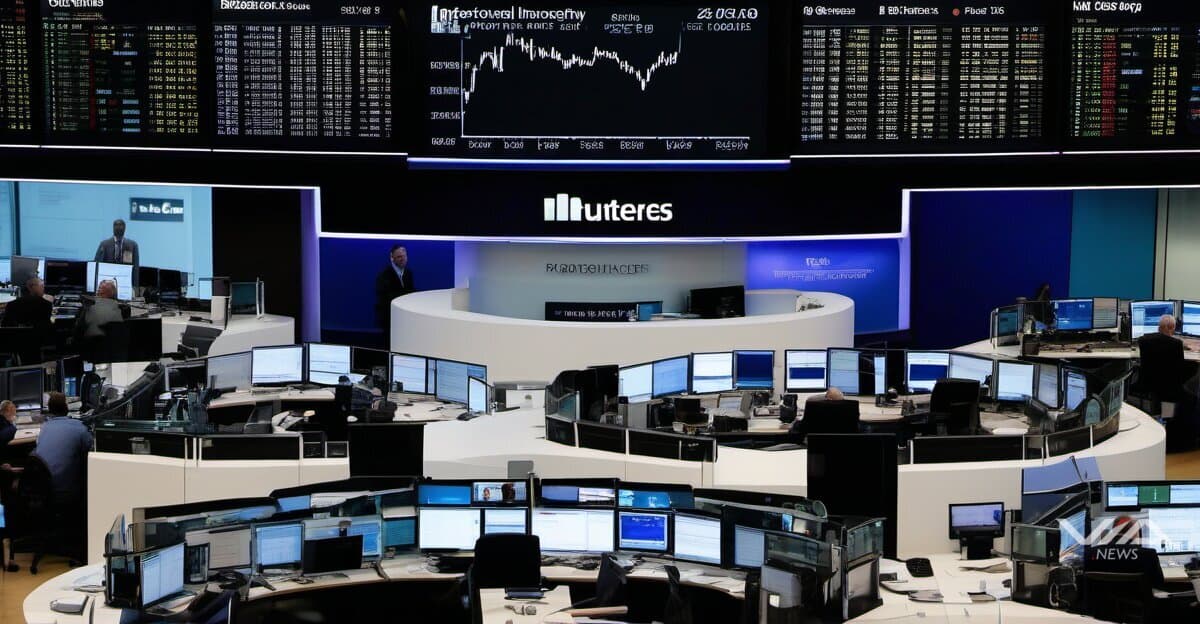
A tech sector sell-off rippled across global markets Friday, dragging down the FTSE 100 and European stocks as investors grappled with a fundamental question: Are massive AI investments a path to future dominance or a costly gamble with diminishing returns? Amazon's shock 11% after-hours plunge following earnings—driven by projections of surging capital expenditures—crystallized growing fears that Big Tech's AI spending spree may be outpacing realistic payoffs.
Optimistic View: Opportunities in AI and Defensive Sectors
The current market turbulence presents several opportunities for investors. One key area is the increased investment in artificial intelligence (AI) infrastructure. This trend could lead to technological breakthroughs and innovative business models, driving future growth. For instance, large tech companies like Amazon, Microsoft, Google, and Meta are making substantial AI investments, which could consolidate their market positions and foster new revenue streams.
Another promising avenue is the rotation into defensive sectors such as consumer staples, energy, and industrials. These sectors offer stable returns and can attract investors seeking safety during volatile market conditions. Historically, defensive sectors have provided a buffer against economic downturns, making them attractive options for risk-averse investors.
Pessimistic View: Risks of Overinvestment and Economic Slowdown
Despite these opportunities, there are significant risks associated with the current market dynamics. Overinvestment in AI technology might lead to diminishing returns and increased competition, potentially eroding profit margins. Moreover, the shift towards more defensive sectors could indicate a broader economic slowdown, which could negatively impact overall market performance.
If the tech sector continues to underperform and broader economic indicators weaken, it could trigger a full-blown market correction. Such a scenario would likely result in significant declines in stock valuations and a prolonged period of low investor confidence, affecting various sectors beyond just technology.
System-Level Implications
The ongoing tech rout and increased focus on defensive sectors have several system-level implications. Firstly, the heightened demand for AI-related components and services is increasing supply chain complexity. This complexity can lead to delays and higher costs, impacting both tech companies and their suppliers.
Secondly, the shift in investor focus towards more stable sectors might result in underinvestment in emerging technologies. While this could provide short-term stability, it might also hinder long-term innovation and growth potential in the tech industry.
Contrarian Perspective: Long-Term Benefits of AI Investments
A contrarian view suggests that the current market reaction may be overestimating the immediate risks and underestimating the long-term benefits of substantial AI investments. These investments could lead to significant productivity gains and new revenue streams that are not yet factored into stock valuations. In the long run, successful integration of AI could drive improved financial performance and stock valuations for tech companies.
Moreover, while defensive sectors provide stability, they might not offer the same growth potential as tech companies that are at the forefront of technological advancements. Investors should consider the balance between short-term stability and long-term growth opportunities when making investment decisions.
In conclusion, the recent drop in tech stocks, particularly following Amazon's earnings report, highlights the complex interplay between market dynamics, technological advancements, and economic indicators. While there are risks associated with overinvestment in AI and a broader economic slowdown, there are also significant opportunities for innovation and growth. Investors must carefully weigh these factors to make informed decisions in the current market environment.
Multiple Perspectives
The Optimistic Case
Bulls are optimistic about the potential for increased investment in AI infrastructure to lead to groundbreaking technological advancements and innovative business models. They believe that tech companies can effectively leverage these investments to enhance their operational efficiencies and improve financial performance, thereby boosting stock valuations. Additionally, bulls see value in rotating into defensive sectors such as consumer staples, energy, and industrials, which offer stable returns and attract investors looking for safety amidst market volatility. This strategic reallocation can uncover undervalued assets and provide a buffer against economic uncertainties.
The Pessimistic Case
Bears express concern that overinvestment in AI technology could result in diminishing returns and heightened competition, potentially squeezing profit margins. They also worry that a shift towards more defensive sectors might indicate a broader economic slowdown, which could negatively affect overall market performance. If the tech sector continues to underperform and economic indicators weaken, this could trigger a full-scale market correction, leading to significant declines in stock valuations and a prolonged period of low investor confidence. Bears argue that the risks associated with these trends outweigh the potential benefits.
The Contrarian Take
The contrarian view challenges the consensus that the recent drop in tech stocks, particularly following Amazon's earnings report, is overly pessimistic. Contrarians suggest that the market may be overestimating the immediate risks while underestimating the long-term benefits of substantial AI investments. These investments have the potential to generate significant productivity gains and open up new revenue streams that are currently not reflected in stock valuations. By taking a longer-term perspective, contrarians believe that the current downturn presents an opportunity to invest in companies poised for future growth and innovation.
Deeper Analysis
Second-Order Effects
The ongoing downturn in tech stocks, particularly following Amazon's earnings report, could trigger several second-order effects that extend beyond immediate market fluctuations. One key consequence is the potential for increased volatility in other sectors that are closely tied to technology, such as manufacturing and logistics. As tech giants like Amazon adjust their spending and investment strategies, the ripple effect could impact suppliers and partners who rely on these companies for business.
Another indirect consequence is the shift in investor behavior. With tech stocks experiencing significant losses, there may be a broader reallocation of capital towards more stable sectors, such as healthcare, utilities, and consumer staples. This could lead to a prolonged period of underinvestment in emerging technologies, potentially slowing innovation and growth in these areas.
Stakeholder Reality Check
- Workers: The consolidation of market power among large tech companies through massive AI investments could result in job displacement. Automation and AI advancements may replace human labor in various roles, affecting not just tech workers but also those in related fields such as customer service and logistics.
- Consumers: While the direct financial impact on consumers may be limited, the consolidation of market power among tech giants could lead to reduced competition, potentially resulting in higher prices and fewer choices for consumers. Additionally, the shift towards AI-driven services could alter the way consumers interact with technology, requiring new skills and adaptability.
- Communities: Local economies heavily reliant on tech companies and their supply chains may face challenges as these companies reevaluate their investments and operations. Communities that depend on tech jobs and the ecosystem surrounding them could experience economic strain, leading to broader social and economic impacts.
Global Context
The global perspective on this tech downturn reveals both opportunities and challenges. Asian markets, particularly those in countries like Japan and South Korea, which have robust tech industries, may use this period to reassess their tech investments and focus on more resilient sectors. This could lead to a strategic realignment of resources and a push towards diversification to mitigate future risks.
From a geopolitical standpoint, the consolidation of market power among Western tech giants could exacerbate existing tensions between nations. Countries seeking to reduce dependency on foreign tech solutions might accelerate their own technological development and innovation efforts, leading to a more fragmented global tech landscape. This fragmentation could have implications for international trade, data governance, and cybersecurity policies.
What Could Happen Next
Scenario Planning
Best Case Scenario (Probability: 30%)
In this scenario, tech companies successfully navigate the challenges posed by increased supply chain complexity and AI investment costs. They achieve breakthroughs in AI that significantly enhance productivity and profitability. This leads to a surge in stock valuations, particularly among large tech firms like Amazon, Microsoft, Google, and Meta. Defensive sectors also perform well, providing a balanced portfolio for investors. The result is a diversified market with strong growth prospects across both tech and traditional sectors.
Most Likely Scenario (Probability: 50%)
The most likely scenario involves a moderate recovery in the tech sector, driven by incremental improvements in AI technology and gradual adjustments to supply chain issues. While large tech companies continue to dominate their markets, smaller players face challenges in competing effectively. Defensive sectors remain attractive to risk-averse investors, but there is no significant shift away from tech stocks. Overall, the market experiences a steady but modest growth trajectory, with occasional volatility driven by economic indicators and geopolitical events.
Worst Case Scenario (Probability: 20%)
In the worst-case scenario, the tech sector's underperformance triggers a broader market correction. Economic indicators such as GDP growth and employment rates weaken, exacerbating investor concerns. Supply chain disruptions become more severe, affecting not just tech but also other industries reliant on complex global networks. As a result, stock valuations drop significantly, and investor confidence wanes, leading to a prolonged period of market instability. Defensive sectors struggle to maintain their appeal, and the overall market enters a downturn.
Black Swan (Probability: 5%)
An unexpected event that could dramatically alter the market landscape is a sudden technological breakthrough that disrupts current industry leaders. For instance, a new AI technology emerges that outperforms existing solutions, leading to rapid shifts in market leadership and valuation. This could create winners and losers unpredictably, with some companies experiencing meteoric rises while others fall into obsolescence. Such an event would introduce high levels of uncertainty and volatility into the market, challenging established investment strategies and company valuations.
Actionable Insights
Actionable Insights
For Investors
Portfolio Implications: With the FTSE 100 experiencing volatility due to tech sector downturns, investors should consider rotating their portfolios into defensive sectors such as consumer staples, energy, and industrials. These sectors tend to perform better during economic uncertainties.
What to Watch: Keep an eye on AI infrastructure investments. While there's potential for technological breakthroughs, overinvestment could lead to diminishing returns and increased competition. Monitor the financial health of tech giants like Amazon, Microsoft, Google, and Meta for signs of market shifts.
For Business Leaders
Strategic Considerations: Evaluate your company’s exposure to the tech sector and consider diversifying into more stable industries. Investing in AI can be lucrative but requires careful planning to avoid oversaturation and ensure sustainable growth.
Competitive Responses: Stay agile and responsive to market changes. Focus on innovation while also building resilience through diversified revenue streams. Engage in strategic partnerships and acquisitions that can bolster your position in both tech and non-tech sectors.
For Workers & Consumers
Employment: The increased focus on AI investments may lead to job displacement in certain roles. Workers should consider upskilling or reskilling to adapt to new technologies and emerging job markets. Seek out training programs and certifications that align with future industry needs.
Pricing: As businesses shift towards more defensive sectors, consumers might see changes in pricing strategies. Defensive sectors often offer more stable pricing, which could provide some relief during economic uncertainties. However, monitor for any inflationary pressures that could affect overall cost of living.
For Policy Makers
Regulatory Considerations: Develop policies that support workforce transition and retraining programs to mitigate the impact of job displacement due to AI advancements. Encourage investment in AI research and development while ensuring safeguards against monopolistic practices and excessive market concentration.
Economic Stability: Implement measures to stabilize the economy by supporting key sectors and providing incentives for businesses to invest in resilient and diverse operations. Foster an environment that encourages innovation while protecting workers from adverse effects of rapid technological change.
Signal vs Noise
The Real Signal
The genuine concern in the current market downturn is the immediate impact on investor sentiment and portfolio allocations. Tech giants like Amazon have seen their shares decline sharply after reporting earnings that fell short of expectations. This has led to a broader sell-off in the tech sector, affecting indices such as the FTSE 100.
The Noise
The media hype surrounding this event often exaggerates the significance of individual company reports. While Amazon's earnings report did contribute to the tech rout, the broader narrative tends to overlook the underlying fundamentals and long-term growth prospects of these companies, especially in emerging technologies like AI.
Metrics That Actually Matter
- AI Investment Levels: Tracking how much tech companies are investing in AI can provide insights into future productivity gains and potential new revenue streams.
- Productivity Gains: Monitoring improvements in operational efficiency and cost savings due to AI adoption can signal long-term profitability.
- Revenue Diversification: Watching for new revenue streams generated from AI applications can indicate a company’s ability to adapt and grow in the digital age.
Red Flags
A key warning sign that many are overlooking is the potential for overvaluation in defensive sectors where investors might rotate their funds. If defensive stocks become overbought, it could lead to a bubble that eventually bursts, causing another market correction. Additionally, if tech companies fail to deliver on their AI promises, it could lead to a prolonged period of underperformance and investor skepticism.
Historical Context
Historical Context
Similar Past Events:
A notable precedent to the current situation occurred during the dot-com bubble burst in the early 2000s. During this period, technology stocks experienced a significant decline following years of rapid growth and speculation.
What Happened Then:
The dot-com bubble burst led to a severe downturn in the stock market, particularly affecting tech companies. Many startups went bankrupt, and established tech giants saw their stock values plummet. The NASDAQ Composite Index, heavily weighted with tech stocks, fell by over 75% from its peak in March 2000 to October 2002.
Key Differences This Time:
This current scenario differs from the dot-com bubble in several ways. Firstly, the tech sector today is more diversified and mature, with many tech companies now generating substantial revenues and profits. Secondly, the global economic backdrop is different, with varying levels of inflation and interest rates compared to the early 2000s. Lastly, regulatory environments have evolved, impacting how tech companies operate and are valued.
Lessons from History:
The dot-com bubble teaches us the importance of valuing companies based on sustainable earnings rather than speculative growth. It also highlights the cyclical nature of markets and the need for investors to be cautious during periods of extreme optimism. Additionally, it underscores the significance of diversification and risk management in investment strategies.