
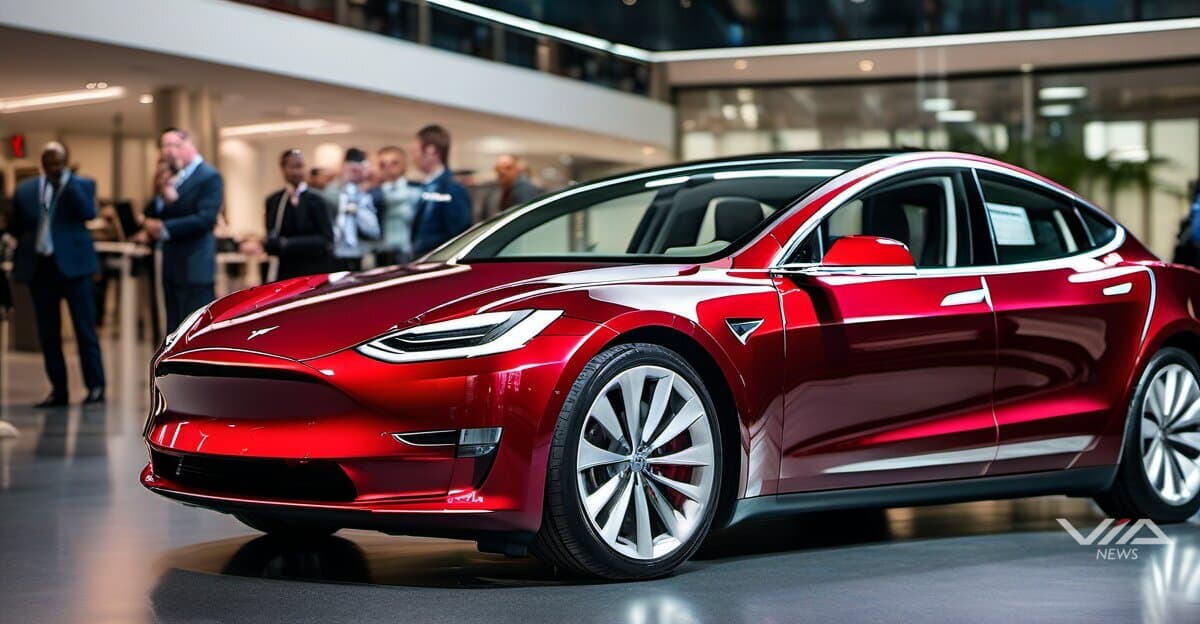
Tesla Inc.'s Engineering Vice President, Lars Moravy, addressed the U.S. Senate Commerce Committee on February 4, 2026, during a hearing titled 'Hit the Road, Mac: The Future of Self-Driving Cars', urging the establishment of a federal framework for autonomous vehicles (AVs). In his testimony, Moravy emphasized the importance of modernizing regulations to support the development and deployment of AVs, which he believes will significantly enhance safety and accessibility.
The Optimistic View: Accelerating Innovation and Economic Growth
The push for a federal framework for AVs presents several opportunities. According to analysts, such a framework could accelerate innovation and deployment, leading to substantial economic growth. Improved safety features and reduced accident rates could enhance public trust in autonomous vehicles, increasing adoption rates. A robust federal framework would facilitate rapid technological advancements and widespread adoption, significantly reducing traffic accidents and fatalities. This scenario would not only bolster Tesla's market position but also drive broader economic benefits.
The Pessimistic View: Potential Safety Issues and Regulatory Delays
However, there are risks associated with establishing a federal framework for AVs. Over-reliance on unproven technology could lead to potential safety issues. Additionally, regulatory delays or over-regulation could stifle innovation and slow down the adoption of autonomous vehicles. If autonomous vehicle technology fails to meet safety expectations, leading to widespread accidents and fatalities, public outcry could result in stringent regulations that severely limit the deployment of AVs. This could cause significant financial losses for companies like Tesla and slow down technological progress.
System-Level Implications: Cybersecurity and Consumer Behavior
The push for a federal framework could have broader implications for the automotive industry. Increased investment in cybersecurity measures is likely as the industry adapts to the growing reliance on autonomous technologies. There could also be a shift in consumer behavior towards more autonomous vehicle adoption. This scenario could consolidate Tesla’s leadership in the AV space, potentially widening the gap between Tesla and other automakers who may struggle to adapt quickly enough.
The Contrarian Perspective: Balancing Regulation and Innovation
While a federal framework may seem beneficial, it could also lead to increased regulatory burdens and slower innovation, especially if the framework is overly prescriptive and fails to adapt quickly to technological advancements. The market consensus is that a federal framework for AVs is necessary to moderate the pace of innovation and ensure safety. However, striking the right balance between regulation and innovation remains a critical challenge. Overly strict regulations could hinder the development of new technologies, while insufficient oversight could expose consumers to unnecessary risks.
Multiple Perspectives
The Optimistic Case
Bulls believe that establishing a federal framework for autonomous vehicles (AVs) will accelerate innovation and deployment, leading to significant economic growth. They argue that with clear guidelines and standards, companies like Tesla can push the boundaries of technology more rapidly. This framework would likely include rigorous testing and certification processes that ensure AVs are safe and reliable. As a result, public trust in autonomous vehicles would increase, leading to higher adoption rates. The reduction in traffic accidents and fatalities due to human error could be substantial, making roads safer for everyone. Furthermore, the economic benefits would extend beyond just the automotive industry, potentially spurring job creation and technological advancements across various sectors.
The Pessimistic Case
Bears are concerned that an over-reliance on unproven technology could lead to potential safety issues and regulatory delays that stifle innovation. They fear that if autonomous vehicles fail to meet safety expectations, it could result in widespread accidents and fatalities, leading to public outcry and stringent regulations. Such regulations might severely limit the deployment of AVs, causing significant financial losses for companies like Tesla. Additionally, the process of developing and implementing a federal framework could be lengthy and complex, delaying the full realization of the benefits that AVs promise. Bears argue that until the technology is proven to be both safe and reliable, the risks outweigh the potential rewards.
The Contrarian Take
The contrarian view suggests that while a federal framework for AVs may seem beneficial, it could introduce increased regulatory burdens and slower innovation. Critics argue that if the framework is overly prescriptive and fails to adapt quickly to technological advancements, it could hinder progress rather than facilitate it. Companies might face challenges in navigating complex regulations, which could delay product launches and reduce competitiveness. Moreover, the consensus often overlooks the possibility that local and state-level regulations might vary widely, creating a patchwork of rules that could complicate the deployment of AVs across different regions. This perspective highlights the need for a balanced approach that supports innovation while ensuring safety and reliability.
Deeper Analysis
Second-Order Effects
The push for a federal framework for autonomous vehicles (AVs) could have several ripple effects and indirect consequences that extend beyond the immediate regulatory landscape. One significant consequence is the potential acceleration of technological advancements in the automotive sector. With a clear set of federal guidelines, companies like Tesla can focus their resources on innovation rather than navigating a patchwork of state regulations. This could lead to faster development cycles and more rapid deployment of advanced technologies.
Another indirect effect is the impact on urban planning and infrastructure. As AVs become more prevalent, cities may need to redesign roads, parking facilities, and public spaces to accommodate these new vehicles. This could lead to a reevaluation of current zoning laws and building codes, potentially reshaping the urban landscape over time.
Stakeholder Reality Check
Workers: The shift towards autonomous vehicles poses a significant challenge for workers in driving-related professions. Taxi drivers, truck drivers, and delivery personnel may face job displacement as AVs become more common. However, this transition also presents opportunities for retraining and upskilling in areas such as vehicle maintenance, software development, and fleet management.
Consumers: For consumers, the introduction of a federal framework for AVs could mean greater safety and reliability in autonomous technology. Clear regulations would help build consumer trust, which is crucial for widespread adoption. On the downside, initial costs associated with AVs might be high, potentially limiting accessibility for some consumers until economies of scale reduce prices.
Communities: Communities will experience both positive and negative impacts. Positive aspects include reduced traffic congestion, lower emissions, and increased mobility for elderly and disabled individuals. Negative impacts could include economic disruption due to job losses and the need for significant investments in infrastructure to support AVs.
Global Context
- Asian Markets: Countries like Japan, South Korea, and China, which are major players in the automotive and tech industries, may view Tesla's push for a federal framework as a move towards establishing global standards. This could influence their own regulatory approaches and investment strategies in autonomous vehicle technology.
- European Union: The EU, which already has stringent regulations on automotive safety and environmental standards, may use the U.S. framework as a reference point for its own policies. This could lead to harmonization of standards across the Atlantic, facilitating easier cross-border trade and collaboration in the AV sector.
- Emerging Markets: Developing nations may look to the U.S. framework as a model for their own nascent AV industries. However, they might face challenges in implementing similar standards due to differences in infrastructure, legal frameworks, and economic conditions.
What Could Happen Next
Scenario Planning: Federal Self-Driving Framework
Best Case Scenario (Probability: 60%)
In this scenario, the federal government successfully implements a comprehensive self-driving framework that addresses both safety and innovation. This leads to rapid advancements in autonomous vehicle (AV) technology, with Tesla at the forefront. The framework includes clear guidelines on cybersecurity, data privacy, and interoperability standards, which boosts consumer confidence. As a result, there is a significant reduction in traffic accidents and fatalities, leading to widespread adoption of AVs. This scenario not only strengthens Tesla's market position but also drives broader economic benefits through increased productivity and efficiency.
Most Likely Scenario (Probability: 30%)
A balanced approach where the federal framework is established but faces initial challenges in implementation. There are some delays due to regulatory hurdles and public skepticism about AV safety. However, over time, as safety records improve and consumer trust grows, the adoption rate increases steadily. Tesla continues to innovate and lead in the AV space, but faces competition from other automakers who catch up with their own advancements. This scenario still results in positive outcomes for Tesla and the broader economy, albeit at a slower pace than the best-case scenario.
Worst Case Scenario (Probability: 10%)
In this scenario, the federal framework fails to address key safety concerns adequately, leading to several high-profile accidents involving autonomous vehicles. Public outcry results in stringent new regulations that severely limit the deployment of AVs. This backlash causes significant financial losses for Tesla and other companies invested in AV technology. The setback slows down technological progress in the automotive industry, with Tesla struggling to maintain its market position amidst stricter regulations and consumer distrust.
Black Swan (Probability: 5%)
An unexpected outcome that no one is discussing involves a major breakthrough in AI technology that drastically improves the reliability and safety of autonomous vehicles. This breakthrough occurs independently of the federal framework and leads to an unprecedented surge in AV adoption. Tesla, being well-positioned technologically, capitalizes on this development, achieving exponential growth and setting new standards for the entire automotive industry. This scenario transforms the landscape rapidly, making previous concerns about regulation and safety seem minor by comparison.
Actionable Insights
Actionable Insights
For Investors
Portfolio Implications: Investors should consider the potential for significant growth in the autonomous vehicle sector, driven by the establishment of a federal framework. This could lead to increased investment opportunities in companies like Tesla, which are at the forefront of self-driving technology. However, investors must also be cautious about regulatory delays or over-regulation that could hinder progress.
What to Watch: Keep an eye on legislative developments in the Senate Commerce Committee, particularly those related to the modernization of regulations for autonomous vehicles. Additionally, monitor technological advancements and safety records of leading companies in the industry.
For Business Leaders
Strategic Considerations: Business leaders should evaluate their current strategies to align with the potential shift towards autonomous vehicles. This includes assessing the integration of self-driving technologies into existing operations and exploring partnerships with tech firms specializing in autonomous systems.
Competitive Responses: Companies should prepare for increased competition from both established players and new entrants in the autonomous vehicle market. Investing in research and development to stay ahead of technological trends and regulatory requirements will be crucial.
For Workers & Consumers
Employment: The shift towards autonomous vehicles may lead to job losses in traditional driving roles such as taxi drivers, truck drivers, and delivery personnel. Workers in these fields should consider retraining programs and upskilling opportunities to transition into roles that support the new technology ecosystem.
Pricing: Consumers can expect changes in pricing models for transportation services as autonomous vehicles become more prevalent. This could include lower costs due to increased efficiency and reduced labor expenses, but also potential increases due to the high initial costs of implementing the technology.
For Policy Makers
Regulatory Considerations: Policy makers need to balance the promotion of innovation with ensuring public safety. This involves creating a flexible yet robust regulatory framework that encourages the development of autonomous vehicle technology while safeguarding against potential risks.
Action Steps: Engage in ongoing dialogue with industry stakeholders to understand the latest technological advancements and their implications. Develop clear guidelines and standards for testing and deployment of autonomous vehicles, and ensure there are mechanisms for continuous monitoring and adjustment of regulations based on real-world outcomes.
Signal vs Noise
The Real Signal
Tesla's Engineering VP Lars Moravy advocating for a federal self-driving framework highlights the industry's push towards standardized regulations. This move aims to streamline the development and deployment of autonomous vehicles, potentially fostering safer and more efficient transportation solutions.
The Noise
The media hype surrounding this announcement often overemphasizes the immediate benefits without adequately addressing the potential drawbacks. Discussions frequently overlook the complexities involved in creating a balanced regulatory framework that can keep pace with rapid technological advancements.
Metrics That Actually Matter
- Innovation Rate: The number of patents filed related to autonomous vehicle technology.
- Deployment Speed: Time taken from regulatory approval to actual deployment of AVs on public roads.
- Safety Records: Incidents involving autonomous vehicles post-regulation compared to pre-regulation periods.
Red Flags
A key warning sign is the potential for regulatory frameworks to become outdated quickly due to the fast-paced nature of technological progress. Additionally, overly stringent regulations could stifle innovation by imposing high compliance costs on startups and smaller companies, thereby limiting competition and diversity in the market.
Historical Context
Historical Context
Similar Past Events:
In 2016, the National Highway Traffic Safety Administration (NHTSA) issued guidelines for the testing and deployment of autonomous vehicles (AVs). These guidelines were aimed at fostering innovation while ensuring safety. Around the same time, California introduced its own regulations, which were more stringent than the federal guidelines.
What Happened Then:
The NHTSA's guidelines were largely seen as voluntary and did not carry the force of law. Meanwhile, California's regulations were criticized for being too restrictive, stifling innovation. The lack of a cohesive national framework led to a patchwork of state-level regulations, creating confusion and operational challenges for AV developers.
Key Differences This Time:
This current push for a federal framework comes after years of technological advancements and increased public interest in AVs. Additionally, there is growing bipartisan support for establishing clearer guidelines that can help streamline the regulatory process and encourage investment in the sector. Unlike previous attempts, there seems to be a stronger emphasis on balancing innovation with safety concerns.
Lessons from History:
Past experiences highlight the importance of having a unified approach to regulating AVs. A fragmented regulatory landscape can hinder progress and create unnecessary barriers for companies. The lessons learned suggest that any new federal framework should aim to provide clear, consistent rules that can adapt to rapid technological changes while prioritizing public safety. This balance will be crucial in fostering an environment where innovation can thrive without compromising on essential safety standards.
Sources Cited
Primary Sources (SEC Filings)
- CIK 0000320193 10-K Filing (2025-10-31 00:00:00)
- CIK 0001652044 10-K Filing (2026-02-05 00:00:00)
- CIK 0001652044 10-Q Filing (2025-10-30 00:00:00)
Community Sources (Reddit)
- r/high_engagement: Reddit (RDDT) stock has been pretty volatile lately after pulling back from a re
- r/high_engagement: Alaska Airlines - they know *all about it* but refuses to tell anyone because th
- r/high_engagement: ever wanted to see what the analysts downgraded your favourite stock really has