
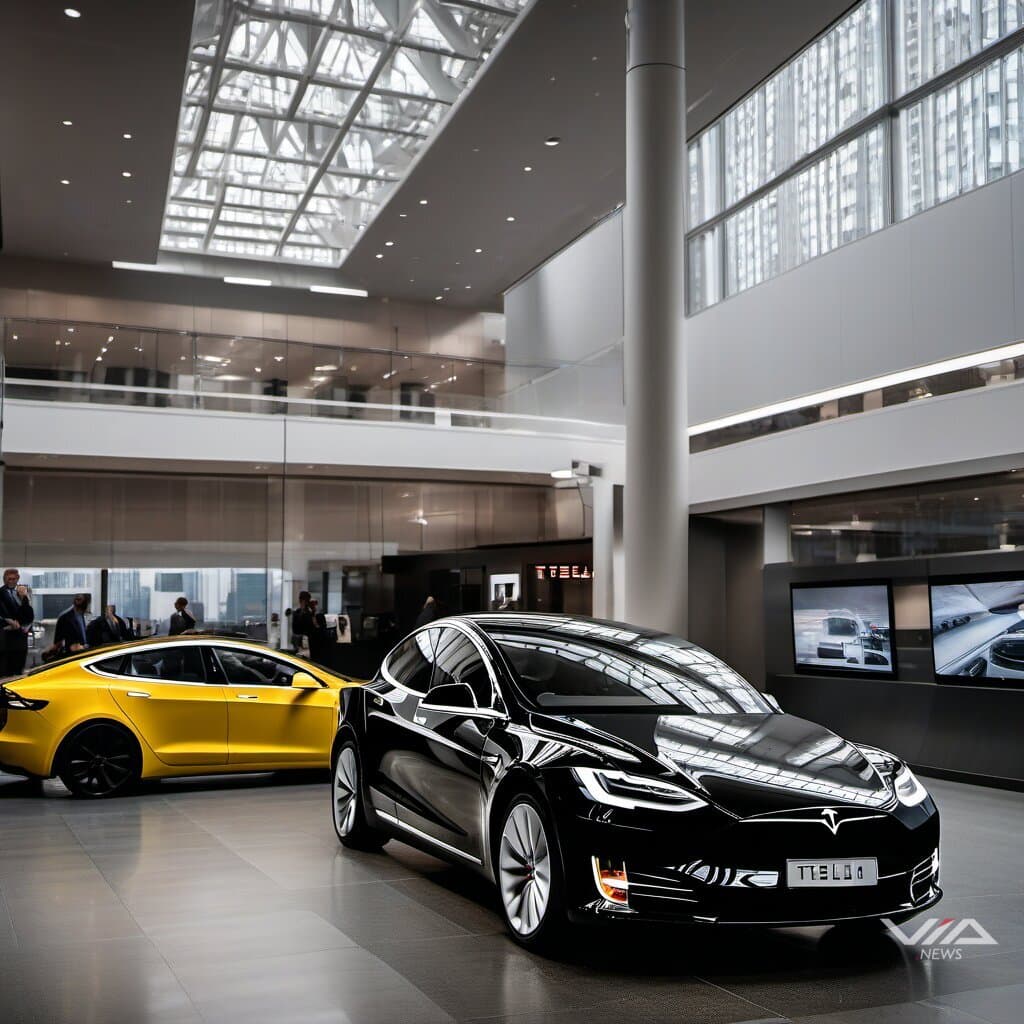
Tesla is projected to report a nearly 16% decline in electric vehicle (EV) deliveries for the fourth quarter of 2025, marking a significant challenge for the company amid rising competition and industry headwinds. Despite this setback, investors have shown continued interest in Tesla’s emerging initiatives, particularly its robotaxi fleet and humanoid robots.
The Optimistic View
The market is increasingly bullish on Tesla’s potential to diversify its revenue streams through innovative projects like the robotaxi fleet and the development of Optimus humanoid robots. These initiatives could lead to substantial growth opportunities and new markets. If Tesla successfully launches and scales these projects, it could become a leader in autonomous transportation and advanced robotics, driving significant revenue growth and enhancing profitability. This scenario could result in a substantial increase in Tesla’s stock price, potentially reaching new highs.
The Pessimistic View
However, there are significant risks associated with Tesla’s ambitious plans. For instance, overreliance on unproven technologies such as robotaxis and humanoid robots could backfire if they fail to achieve commercial success or scale as anticipated. Additionally, the continued decline in EV sales due to increased competition and the loss of government incentives could further erode Tesla’s market share. If Tesla fails to meet key milestones in its robotaxi and humanoid robot initiatives, it could face a prolonged period of declining EV sales and profitability, leading to a sharp drop in its stock price and erasing a substantial portion of its market capitalization.
System-Level Implications
Tesla’s focus on autonomous vehicles and robots could have far-reaching effects on the automotive industry. It might shift power dynamics, reducing the competitive edge of traditional automakers who lack similar technological advancements. This shift could also drive increased investment in AI and machine learning technologies by automotive and tech companies, reshaping the industry landscape.
The Contrarian Perspective
While investors are currently focused on Tesla’s emerging initiatives, some analysts argue that the company’s core EV business is facing significant headwinds. The emphasis on future projects may be premature and overvalued, given the current challenges in the EV market. This perspective suggests that investors might be overlooking the fundamental issues affecting Tesla’s primary business, which could pose a long-term risk to the company’s overall performance and valuation.
Multiple Perspectives
The Optimistic Case
Bulls believe that Tesla's expansion into the robotaxi market and development of the Optimus humanoid robots present significant opportunities for growth and diversification. The potential for autonomous transportation and advanced robotics could lead to substantial revenue streams and enhance Tesla’s profitability. If Tesla successfully launches and scales these initiatives, it could become a leader in autonomous transportation and advanced robotics, driving significant revenue growth and enhancing profitability.ome a leader in autonomous transportation and advanced robotics, driving significant revenue growth and enhancing profitability.ome a leader in both sectors, driving a substantial increase in its stock price. Bulls argue that these innovations will not only diversify Tesla’s offerings but also solidify its position as a technological pioneer, attracting investors and boosting market confidence.
The Pessimistic Case
Bears are concerned about Tesla’s overreliance on unproven technologies like robotaxis and humanoid robots, which may not achieve commercial success or scale as expected. Additionally, the continued decline in electric vehicle (EV) sales due to increased competition and the loss of government incentives poses a significant risk. Bears fear that if Tesla fails to meet milestones in its robotaxi and humanoid robot initiatives, it could face a prolonged period of declining EV sales and profitability. This scenario could result in a sharp drop in Tesla’s stock price, potentially erasing a substantial portion of its market capitalization.
The Contrarian Take
While the consensus focuses on Tesla’s emerging robotaxi fleet and humanoid robots, contrarians argue that this overlooks significant challenges in Tesla’s core EV business. The focus on future initiatives may be premature and overvalued, given the current headwinds faced by Tesla’s primary operations. Contrarians suggest that investors should pay closer attention to the sustainability of Tesla’s core business before placing too much faith in its ambitious future projects. This perspective highlights the importance of balancing optimism with a realistic assessment of current market conditions and competitive pressures.
Deeper Analysis
Second-Order Effects
The decline in Tesla's EV deliveries and the shift in investor focus towards autonomous vehicles and robotics could trigger several second-order effects. One significant consequence is the reallocation of resources within the automotive industry. As traditional automakers and tech companies invest heavily in AI and autonomous driving technologies, there might be a reduction in funding for conventional EV development. This could slow down the overall progress in battery technology and infrastructure for electric vehicles.
Another potential ripple effect is the impact on suppliers and partners. Companies that specialize in components for traditional EVs might face a downturn in demand, while those involved in the production of sensors, processors, and software for autonomous systems could experience a surge in orders. This shift could alter the landscape of the automotive supply chain, leading to consolidation among smaller players and increased specialization among larger ones.
Stakeholder Reality Check
Workers: The decline in EV sales could lead to a reduction in workforce needs at Tesla, particularly in manufacturing and sales roles. This could result in layoffs or restructuring, affecting the job security and livelihoods of many employees. Additionally, the transition towards autonomous vehicle technologies might require different skill sets, potentially leaving some workers behind if they do not receive adequate training or re-skilling opportunities.
Consumers: In the short term, consumers might face limited options in the EV market as Tesla focuses on its new initiatives. However, in the long run, the advancement in autonomous vehicle technology could lead to safer and more efficient transportation solutions, benefiting all users. The cost implications of these new technologies will also play a crucial role in determining consumer adoption rates.
Communities: Local communities where Tesla operates might experience economic impacts due to changes in employment levels and industrial activities. Areas heavily reliant on Tesla's manufacturing operations could face challenges in adapting to a new economic reality. Conversely, regions that attract investments in autonomous vehicle research and development might benefit from job creation and economic growth.
Global Context
- Asian Markets: Countries like China and South Korea may view Tesla's declining EV sales as an opportunity to bolster their domestic EV manufacturers. This could lead to increased investment in local R&D and manufacturing capabilities, thereby enhancing regional competitiveness. Companies such as BYD and LG Chem might gain a stronger foothold in the global market, challenging Tesla's leadership position.
- European Union: The EU, with its ambitious goals for reducing carbon emissions, might continue to support the development of EVs despite Tesla's current struggles. This could result in a fragmented market where multiple players compete, each with their own strengths in technology and manufacturing. The EU's regulatory environment could also influence the pace and direction of technological advancements in the automotive sector.
- American Market: In the United States, the shift in focus towards autonomous vehicles could accelerate the adoption of related technologies. This could create new opportunities for innovation and entrepreneurship, but it might also exacerbate existing inequalities if access to these technologies is unevenly distributed across different socioeconomic groups.
What Could Happen Next
Scenario Planning: Tesla's Future in Autonomous Transportation and Advanced Robotics
Best Case Scenario (Probability: 35%)
In this scenario, Tesla successfully launches and scales its robotaxi and humanoid robot initiatives, becoming a leader in both autonomous transportation and advanced robotics. The company achieves significant milestones in technology development, regulatory approval, and market acceptance. Revenue from these new ventures drives substantial growth, enhancing profitability and leading to a substantial increase in Tesla's stock price. By 2029, Tesla's stock could reach or exceed the $2,600 price target, reflecting its dominant position in emerging markets.
Most Likely Scenario (Probability: 45%)
A balanced assessment suggests that Tesla will make progress in its robotaxi and humanoid robot initiatives but at a slower pace than anticipated. While there will be some initial successes, challenges such as regulatory hurdles, technical issues, and competition from other tech giants will slow down the scaling process. Tesla’s stock may see moderate growth, driven by continued innovation and gradual market penetration, but it is unlikely to reach the highest price targets without overcoming significant obstacles.
Worst Case Scenario (Probability: 20%)
In this scenario, Tesla faces significant setbacks in its robotaxi and humanoid robot initiatives. Technical failures, regulatory delays, and intense competition from established players and new entrants into the market lead to prolonged periods of underperformance. As a result, Tesla's stock price drops sharply, potentially erasing a substantial portion of its market capitalization. The company struggles to regain momentum, and investors lose confidence in its ability to innovate and compete effectively in the evolving automotive and robotics industries.
Black Swan (Probability: 5%)
An unexpected outcome could involve a major technological breakthrough or partnership that rapidly advances Tesla’s autonomous vehicle and robotics capabilities. For example, a collaboration with a leading AI research institute or the acquisition of a key robotics startup could provide Tesla with unprecedented advantages. Such an event could propel Tesla to become the undisputed leader in both autonomous transportation and advanced robotics, significantly outperforming current expectations and driving its stock price to unforeseen heights.
Actionable Insights
Actionable Insights
For Investors
Portfolio Implications: Tesla's recent decline in EV deliveries by nearly 16% signals a potential shift in market dynamics. Investors should consider diversifying their portfolios to include companies that are less reliant on current EV trends. Additionally, keep an eye on Tesla's expansion into the robotaxi market and the development of Optimus humanoid robots. These ventures represent significant growth opportunities but also carry risks associated with unproven technologies.
What to Watch: Monitor Tesla’s quarterly financial reports for signs of progress in these new markets. Pay attention to regulatory developments that could impact the adoption of autonomous vehicles and robotics. Also, track competitors' moves in the EV sector to gauge the overall health of the industry.
For Business Leaders
Strategic Considerations: The decline in Tesla's EV sales presents both challenges and opportunities. Companies should reassess their strategic plans to ensure they are not overly dependent on a single technology or market trend. Consider diversifying product lines and exploring partnerships or acquisitions in emerging areas like autonomous driving and robotics.
Competitive Responses: Businesses should closely monitor Tesla's progress in the robotaxi and humanoid robot sectors. Develop strategies to either compete directly or collaborate with Tesla to leverage its technological advancements. This could involve investing in R&D to stay ahead of the curve or forming alliances to share risks and resources.
For Workers & Consumers
Employment: Tesla's declining EV sales could affect job security for workers in manufacturing and sales roles. Employees should consider upskilling in areas related to autonomous driving and robotics to remain competitive. Job seekers might look into opportunities within Tesla's new ventures or other companies expanding into these fields.
Pricing: As Tesla faces challenges in its core EV business, it may adjust pricing strategies to maintain market share. Consumers should be prepared for potential price fluctuations and consider alternative EV options from competitors who might offer more stable pricing.
For Policy Makers
Regulatory Considerations: The shift towards autonomous vehicles and advanced robotics requires careful regulation to ensure safety and ethical use. Policymakers should work on developing frameworks that support innovation while protecting public interests. This includes setting standards for autonomous vehicle testing, data privacy regulations for connected cars, and guidelines for the deployment of humanoid robots in various industries.
Support Measures: Governments can play a crucial role by providing incentives for companies to invest in research and development. This could include tax breaks, grants, and subsidies for businesses working on cutting-edge technologies. Additionally, policies aimed at reskilling and retraining the workforce to adapt to new technological landscapes will be essential.
Signal vs Noise
The Real Signal
Tesla's recent decline in EV deliveries by nearly 16% signals underlying issues within its core business. Despite investor excitement over new ventures like robotaxis and humanoid robots, the company's primary source of revenue remains vulnerable.
The Noise
The media hype surrounding Tesla's futuristic projects diverts attention from the current struggles in its electric vehicle sales. While these innovations hold promise, they are not yet contributing to the company’s bottom line, making them more of a distraction than a solution at present.
Metrics That Actually Matter
- Quarterly EV Sales: A consistent indicator of Tesla's core business health.
- Profit Margins: Reflects the efficiency and pricing power of Tesla's vehicles.
- Market Share Trends: Shows how Tesla is performing relative to competitors in the growing EV market.
Red Flags
Investors should be wary of overly optimistic projections regarding new product lines before seeing tangible results from these initiatives. Additionally, a prolonged period of declining EV sales could indicate deeper structural problems within the company, such as increased competition or operational inefficiencies.
Historical Context
Historical Context
Similar Past Events:
In the early 2000s, the automotive industry faced significant challenges with declining sales and increased competition. Companies like General Motors (GM) and Ford experienced a downturn in their traditional vehicle segments, leading to restructuring efforts and a shift towards new technologies and markets.
What Happened Then:
During the early 2000s, GM and Ford saw a decline in their core businesses due to increased competition from foreign automakers and changing consumer preferences. Both companies underwent major restructuring, including plant closures and layoffs. They also began investing heavily in new technologies such as hybrid vehicles and advanced manufacturing processes. Despite initial struggles, these investments eventually helped them regain market share and profitability.
Key Differences This Time:
Tesla's current situation differs from that of GM and Ford in the early 2000s in several key ways. Firstly, Tesla is a relatively young company that has built its reputation around innovation and electric vehicles, whereas GM and Ford were established players in the traditional auto industry. Secondly, Tesla faces competition not just from other car manufacturers but also from tech giants entering the electric vehicle space. Lastly, Tesla's diversified portfolio, including solar energy solutions and autonomous driving technology, offers a broader range of growth opportunities compared to the more singular focus of GM and Ford during their restructuring periods.
Lessons from History:
The experiences of GM and Ford highlight the importance of adapting to changing market conditions through strategic investments and innovation. For Tesla, this means continuing to innovate in electric vehicle technology while exploring new revenue streams such as autonomous driving and energy storage solutions. Additionally, maintaining financial discipline and managing investor expectations will be crucial as the company navigates its current challenges.