
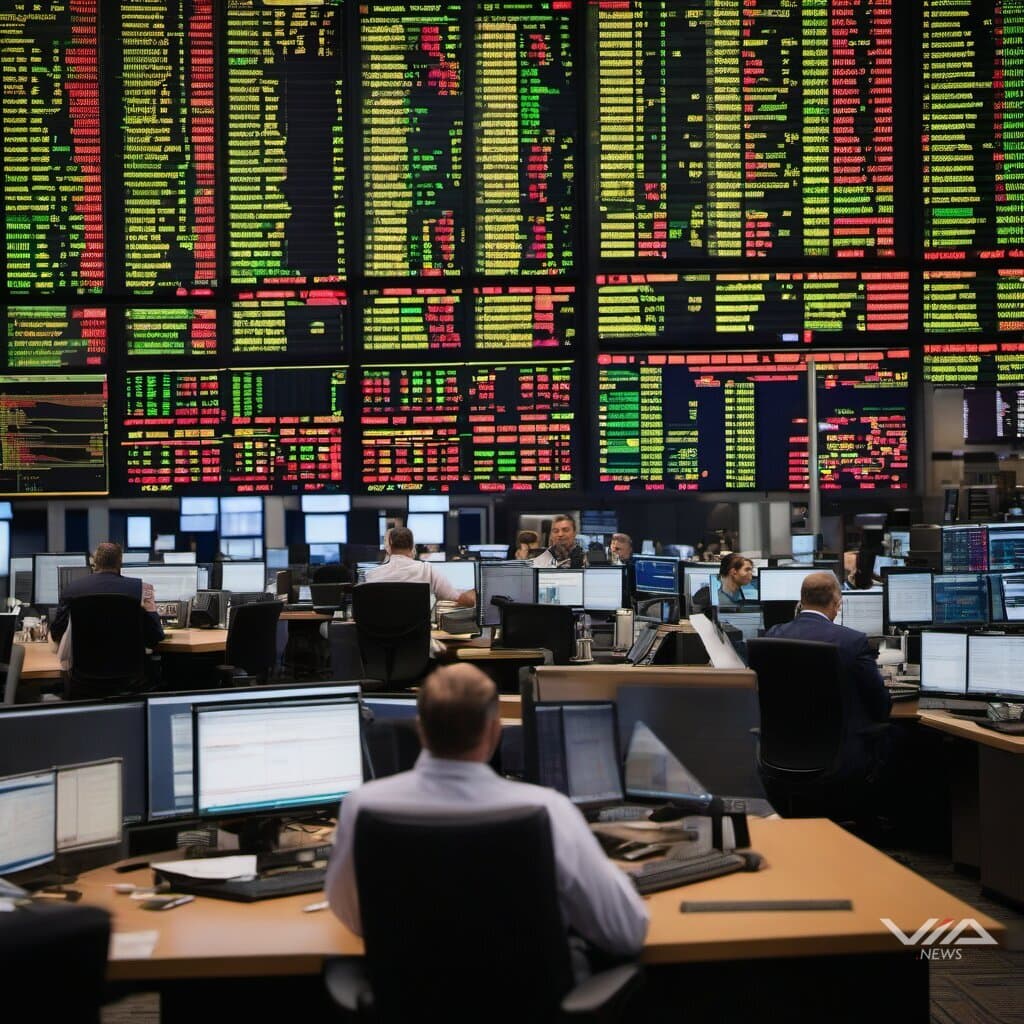
US stock futures were down Wednesday morning, following a pullback that dragged the Dow and S&P 500 off record highs. Dow futures (YM=F) dipped about 0.3%, while S&P 500 (ES=F) and Nasdaq 100 (NQ=F) futures slid 0.2%, after the Dow (^DJI) led stocks lower in a down session Tuesday.
The Optimistic Outlook
The potential for strong earnings reports from major banks could boost investor confidence. Bank of America (BAC), JPMorgan Chase (JPM), and Citigroup (C) have all reported robust earnings, driving investor sentiment higher. Additionally, increased demand for safe-haven assets like gold and silver indicates a resilient investment environment. This demand suggests that investors are seeking stability amid economic uncertainties, which can be a positive sign for overall market health.
The Supreme Court’s decision to uphold the tariff authority has led to a more stable trade policy environment. This stability can provide multinational corporations with clearer guidelines for their operations, reducing the risk of sudden policy changes that could disrupt business plans. Furthermore, the robust earnings from major banks could help reverse recent market declines, providing a much-needed boost to investor morale.
The Pessimistic Outlook
Underwhelming bank earnings could signal broader economic weakness. If major financial institutions report disappointing results, it could indicate underlying issues within the economy, such as reduced consumer spending or increased loan defaults. This could lead to a loss of investor confidence and further market declines.
Uncertainty around the Supreme Court's tariff ruling could lead to increased market volatility. If the ruling is perceived negatively by investors, it could trigger a sell-off, exacerbating existing market fears. Political interference in the Federal Reserve could also contribute to this volatility, as it might undermine the independence and effectiveness of monetary policy.
System-Level Implications
- Increased Volatility: Heightened volatility in financial markets could lead to tighter lending standards by banks, affecting small businesses and startups. This could result in reduced access to capital for new ventures, slowing economic growth.
- Tariff Uncertainty: Multinational corporations may need to re-evaluate their supply chains in response to uncertain tariff policies. This could lead to reshoring or diversifying suppliers, which would require significant investments and time to implement.
- Regulatory Shifts: Increased pressure on financial institutions and regulatory bodies could shift power towards government entities, potentially altering the balance between public and private sector influence in economic decision-making.
The Contrarian Perspective
While the immediate reaction to bank earnings and political events may cause short-term volatility, these factors may not sustain long-term market trends. Historically, markets tend to recover and stabilize after initial shocks. For instance, past instances of economic uncertainty have often been followed by periods of recovery as investors adjust to new realities and find new opportunities. Therefore, despite current challenges, the market could rebound once the dust settles and clarity emerges.
Multiple Perspectives
The Optimistic Case
Bulls are optimistic that the upcoming earnings reports from major banks will be strong, which could significantly boost investor confidence. This positive sentiment could be further reinforced by an increase in demand for safe-haven assets such as gold and silver, indicating a resilient investment environment. Additionally, if the Supreme Court upholds the tariff authority, it would provide a stable trade policy environment, reducing uncertainty and fostering growth. These factors combined could reverse recent market declines, driving the market towards recovery and stability.
The Pessimistic Case
Bears are concerned that underwhelming bank earnings could signal broader economic weakness, leading to a lack of confidence among investors. Furthermore, uncertainty around the Supreme Court's decision on tariffs could lead to increased market volatility. If unfavorable tariff rulings are made, coupled with potential political interference in the Federal Reserve's operations, this could trigger a severe market downturn. Such a scenario could potentially lead to a recession, causing widespread economic distress and prolonged market instability.
The Contrarian Take
The contrarian view suggests that while the immediate reaction to bank earnings and political events may cause short-term volatility, these factors may not sustain long-term market trends. Historically, markets have shown resilience and a tendency to recover and stabilize after initial shocks. Therefore, even if there is an initial negative reaction, the underlying fundamentals and long-term economic health may ultimately prevail, leading to a more stable and positive market outlook over time.
Deeper Analysis
Second-Order Effects
The current downturn in US stock markets, particularly the decline in Dow, S&P 500, and Nasdaq futures, signals a period of increased volatility and uncertainty. This volatility can have several ripple effects and indirect consequences:
- Tighter Lending Standards: As financial markets become more volatile, banks may tighten their lending criteria to mitigate risk. This could make it harder for small businesses and startups to secure loans, potentially slowing down innovation and economic growth.
- Supply Chain Re-evaluation: Heightened uncertainty around tariffs and trade policies may prompt multinational corporations to reassess their supply chains. Companies might consider reshoring production or diversifying their supplier base to reduce dependency on any single market, which could lead to significant shifts in global manufacturing patterns.
- Regulatory Shifts: The increased pressure on financial institutions could lead to a greater role for government entities in economic decision-making. This could result in new regulations aimed at stabilizing the financial system, which might alter the balance of power between public and private sectors.
Stakeholder Reality Check
The immediate impact on stakeholders such as workers, consumers, and communities is nuanced:
- Workers: While the direct impact on job security is unclear, prolonged market volatility could affect major banks' performance, which might indirectly influence hiring practices and job security. Smaller businesses, which often rely on bank loans, could face challenges in maintaining employment levels.
- Consumers: Consumers might experience higher costs due to potential supply chain adjustments and increased tariffs. Additionally, if banks tighten lending standards, it could become more difficult for consumers to access credit for large purchases like homes or cars.
- Communities: Communities heavily reliant on financial services or industries affected by supply chain changes could see economic impacts. Local economies tied to small businesses might struggle if those businesses face difficulties in securing financing.
Global Context
The US stock market downturn has broader international implications:
- Asian Markets: Asian markets, particularly those closely tied to the US economy, may react cautiously to the downturn. Ongoing trade tensions and the potential for further tariffs could exacerbate this cautious stance, leading to a more conservative investment approach.
- Chinese Market: The Chinese market's response to increased margin requirements could signal a tightening of financial regulations. This might affect investor sentiment globally, as investors may become more risk-averse, leading to a more cautious approach to investments across different markets.
- Geopolitical Implications: The interplay between financial markets and geopolitical events, such as trade policies and tariffs, highlights the interconnectedness of global economies. Any significant shifts in one region can have far-reaching effects, influencing investment decisions and economic strategies worldwide.
What Could Happen Next
Scenario Planning: What Could Happen Next
Best Case Scenario (Probability: 30%)
In the best-case scenario, the Supreme Court upholds the tariff authority, providing a stable trade policy environment that reassures investors. Major banks report robust earnings, bolstering market sentiment and potentially reversing recent declines. This positive momentum attracts additional investment into precious metals, indicating a resilient economy. Financial markets stabilize, and banks maintain flexible lending standards, supporting small businesses and startups. Multinational corporations continue to operate smoothly, with minimal disruption to supply chains.
Most Likely Scenario (Probability: 50%)
The most likely scenario involves a mixed outcome where the Supreme Court's decision on tariffs is favorable but not entirely conclusive, leading to some lingering uncertainty. Bank earnings are solid but not spectacular, maintaining investor confidence without sparking a significant rally. There is a moderate increase in precious metal investments, reflecting cautious optimism. Financial markets experience heightened volatility, prompting banks to slightly tighten lending standards, which impacts small businesses and startups. Multinational corporations begin to reassess their supply chains, considering both reshoring and diversification strategies.
Worst Case Scenario (Probability: 20%)
In the worst-case scenario, the Supreme Court rules unfavorably on tariffs, exacerbating trade tensions. Underwhelming bank earnings and political interference in the Federal Reserve's operations trigger a severe market downturn, potentially leading to a recession. This economic distress affects small businesses and startups through stricter lending conditions. Multinational corporations face significant disruptions in their supply chains, leading to costly reshoring or supplier diversification efforts. The increased pressure on financial institutions and regulatory bodies shifts more power towards government entities, altering the balance between public and private sector influence in economic decision-making.
Black Swan (Probability: 5%)
An unexpected outcome could be a sudden geopolitical event, such as a major conflict or a global health crisis, that disrupts global trade and financial markets. This event could overshadow the impact of tariffs and bank earnings, leading to a rapid and severe market correction. The uncertainty would cause a flight to safety, significantly increasing demand for precious metals and other safe-haven assets. Financial institutions might impose stringent lending restrictions, severely impacting small businesses and startups. Multinational corporations would face unprecedented challenges in managing their supply chains, potentially leading to widespread operational disruptions.
Actionable Insights
Actionable Insights
For Investors
Portfolio Implications: With the potential for strong earnings reports from major banks, consider diversifying your portfolio to include financial sector stocks. However, be cautious about the uncertainty surrounding the Supreme Court's tariff ruling, which could increase market volatility. Monitor the performance of safe-haven assets like gold and silver, as their demand might indicate a more resilient investment strategy during uncertain times.
What to Watch: Keep an eye on the earnings reports from major banks and the upcoming Supreme Court decision on tariffs. These events will likely have a significant impact on market sentiment and asset prices.
For Business Leaders
Strategic Considerations: Evaluate your business's exposure to potential changes in trade policies and prepare contingency plans. If your company relies heavily on imports or exports, assess how tariff changes might affect your supply chain and pricing strategies. Consider diversifying suppliers or markets to mitigate risks.
Competitive Responses: Use the opportunity presented by strong bank earnings to explore strategic partnerships or investments that can leverage the current financial stability. Stay agile and ready to pivot based on market conditions and regulatory changes.
For Workers & Consumers
Employment: While the immediate impact on job security is neutral, monitor the performance of major banks and the overall economy. If the trend of underwhelming earnings continues, it could indirectly affect hiring practices and job security. Stay informed and consider enhancing skills that are in high demand across various industries.
Pricing: Be prepared for potential price fluctuations due to changes in trade policies and market volatility. Look for opportunities to lock in prices for essential goods and services if you anticipate increases. Diversify spending to balance risk and take advantage of sales or promotions.
For Policy Makers
Regulatory Considerations: Given the uncertainty around the Supreme Court's tariff ruling, policy makers should prepare for potential economic impacts. Develop contingency plans to support affected industries and workers. Consider implementing measures to stabilize the economy, such as tax incentives for businesses or subsidies for consumers.
Monitor the financial sector closely, especially the performance of major banks, to ensure stability and prevent systemic risks. Engage with stakeholders to understand the broader implications of trade policies and work towards solutions that promote economic growth and stability.
Signal vs Noise
The Real Signal
The genuine concern in today’s stock market news revolves around the potential impact of bank earnings on investor sentiment and the looming tariff ruling. These factors can influence short-term market movements, but it's important to consider how they fit into broader economic trends.
The Noise
The media hype surrounding immediate market reactions to individual bank earnings and political events can overshadow more fundamental economic indicators. Focusing solely on daily fluctuations can distract from the underlying health of the economy and corporate profitability.
Metrics That Actually Matter
- Earnings Growth: Look beyond the initial earnings report to see if there is sustained growth over quarters.
- Interest Rates: Monitor changes in interest rates, which can significantly affect both consumer spending and business investment.
- Consumer Confidence: This metric provides insight into future spending patterns and overall economic health.
Red Flags
A warning sign often overlooked is the increasing demand for safe-haven assets like government bonds. This indicates a growing risk aversion among investors, which might suggest underlying concerns about economic stability that are not immediately apparent in day-to-day market movements.
Historical Context
Historical Context
Similar Past Events:
In recent history, the stock market has experienced several periods of volatility due to economic uncertainty and regulatory changes. For instance, in 2018, the market faced significant declines amid rising interest rates and concerns over global trade tensions, particularly between the U.S. and China.
What Happened Then:
The 2018 downturn saw the S&P 500 fall into correction territory, defined as a drop of more than 10% from its peak. The market recovered gradually by the end of the year, but not without significant losses for many investors. The primary drivers were fears of a trade war and the Federal Reserve's tightening monetary policy.
Key Differences This Time:
This current situation differs from 2018 in several ways. First, the Federal Reserve is currently in a more accommodative stance, with interest rates at historically low levels. Additionally, the ongoing recovery from the pandemic has bolstered consumer confidence and corporate profits, which may provide a buffer against market declines. Furthermore, the specific focus on bank earnings and tariff rulings introduces unique variables that could influence investor sentiment differently.
Lessons from History:
Past events teach us that market corrections are a normal part of the economic cycle and can be triggered by a variety of factors, including geopolitical tensions and shifts in monetary policy. However, the resilience of the economy and the adaptability of businesses often lead to eventual recovery. Investors should remain cautious but also consider the long-term growth potential of the market, especially if underlying economic fundamentals remain strong.