
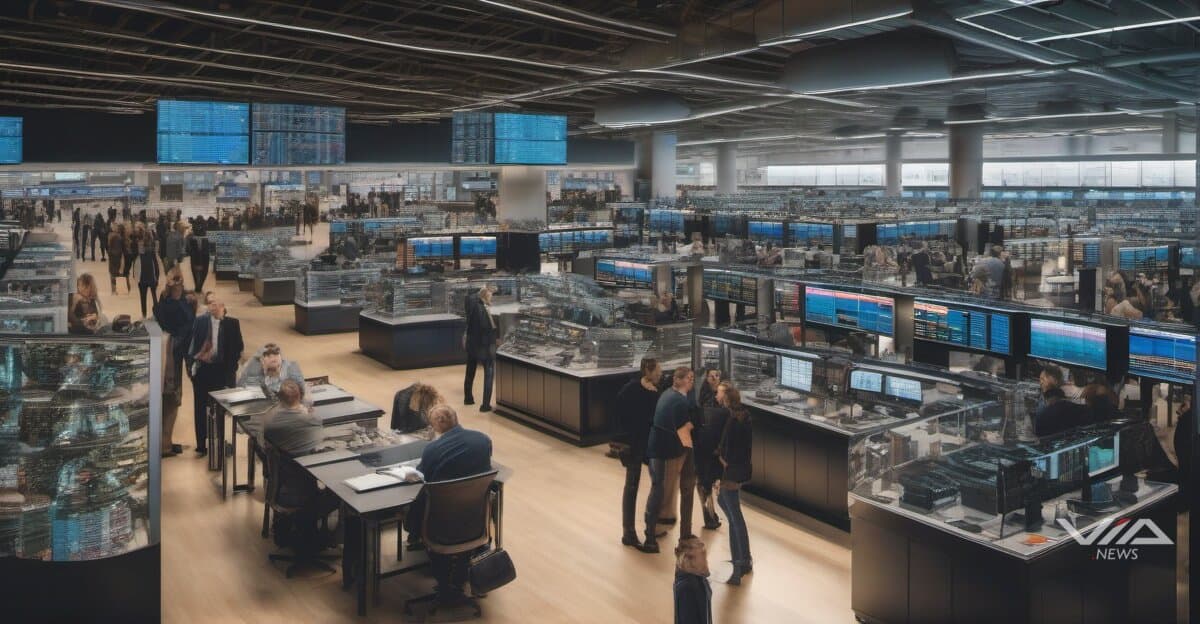
Flow Traders has formally integrated deep learning systems into its core trading operations, joining retail platforms BitMart and nof1.ai in deploying AI-driven strategies with live capital. This convergence eliminates the traditional capability gap between institutional and retail algorithmic trading.
Bitcoin's recent all-time high followed by correction provides a real-world stress test for these AI systems. Institutional players and retail platforms now run similar neural network architectures to manage volatility, execute trades, and adjust positions algorithmically.
Google's Gemini 3 Pro release and NVIDIA's latest performance benchmarks supply the computational infrastructure driving this convergence. Retail platforms leverage cloud-based AI services that match institutional processing power, eliminating the hardware moat that previously protected large trading firms.
BitMart's AI trading tools process market data and execute trades using the same deep learning frameworks as institutional desks. nof1.ai deploys real capital through algorithms accessible to individual traders, democratizing strategies once exclusive to hedge funds and market makers.
Regulatory dynamics create mixed signals for AI-crypto trading. China's ban and USDT's credit downgrade constrain certain markets, while Bittensor's ETP launch and the Fed's dovish shift enable expansion in others. AI systems adapt faster to these regulatory changes than human traders can.
The cryptocurrency market's maturation accelerates this institutional-retail convergence. Bitcoin volatility generates trading opportunities that AI systems exploit identically whether deployed by Flow Traders or retail platforms. Market structure increasingly favors algorithmic execution regardless of trader size.
Flow Traders' adoption validates AI trading effectiveness at scale. When a major market maker integrates deep learning into core operations, it signals algorithmic strategies have moved from experimental to essential. Retail platforms offering similar capabilities create competitive pressure across the trading ecosystem.
This convergence reshapes market dynamics. Order flow from AI systems—whether institutional or retail—exhibits similar patterns: rapid execution, volatility-responsive positioning, and data-driven decision-making. The distinction between institutional and retail trading blurs when both deploy equivalent AI infrastructure.
Advanced AI infrastructure continues closing capability gaps. Cloud computing costs decline while processing power increases, enabling retail platforms to match institutional performance. The trading advantage shifts from capital and infrastructure to algorithm quality and data access.